
The exact-match query 16 channel dvr price is a budget question, but the honest answer is that the recorder alone rarely decides the total. Channel count sets the ceiling on how many cameras the box can accept. Storage sets how far back the footage reaches. Signal type decides whether existing coaxial cabling can be reused or whether the whole site needs new network runs.
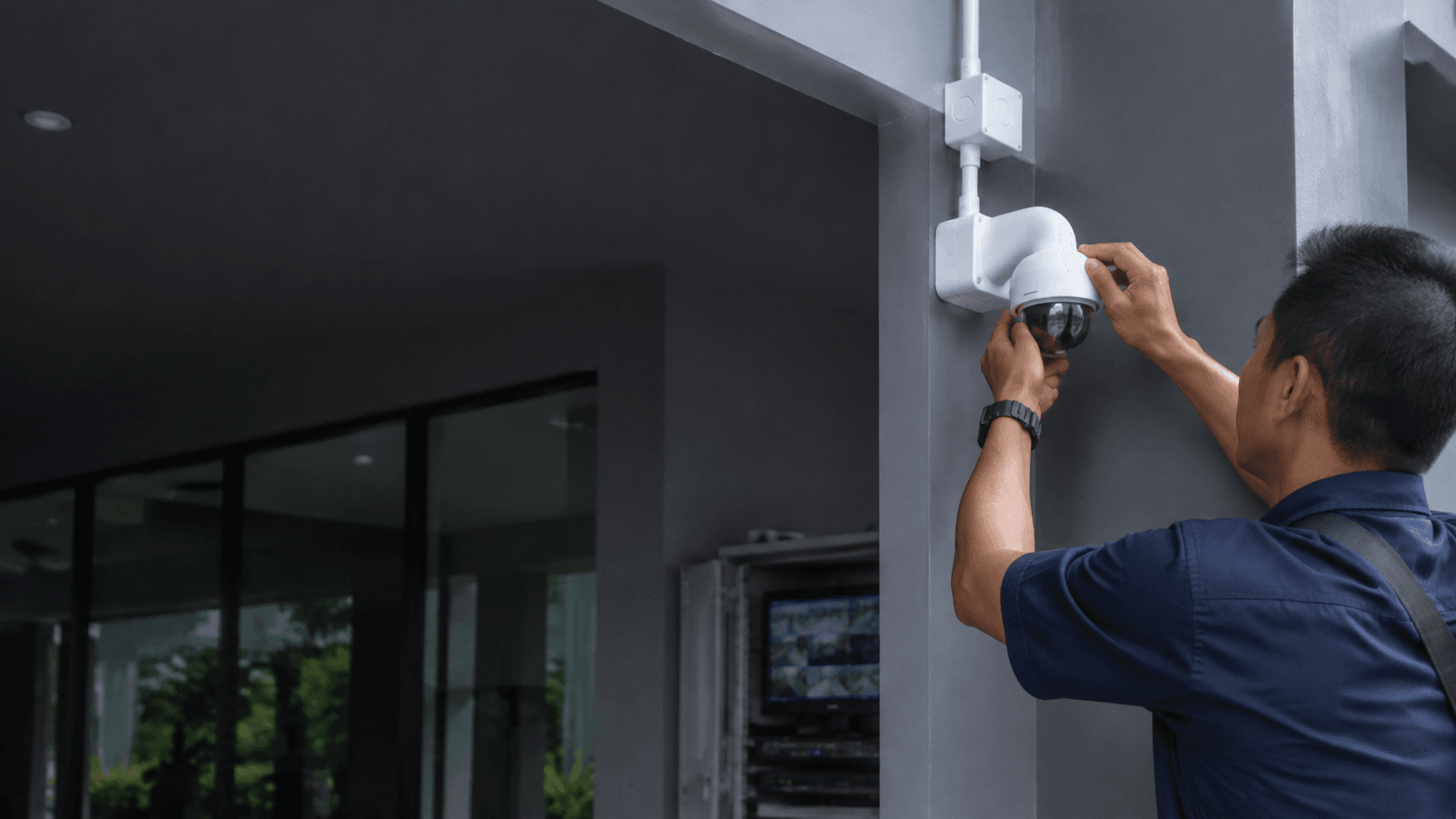
Eyonic Sdn Bhd, a security system supplier in Sarawak, plans, supplies and installs monitoring systems with camera placement, recording and remote viewing for homes, offices, shops and industrial sites. That scope matters here, because a recorder bought on price alone often fails at the installation stage.
16 Channel Dvr Price: What Matters Before You Choose
Three variables move the number more than brand does. The first is channel count and whether the unit is a pure DVR or a hybrid that also accepts IP cameras. The second is the hard drive, which is frequently sold separately and can be the single largest line item after the recorder itself. The third is labour. cable runs, connectors, power, and configuration time.
Published package pricing from Eyonic gives a useful anchor for what a supplied-and-installed security package looks like in this market. The Hikvision CCTV Package is listed at RM 1,599 and covers camera supply and setup, basic recording configuration, and mobile viewing handover. The Hikvision Alarm System is also RM 1,599, covering a control panel and sensors, siren and zone setup, and user testing and handover. The Autogate Package is RM 1,599 as well, covering motor recommendation, remote-control setup, and safety testing and handover.
Those figures describe complete packages rather than a bare recorder, which is exactly the comparison a buyer should make. A recorder-only price excludes the cameras, the drive, the cabling and the commissioning that make the system usable.
Choosing the Right 16 Channel Dvr
Work through the decision in order rather than starting with the cheapest listing.
- Count the cameras needed now, then add the cameras likely to be added within two years. Sixteen channels only help if the recorder is bought before the site outgrows a smaller unit.
- Confirm the signal type of any existing cameras. Analog, HD-over-coax and IP cameras do not share one connector standard, and a mismatch forces either new cameras or a different recorder.
- Decide the retention period. Longer retention needs a larger drive, and drive capacity is usually the most flexible cost lever in the whole system.
- Check the recorder's maximum supported drive size before buying storage, because a drive larger than the firmware supports will not be fully used.
- Confirm remote viewing works on the devices actually used on site, and that the handover includes setting it up rather than only describing it.
- Price the installation separately from the hardware. Cable routing, containment and power are site-specific and rarely appear in an online recorder listing.
What is 16 channel dvr?
A 16 channel DVR is a digital video recorder that accepts video inputs from up to sixteen cameras and writes the footage to local storage. Many current models are hybrid, meaning they accept analog or HD-over-coax cameras on BNC inputs and can also take a number of IP cameras over the network. The channel count is a ceiling, not a requirement: a sixteen-channel unit runs happily with four cameras and leaves room to expand.
This is why the same nominal product spans a wide price range. A basic analog-only recorder and a hybrid unit with higher resolution support and network features are both described as a 16 channel DVR, yet they serve different sites.
16 Channel Security DVR Recorders and the Storage Question
Storage is where most budget plans break. A recorder sold without a hard drive is not a working system until a surveillance-grade drive is fitted, and the drive must match the recorder's supported capacity. Competitor listings in this category commonly ship with 1TB, 2TB or 4TB drives preinstalled, and some advertise support for far larger capacities through additional drive bays.
Retention is a function of camera count, resolution, frame rate and recording schedule. Sixteen cameras recording continuously at high resolution fill a drive far faster than four cameras recording on motion only. Buyers who need weeks of history should size the drive for the worst case, not the average day.
Practical Considerations for 16 Channel Dvr
Several constraints are easy to miss until installation day.
Existing cabling. A site already wired with coaxial cable is usually cheaper to upgrade with a hybrid recorder than to convert to a full IP system, because the cable runs stay. A site with no cabling has more freedom and should compare both options on total cost rather than recorder price.
Lighting conditions. Camera performance depends on the actual light at each position. Eyonic recommends checking real lighting conditions before confirming placement for ColorVu-style cameras, and the same discipline applies to any low-light specification quoted on a datasheet.
Power and network. Recorders need a stable power source and, for remote viewing, a working network path. Sites without reliable connectivity should confirm that local recording and playback still function independently of the internet.
Physical space and heat. A recorder with multiple drives needs ventilation and a secure location. Cabinets that are too small or too warm shorten drive life.
Who maintains it. A system installed without a handover leaves the site dependent on the installer for every playback request. User testing and handover are part of the Eyonic installation process, which includes site survey, system proposal, installation and handover.
Evidence from Completed Projects
Eyonic completed a project for the Kuching Immigration Office, focused on arrival flow, staff areas, visitor movement and dependable daily operation. The approximate budget for that type of work is RM 12,000 to RM 28,000. A separate project for KTA Sarawak Sdn Bhd covered a practical office setup in Kuching to support staff movement, visitor handling, tidy cabling and clearer daily site control, with an approximate budget of RM 8,000 to RM 18,000.
Those ranges are useful because they show what multi-camera installations actually cost once cameras, recording, cabling and commissioning are included. A single recorder price sits far below them, and the gap is the installation.
Making an Informed Choice About
The most reliable approach is to price the whole system against a defined requirement rather than comparing recorder listings in isolation. Define the camera count, the retention period, the signal type and the viewing needs first. Then ask for a proposal that separates hardware, storage and installation so each line can be judged on its own.
Where a site already has usable cabling, a hybrid recorder can preserve that investment. Where it does not, the cabling decision usually outweighs the difference between two recorder models. Buyers comparing a 16 channel dvr price across suppliers should ask what happens after the box arrives: who mounts the cameras, who configures recording, who sets up remote viewing, and who tests the system with the people who will use it daily.
Eric Yong, founder of Eyonic Security Systems, has worked in the industry for more than ten years and is experienced in technical installation of digital security solutions for commercial businesses in Sarawak. That background is relevant to the price question because installation quality, not the recorder specification sheet, determines whether a system performs as expected over time.
Share your location, property type and required system with Eyonic on WhatsApp at +60 11-5111 7959 for the next practical step.