
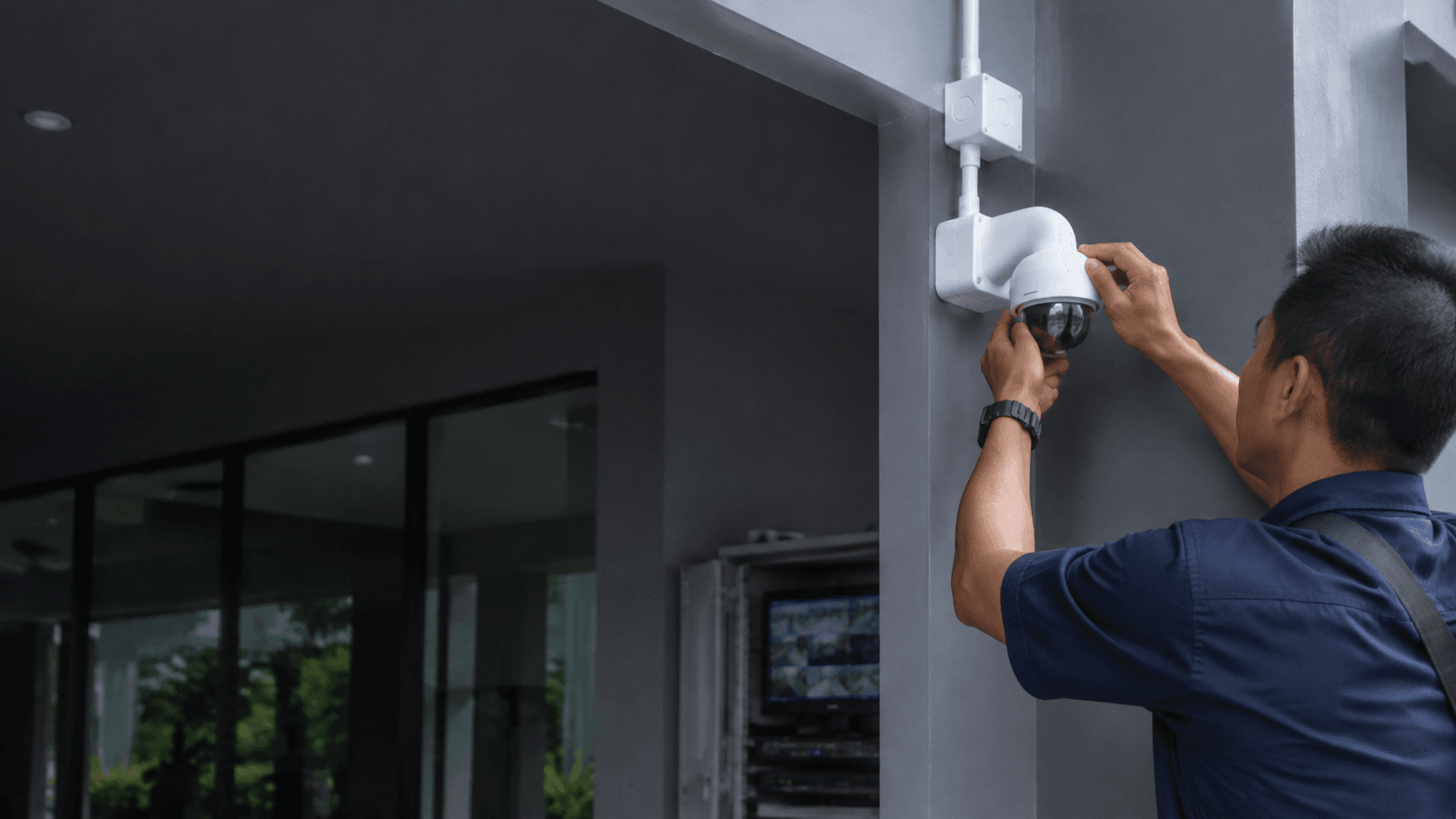
Uniview is a video surveillance brand whose catalogue spans IP cameras, network video recorders, and the software that ties them together. Buyers in Malaysia usually meet the brand in one of two ways: browsing an online store that lists model numbers and prices, or asking a local installer what can actually be supplied, mounted and supported on site.
That second path matters more than a specification sheet. A camera that looks strong on paper still depends on where it points, how the cable runs, how the recorder is configured, and whether anyone on site can pull up the footage when it counts. The sections below cover what the brand family includes, what to compare before committing, and how a Sarawak-based installation process handles survey, placement, recording and handover.
What Uniview CCTV Covers
Uniview CCTV is best understood as a product family rather than a single item. The brand's own product pages organise the range around IP cameras, network video recorders, access control, video management software, and display and control equipment. Retail listings add surveillance kits that bundle cameras, a recorder and a hard drive into one purchase.
For a Malaysian buyer, the practical split is between cameras that capture the image and recorders that store and serve it. Cameras come in body styles suited to different mounting positions, and recorders come in channel counts that determine how many cameras one unit can manage. Kits exist for buyers who want a matched set rather than individually chosen parts.
Two things are worth separating early. First, the brand catalogue is broad and includes equipment for large commercial and traffic applications that most homes and small shops will never need. Second, availability and pricing in Malaysia are not fixed by the brand's global pages; they depend on what a local supplier stocks and supports. No supplied evidence in this brief verifies Uniview pricing, warranty terms, or local availability in Malaysia, so those questions belong with the supplier being considered.
Uniview CCTV Cameras, Recorders and Software
Uniview cameras appear across retail listings in several common shapes. Bullet cameras suit long exterior runs along a wall or fence line. Turret and dome cameras suit entrances and interior ceilings where a compact housing is less obtrusive. PTZ cameras add motorised pan, tilt and zoom for wide areas that need coverage from one position.
Recorders divide into network video recorders, which take IP camera streams over the network, and hybrid recorders that accept both older analogue inputs and IP cameras. Channel count is the number that matters most: an eight-channel recorder manages eight cameras, and a sixteen-channel unit manages sixteen. PoE models supply power to cameras over the same network cable, which removes the need for a separate power run at each camera position.
Software sits on top of the hardware. It handles live viewing, playback, recording schedules and remote access. Retail listings reference mobile apps and desktop clients, but no supplied evidence in this brief verifies specific Uniview app names, cloud features, or firmware update behaviour. Those details should be confirmed against current official documentation or with the supplier before a purchase decision rests on them.
Compliance labels also appear in retail listings, including NDAA and ONVIF references. No supplied evidence in this brief verifies NDAA, ONVIF, or other compliance claims for Uniview products, so any compliance requirement should be checked against official documentation rather than assumed from a listing title.
What to Compare Before Choosing Uniview CCTV
Comparison should start with the property, not the model list. A terrace house, a shop lot, an office floor and an industrial yard each create different coverage problems, and the same camera choice rarely suits all four.
Four comparison points carry most of the weight:
- Coverage versus identification. Seeing that something happened and identifying who or what did it are different outcomes. Wide coverage across a yard may show movement without resolving a face or plate.
- Lighting at each position. Daytime performance says little about night performance. A position lit by a street lamp behaves differently from a dark back lane, and the difference changes which camera suits the spot.
- Recorder capacity and storage. Channel count limits how many cameras one recorder handles, and storage determines how far back footage can be reviewed. Retention expectations should be set before the recorder is chosen.
- Who supports it afterwards. A system is only as useful as the local support behind it. Configuration, playback and remote viewing all need someone accountable when something stops working.
Budget is part of the comparison, but it should follow the coverage plan rather than lead it. A cheaper camera placed badly will underperform an average camera placed well. For reference, Eyonic's published package pricing starts at RM 1,599 for a Hikvision CCTV package covering camera supply and setup, basic recording configuration, and mobile viewing handover, and comparable project work in Kuching has been scoped in the RM 8,000 to RM 28,000 range depending on site and scope. Those figures describe Eyonic's own published packages and completed project budgets, not Uniview pricing.
How a Site Survey Shapes Uniview CCTV Placement
Placement decisions made at a desk tend to fail on site. A site survey exists to catch the difference between the plan and the building: where walls actually run, where power and network can reach, which corners are blind, and how light falls at night.
Eyonic's CCTV installation process includes site survey, system proposal, installation, and handover. The survey stage is where camera positions are confirmed against real conditions rather than assumptions. Eyonic also recommends checking actual lighting conditions before confirming placement for ColorVu-style cameras, and the same discipline applies to any camera chosen for low-light performance.
Several constraints shape the final layout. Cable routes determine whether a position is practical at all. Roof and wall construction affects mounting and weather exposure. Entrances, counters and storage areas usually deserve closer coverage than open corridors. Where a camera must resolve detail, it needs to sit closer to the subject rather than simply cover more ground.
Property type changes the emphasis. A home typically prioritises entry points, gates and perimeter. A shop prioritises the counter, stock area and entrance. An office prioritises staff movement and visitor handling. An industrial site prioritises yard coverage, loading areas and perimeter lines. The Kuching Immigration Office project is a useful illustration of that logic: the work focused on arrival flow, staff areas, visitor movement and dependable daily operation rather than uniform coverage for its own sake.
Installation, Handover and Daily Use
Installation turns the survey into a working system. Cabling is run, cameras are mounted and aimed, the recorder is configured, and recording schedules are set. Aiming is not a formality; small adjustments at this stage decide whether a face or plate is readable later.
The practical sequence Eyonic follows runs in four stages:
- Site survey to confirm positions, cable routes and lighting conditions.
- System proposal covering camera selection, recorder capacity and storage.
- Installation of cameras, cabling, recorder and configuration.
- Handover covering live viewing, playback and remote viewing.
Handover is where the system becomes usable. It covers how to open a live view, how to find footage from a specific time, and how remote viewing works on a phone. A system handed over without that walkthrough tends to sit unused until an incident, at which point nobody remembers how to retrieve the clip.
Daily use raises its own questions. Retention length depends on storage and recording settings, so the review window should be agreed rather than discovered later. Remote viewing depends on the network at the property, and a weak upload connection limits how smoothly footage plays away from site. Firmware and software updates should be handled by whoever maintains the system, since update behaviour varies and no supplied evidence in this brief verifies Uniview firmware update behaviour.
For buyers comparing options, the honest position is that Uniview CCTV is one brand family among several, and the deciding factors are usually local: what can be supplied, how well the site is surveyed, how carefully cameras are placed, and who answers when something needs attention. Eric Yong, founder of Eyonic Security Systems, has worked in the industry for more than ten years and is experienced in technical installation of digital security solutions for commercial businesses in Sarawak.
Share your location, property type and required system with Eyonic on WhatsApp at +60 11-5111 7959 for the next practical step.