
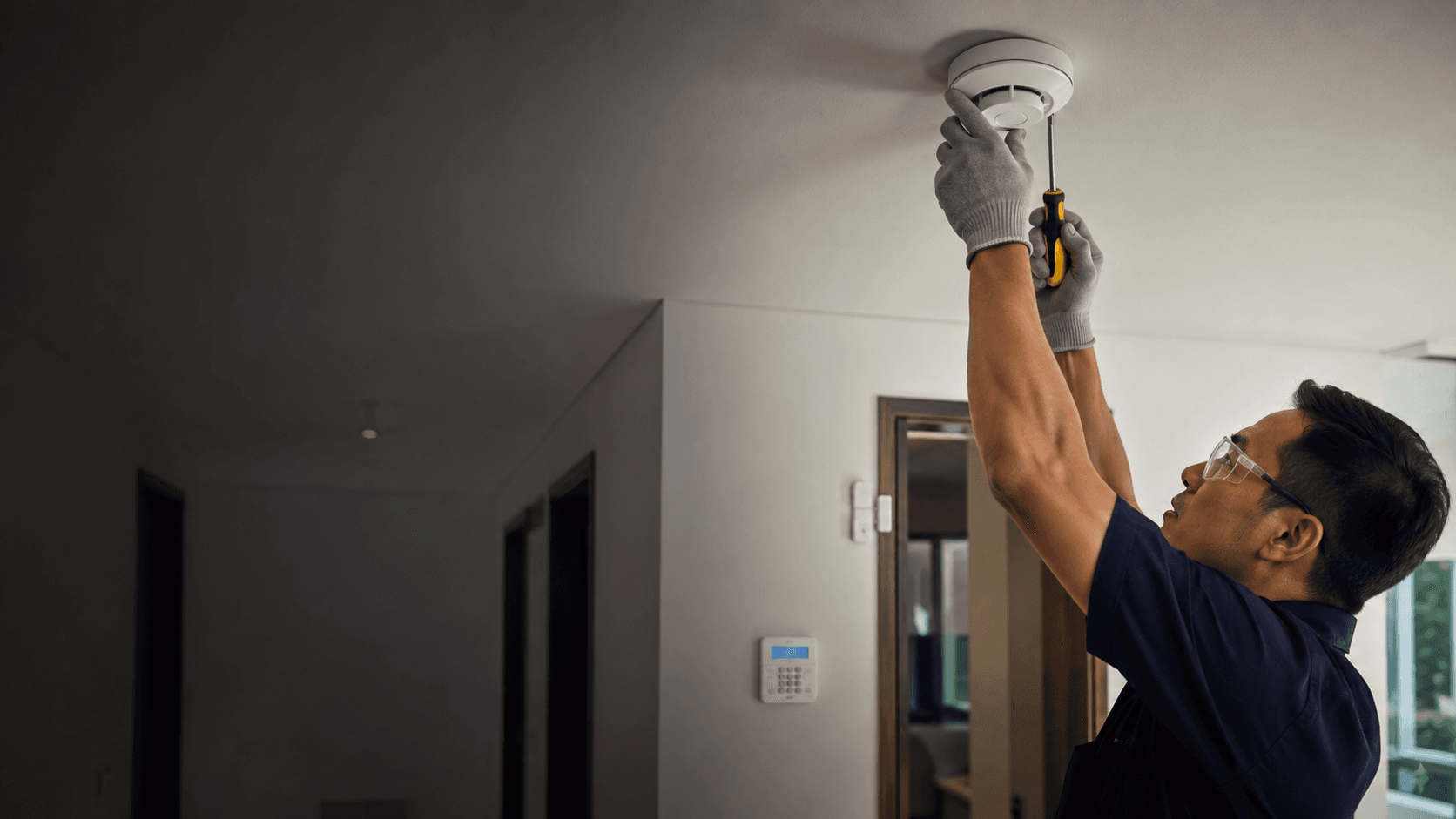
The phrase best home alarm system with cameras describes a setup where door contacts, motion sensors and a siren work alongside cameras rather than as separate purchases. That combination matters because an alarm tells a household something triggered, while a camera shows what triggered it.
Most buyer guides rank national subscription brands. In Sarawak, the practical question is different: who surveys the property, who mounts the devices, and who returns when a zone misbehaves. Eyonic Sdn Bhd plans, supplies and installs security systems for homes, offices, shops and industrial sites, and its founder Eric Yong has worked in technical installation of digital security solutions for commercial businesses in Sarawak for more than 10 years.
Best Home Alarm System With Cameras: What Matters Before Choosing
Four things decide whether a combined alarm and camera setup works in daily use: sensor coverage, camera placement, how alerts reach the owner, and who maintains the system after handover.
- Survey the property and list every entry point that needs a sensor.
- Check actual lighting at each proposed camera position before confirming placement.
- Confirm how alerts and live views reach the owner, and test that path.
- Agree on the handover. user testing, zone naming and who to call for service.
Eyonic's installation process follows site survey, system proposal, installation and handover. The survey stage is where sensor counts and camera angles get decided, and it is cheaper to change a plan on paper than to re-run cable after plastering.
Alarm coverage versus camera coverage
Sensors and cameras answer different questions. A door contact or motion sensor reports that a zone opened or moved. A camera records what happened in the area it can see. A property with cameras but no sensors has footage; a property with sensors but no cameras has an alert with no picture. Combining them means an alert can be checked against video instead of treated as an unknown.
What the RM 1,599 alarm package covers
Eyonic lists a Hikvision Alarm System at RM 1,599 covering a control panel and sensors, siren and zone setup, and user testing and handover. A separate Hikvision CCTV Package at RM 1,599 covers camera supply and setup, basic recording configuration, and mobile viewing handover. A household wanting both alarm and camera functions is therefore looking at two scopes of work, not one, unless a survey shows a smaller combined configuration is enough.
Choosing the Right Home Alarm System With Cameras
The right configuration depends on the property, not on a brand ranking. A single-storey terrace house, a double-storey family home and a shop-lot with living quarters above it have different entry points, different cable routes and different camera sightlines.
Start with the perimeter. Gates, side entrances, back doors and ground-floor windows are the usual first zones. Then decide which of those zones also needs video, and whether that video needs to work in low light.
Lighting decides camera placement
Eyonic recommends checking actual lighting conditions before confirming placement for ColorVu-style cameras. A position that looks adequate in daylight can be useless at night if a wall, tree or neighbouring light source interferes. This check belongs in the survey, before brackets are fixed.
Wired, wireless and hybrid setups
Wireless sensors reduce cabling work in finished interiors. Wired runs suit new builds, renovations and properties where cable can be concealed tidily. Many homes end up hybrid. wired cameras on the exterior where power and cable routes exist, wireless sensors inside where chasing walls is impractical. The trade-off is straightforward. Wireless is faster to install and easier to extend; wired is less dependent on battery replacement and radio range.
Recording and remote viewing
Cameras need somewhere to record and a way to be viewed. Eyonic's CCTV scope includes NVR setup and remote viewing, which means the recorder and the mobile viewing path are configured and handed over rather than left to the owner. For an alarm and camera combination, the useful test at handover is simple: trigger a zone, confirm the alert arrives, and confirm the matching camera view can be opened.
Practical Considerations for
Cost, maintenance and false alerts are the three areas where expectations most often diverge from reality.
| Package | Listed price | Included scope |
|---|---|---|
| Hikvision Alarm System | RM 1,599 | Control panel and sensors, siren and zone setup, user testing and handover |
| Hikvision CCTV Package | RM 1,599 | Camera supply and setup, basic recording configuration, mobile viewing handover |
| Autogate Package | RM 1,599 | Motor recommendation, remote-control setup, safety testing and handover |
Larger or more complex sites sit well above package pricing. Eyonic's completed Kuching Immigration Office project, which covered arrival flow, staff areas, visitor movement and dependable daily operation, had an approximate budget range of RM 12,000 to RM 28,000. A KTA Sarawak Sdn Bhd office project in Kuching, covering staff movement, visitor handling, tidy cabling and clearer daily site control, had an approximate budget range of RM 8,000 to RM 18,000. Those figures describe commercial office work, not a typical single home, but they show how far scope can move a budget.
Maintenance and battery life
Wireless sensors depend on batteries, and battery life varies with how often a zone is triggered and how far the sensor sits from the panel. Wired devices avoid that task but need cable routes that survive renovation work. Either way, a system that is never tested is a system nobody can trust. Periodic testing of each zone, plus a check that alerts still reach the owner's phone, catches most failures before they matter.
False alerts and pet movement
Motion sensors respond to movement, and pets move. Placement, sensor type and zone configuration determine whether a household gets useful alerts or constant noise. This is a survey and setup decision, not a product decision, which is why zone naming and user testing appear in the handover scope.
Where cameras should not go
Cameras pointed at a neighbour's window, a shared corridor or a public footpath create problems that have nothing to do with technology. Placement should stay within the property's own boundary and cover the entry points that matter. Interior cameras in private rooms are rarely worth the discomfort they cause.
Making an Informed Choice About
A combined alarm and camera setup is worth considering when a household wants both an alert and a record of what happened, and when the property has clear entry points that can be covered. It is less useful when the only concern is watching a driveway, where cameras alone may be enough, or when nobody will act on an alert.
For properties in Sarawak, local installation matters more than a global brand ranking. Someone has to survey the site, propose the system, install it, and hand it over with the zones named and the mobile viewing tested. Eyonic's project record includes government and engineering consultancy clients in Kuching, alongside residential and commercial work.
Budget expectations should be set from a survey rather than a package price. The RM 1,599 alarm package and RM 1,599 CCTV package are entry points that cover defined scopes. Additional sensors, extra cameras, longer cable runs, autogate integration or intercom work add to that. A household that wants alarm, cameras and gate control is combining three separate scopes.
Share the location, property type and required system with Eyonic on WhatsApp at +60 11-5111 7959 for the next practical step.