
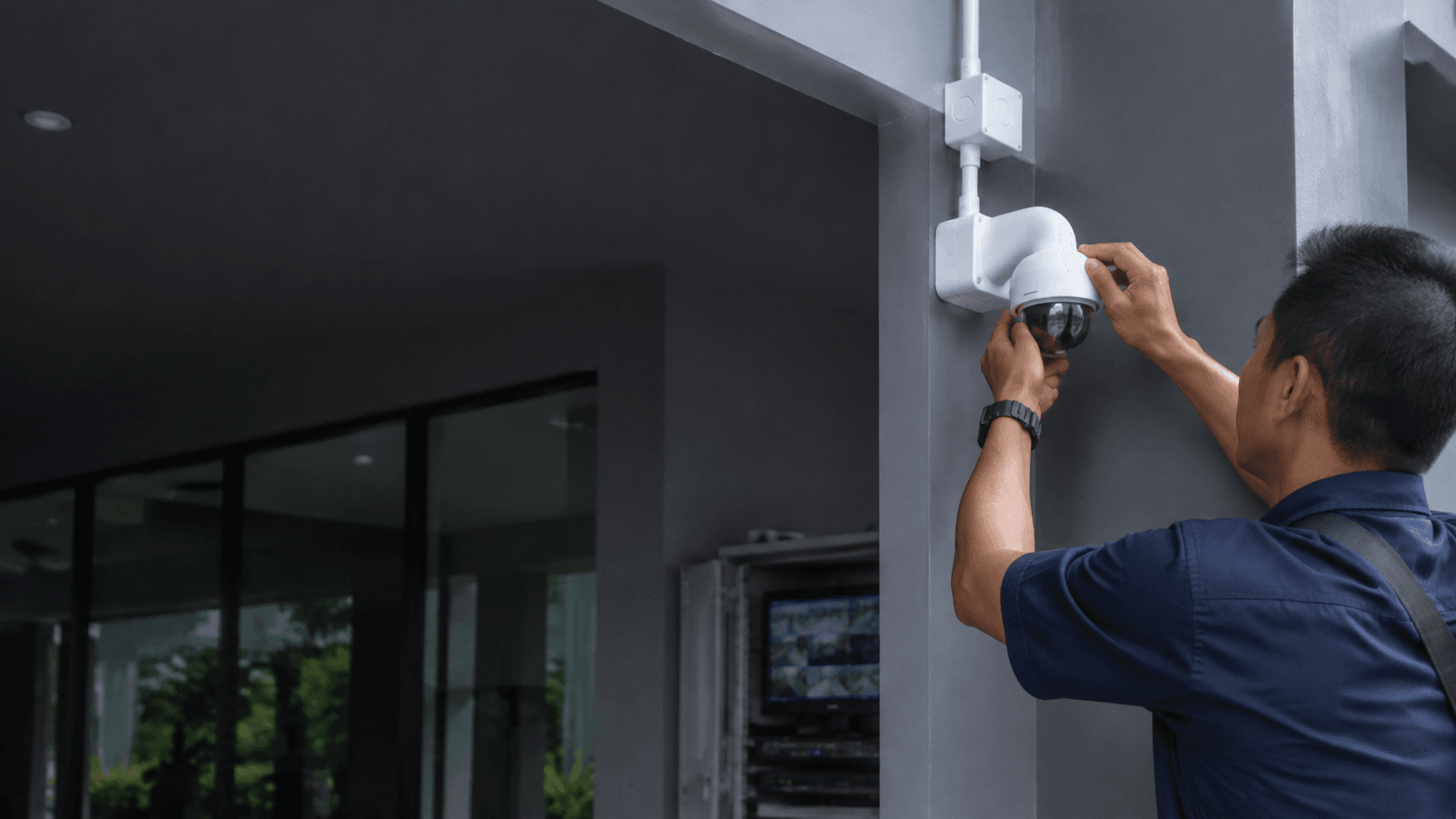
The exact-match query motion detection cctv camera covers a wide field: passive infrared sensors, pixel-change video analytics, and AI object classification all sit under the same label. The differences matter because they change how many false alerts reach a phone, how much storage a recorder consumes, and whether footage is useful after an incident.
- Confirm what needs watching. entrances, staff areas, visitor movement or perimeter edges.
- Check the actual lighting at each position before confirming placement, especially for colour night-view models.
- Decide whether alerts should fire on any movement or only on people and vehicles.
- Match camera resolution and housing to the location, indoors or outdoors.
- Confirm recorder capacity and storage retention against the number of cameras.
- Complete a site survey, agree the system proposal, install, then hand over with mobile viewing tested.
Motion Detection Cctv Camera. What Matters Before Choosing
A motion detection cctv camera is only as useful as the events it captures. A camera that records every passing car or shifting shadow fills a recorder with clips nobody reviews. A camera tuned to people and vehicles produces a shorter, more useful timeline.
Three practical variables drive most of the outcome. Detection method decides what counts as movement. Placement decides what the camera can see and how often light changes confuse it. Recording policy decides whether footage is continuous, motion-only, or event-tagged.
Eyonic's CCTV installation process runs through site survey, system proposal, installation and handover, which places detection planning before hardware is fixed to a wall. That order matters because detection zones and camera angles are difficult to correct after cabling is complete.
Choosing the Right Motion Detection Cctv Camera
Selection starts with the detection method rather than the camera body. Passive infrared sensing reacts to heat movement and suits short-range indoor coverage. Video-based detection compares pixel changes between frames and covers wider outdoor views but reacts to rain, foliage and headlights. AI-assisted detection classifies objects as people or vehicles before triggering an alert, which reduces nuisance notifications.
Resolution and night performance follow. Higher resolution helps identify a face or plate at distance but increases storage demand. Colour night-view cameras need a lighting check at the actual position, because a specification sheet cannot show how much ambient light reaches a doorway after dark.
Motion Detector Camera, 1080P HD
A 1080P HD motion detector camera remains a common choice for indoor rooms with steady lighting. The resolution is enough to recognise a person at close range, and file sizes stay manageable for a small recorder. The trade-off appears outdoors at distance, where 1080P detail falls short for identifying faces or number plates.
Indoor units in this class often use a compact housing and a fixed lens covering a wide angle. That suits a lit room, a corridor or a reception area. It suits less well an unlit yard, where infrared or colour night-view models perform better.
Practical Considerations for Motion Detection Cctv Camera Placement
Placement decides detection quality more than any menu setting. Cameras mounted too high lose facial detail. Cameras aimed across a public walkway trigger on every passer-by. Cameras facing a road catch headlights at night.
Detection zones let an installer exclude a pavement, a tree or a neighbour's gate from the trigger area. Sensitivity settings then decide how much movement is needed before recording starts. Both are configured after the camera is positioned, so the position itself should be settled first.
Lighting is the constraint most often underestimated. A position that looks adequate in daylight can be almost dark at the exact hour when detection matters. Checking conditions at the real location, at the real time of day, prevents a camera from being installed where it cannot perform.
How Motion Detection Reduces Storage and Review Time
Motion-triggered recording writes footage only when something moves, which extends retention on a fixed hard drive. Event tagging goes further. a recorder can mark clips containing people or vehicles so a search returns a short list instead of hours of timeline.
The trade-off is coverage risk. If detection misses an event, nothing is recorded. Continuous recording avoids that risk but consumes storage faster and produces longer review sessions. Many sites combine both, running continuous recording at low frame rates with motion events marked for quick search.
Making an Informed Choice About Motion Detection Cctv Camera Systems
The right configuration depends on the property. A shop entrance needs clear facial detail at close range and alerts that ignore street traffic. A warehouse needs wide coverage and detection that tolerates moving machinery. An office reception needs visitor movement captured without triggering on every staff pass.
Eyonic completed a project for the Kuching Immigration Office covering arrival flow, staff areas, visitor movement and dependable daily operation. That scope shows how detection planning follows the movement pattern of a site rather than a generic camera count.
Eyonic's Hikvision CCTV package covers camera supply and setup, basic recording configuration and mobile viewing handover at RM 1,599. Comparable packages for alarm systems and autogate work are also listed at RM 1,599. Larger project scopes, such as the Kuching Immigration Office work, sit in a different budget range because camera count, cabling and configuration all increase.
For a next practical step, share the location, property type and required system with Eyonic on WhatsApp at +60 11-5111 7959.