
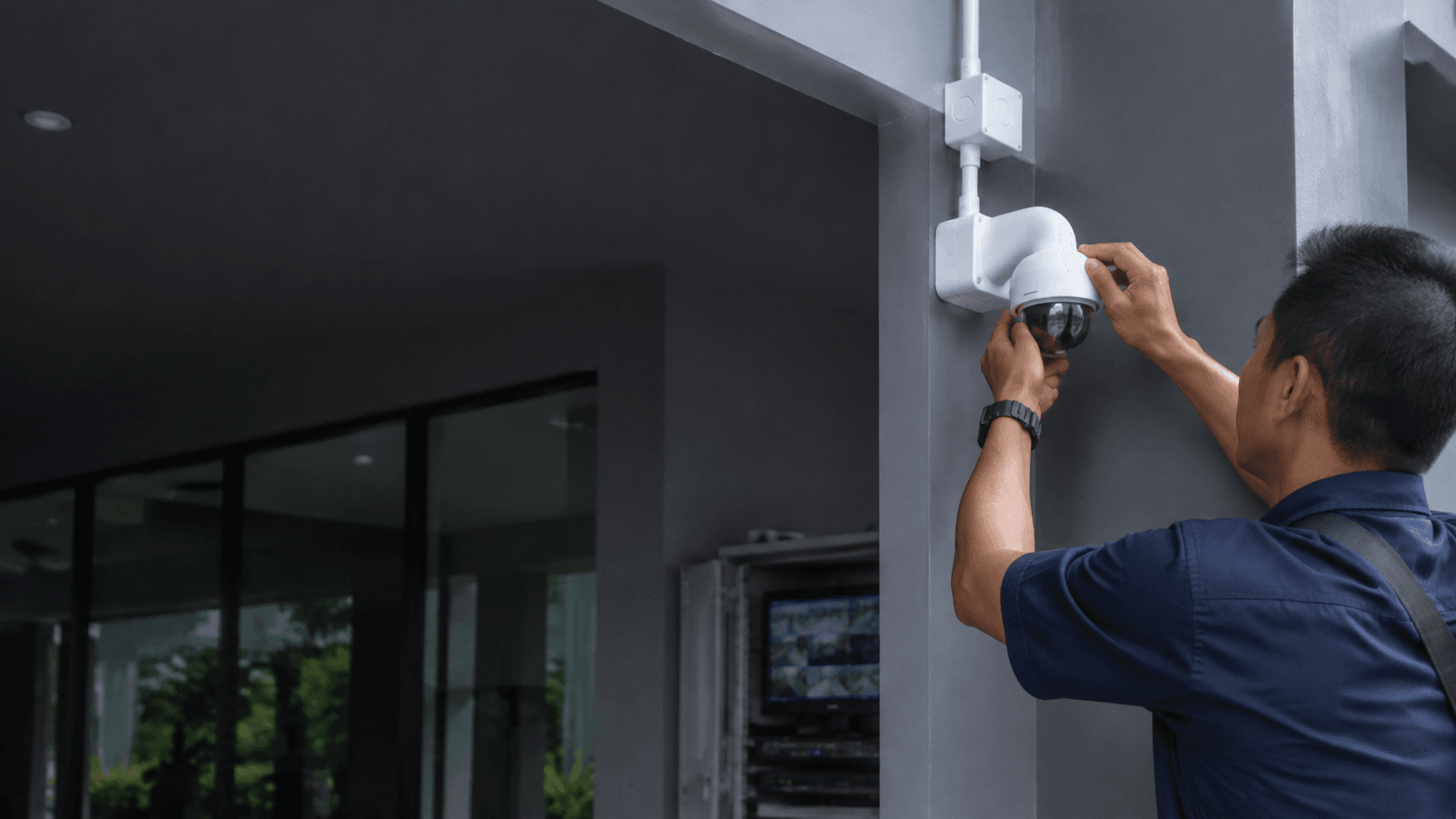
The brand sits in the professional and commercial tier of video surveillance, which shapes how buyers in Malaysia approach it. Bosch Security Systems builds cameras for sites that need dependable daily operation rather than consumer-grade convenience. That positioning matters because the practical questions are rarely about the camera alone. They concern who supplies it, who mounts it, how footage is recorded, and who answers when something stops working.
Eyonic Sdn Bhd, a security system supplier in Sarawak, plans, supplies and installs monitoring systems with camera placement, recording and remote viewing for homes, offices, shops and industrial sites. That service model is the realistic frame for a Bosch CCTV camera project in Malaysia, because the hardware decision only becomes useful once placement, recording and support are settled.
Bosch CCTV Camera. what Malaysian buyers should confirm first
Before comparing anything, four things need answers. Which Bosch models are actually available through a local channel. Whether the site's lighting and layout suit the intended camera type. How footage will be recorded and retained. Who handles installation and after-sales support.
Bosch Security Systems is the manufacturer behind the brand, and its catalogue spans multiple camera families rather than a single product. Buyers who start with a model number before confirming local supply often end up choosing twice. The safer sequence is to confirm the supply channel first, then match the model to the site.
Lighting is the most commonly skipped check. Eyonic recommends checking actual lighting conditions before confirming placement for ColorVu-style cameras, and the same discipline applies to any low-light camera decision. A camera chosen from a specification sheet can behave differently under a covered walkway, a reflective shopfront, or a corridor lit only at night.
Recording and remote viewing deserve equal weight. A camera that captures well but records poorly, or that cannot be viewed remotely when it matters, solves only part of the problem. NVR setup and remote viewing are part of the same planning conversation as camera selection.
Bosch CCTV Camera models and where each fits
Bosch does not sell one camera for every situation. The range covers different form factors and intended uses, and the right choice follows the site rather than the other way around.
Dome-style cameras suit indoor areas where a low-profile presence is preferred, such as office interiors and reception zones. Bullet-style cameras suit outdoor perimeters and longer sightlines. Panoramic and multi-sensor models suit open areas where a single wide view replaces several narrow ones. License plate capture models exist for vehicle entry points, where the camera's job is reading plates rather than general observation.
Because verified model-level specifications are not available from approved sources here, this page does not list resolutions, lens sizes, or sensor details. Those figures should come from the manufacturer's current datasheet or an authorised distributor, not from a secondary summary. Treating an unverified specification as fact is how mismatched purchases happen.
The practical filter is simpler than a specification comparison. Identify what the camera must see, at what distance, in what light, and for how long footage must be kept. Those four answers narrow the model family faster than any feature list.
Matching camera type to site conditions
An indoor office with even lighting and short sightlines rarely needs the same camera as an outdoor gate with variable light and moving vehicles. A shopfront with strong reflections creates different problems again. The camera type should follow the observed condition, not the other way around.
Where a site has mixed conditions, such as a covered entrance that is bright by day and dark by night, the placement decision matters more than the model tier. Moving a camera a short distance can change what it sees more than upgrading it.
Planning a Bosch CCTV Camera layout for Malaysian sites
Layout planning starts with movement, not with camera count. Where do people and vehicles enter, where do they go, and which areas need a record of activity rather than constant monitoring.
For a public-facing site, arrival flow, staff areas and visitor movement are the natural coverage priorities. That is the pattern behind Eyonic's work at the Kuching Immigration Office, where the focus was arrival flow, staff areas, visitor movement and dependable daily operation. The same logic applies to offices, clinics, retail units and industrial premises.
For an office or consultancy environment, the priorities shift toward staff movement, visitor handling and tidy cabling. Eyonic's KTA Sarawak Sdn Bhd project followed that pattern, supporting staff movement, visitor handling, tidy cabling and clearer daily site control.
Cabling deserves early attention rather than late improvisation. Routing decisions affect both the finished appearance and how easily a system can be extended later. A layout that ignores cable paths usually produces visible compromises after installation.
Placement checks that prevent rework
Camera placement should be confirmed against actual conditions on site. Height, angle, distance to the target area, and the light available at different hours all change what a camera records. A position that looks correct on a floor plan can fail once the sun direction, ceiling height, or nearby reflective surface is taken into account.
Privacy boundaries also matter. Cameras should cover the intended area without unnecessarily capturing neighbouring property or private spaces. This is a planning decision, not an afterthought.
Bosch CCTV Camera installation process from survey to handover
A structured installation sequence reduces the risk of a system that works on day one but becomes difficult to manage later. Eyonic's CCTV installation process follows four stages.
- Site survey to assess layout, lighting, entry points and existing infrastructure.
- System proposal covering camera placement, recording and remote viewing.
- Installation of cameras, cabling and recording equipment.
- Handover with configuration, user guidance and confirmation that the system operates as intended.
The survey stage is where most problems are prevented. It establishes what the site actually needs rather than what a package assumes. The proposal stage turns those findings into a defined scope, so the installation stage has a clear target.
Handover is not a formality. It is where recording configuration, remote viewing access and basic operation are confirmed with the people who will use the system daily. A system handed over without that step tends to generate support calls that a short briefing would have avoided.
Eric Yong, founder of Eyonic Security Systems, has been in the industry for more than 10 years and is experienced in technical installation of digital security solutions for commercial businesses in Sarawak. That experience sits behind the survey and handover stages, where site-specific judgement matters most.
Budget and package context for a project
Verified Bosch CCTV camera pricing in Malaysia is not available from approved sources, so this page does not quote a figure for the brand. Buyers should expect pricing to come from an authorised distributor or reseller, and to vary with model family, camera count, recording equipment and installation complexity.
For scale, Eyonic's published package pricing starts at RM 1,599 for a Hikvision CCTV package covering camera supply and setup, basic recording configuration and mobile viewing handover. That figure is a reference point for entry-level package structure, not a Bosch price.
Larger site work sits in a different range. Eyonic's Kuching Immigration Office project carried an approximate budget of RM 12,000 to RM 28,000, and the KTA Sarawak Sdn Bhd project an approximate budget of RM 8,000 to RM 18,000. Those figures reflect multi-area commercial installations rather than single-camera setups.
Budget planning should account for more than cameras. Cabling, recording hardware, installation labour and configuration all contribute. A quote that covers only camera units usually understates the total.
What drives cost up or down
Camera count is the obvious variable, but it is rarely the largest one. Cable routing through finished walls, the number of recording channels required, and whether remote viewing needs additional network work all move the total. Sites with existing infrastructure cost less to equip than sites starting from nothing.
Retention requirements also affect cost. Longer footage retention needs more storage, and that is a decision best made before hardware is selected rather than after.
questions Malaysian buyers ask
Is a Bosch CCTV camera available locally in Malaysia? Availability depends on the authorised distribution channel. Confirming supply before committing to a model avoids the situation where a chosen camera cannot be sourced or supported locally.
Can a Bosch CCTV camera be installed by a local installer? Yes, provided the installer works with the brand and can configure recording and remote viewing correctly. Installation capability matters as much as supply, because a correctly supplied camera that is poorly placed or poorly configured underperforms.
Does a Bosch CCTV camera need a specific recorder? Recording setup should be confirmed as part of the system proposal. NVR setup and remote viewing are part of the same planning conversation as camera selection, not separate purchases.
How long does installation take? Duration depends on camera count, site complexity and cable routing. A single-area installation and a multi-floor commercial site are not comparable, which is why the survey stage exists.
What happens after handover? After-sales support covers configuration questions, adjustments and fault resolution. Confirming what support is included, and who provides it, is as important as the hardware decision itself.
Share your location, property type and required system with Eyonic on WhatsApp at +60 11-5111 7959 for the next practical step.