
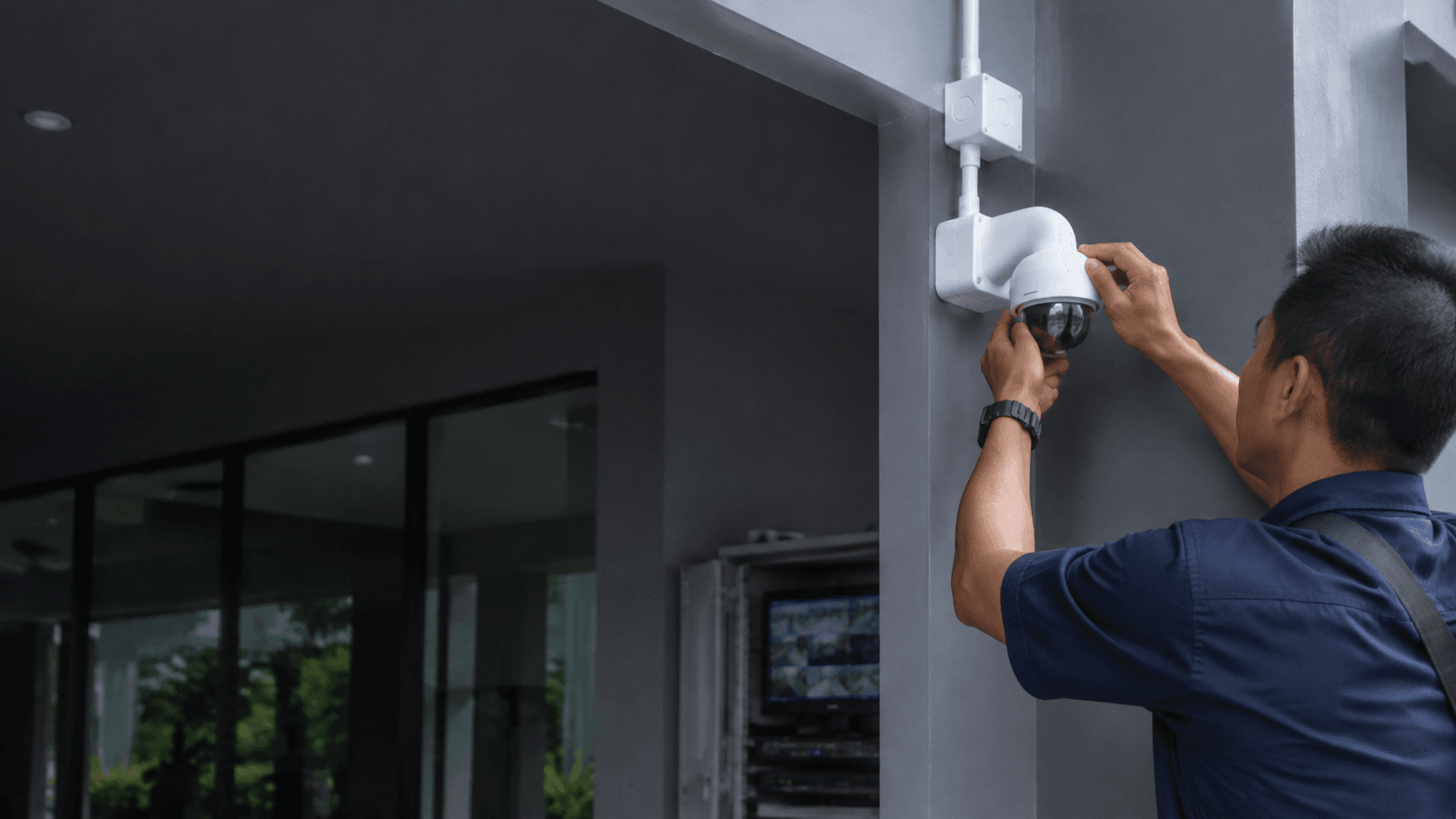
The specification describes recording capacity and picture resolution, not a complete system. Cameras, cabling, storage and placement decide whether the recorder performs as intended on site.
Hikvision DVR 8 Channel 2MP 1080p: what the specification covers
Two numbers carry most of the meaning. Eight channels is the maximum number of camera inputs the recorder accepts. 2MP 1080p is the resolution at which footage is recorded, giving roughly two million pixels per frame.
Those two figures sit alongside other decisions that are not fixed by the model name. Compression format, storage bay count, output ports and supported signal types vary between Hikvision DVR families, so the specification on a listing page should be read as a starting point rather than a full description of the unit.
Hikvision's Turbo HD DVR range includes 8-channel models across several series, and published product pages describe features such as H.265 compression, AcuSense detection and Hik-Connect remote access on particular models. Those features belong to the models that list them, not to every 8-channel recorder.
What an 8-channel 2MP 1080p recorder is used for
Eight channels suit a property that needs full coverage without a large camera count. A typical small office might cover an entrance, a reception counter, a corridor, a store room and a rear door, leaving spare channels for later expansion.
2MP 1080p recording is a practical middle ground. It produces recognisable detail for identifying people and vehicles at normal viewing distances without the storage load of higher-resolution formats. Where the requirement is reading a number plate or a face at distance, resolution alone will not solve it; lens choice and camera position matter more.
An 8-channel recorder also fits phased projects. A shop can start with four cameras and add more without replacing the recorder, provided the remaining channels and the power and cabling arrangement support the addition.
When eight channels is the wrong fit
A site needing more than eight camera positions should move to a 16-channel unit rather than daisy-chaining recorders. A single-camera domestic setup rarely justifies eight channels, and a smaller recorder would leave more budget for camera quality and storage.
Hikvision DVR 8 Channel 2MP 1080p in a Sarawak installation
Eyonic Sdn Bhd plans, supplies and installs monitoring systems with camera placement, recording and remote viewing for homes, offices, shops and industrial sites in Sarawak. The company's CCTV installation process follows a defined sequence.
- Site survey to review the property, camera positions and existing cabling.
- System proposal covering the equipment and configuration that suits the site.
- Installation of cameras, recorder, cabling and storage.
- Handover covering recording configuration and mobile viewing.
That sequence matters for an 8-channel recorder because the recorder is one component in a chain. A survey establishes how many camera positions the property actually needs, whether cable runs are practical, and where the recorder can sit with power and network access.
Eyonic completed a project for the Kuching Immigration Office, focused on arrival flow, staff areas, visitor movement and dependable daily operation. The scope of that work shows the kind of coverage planning a public building requires, where entrances and movement routes carry more weight than raw camera count.
Eyonic also completed a project for KTA Sarawak Sdn Bhd, an engineering consultancy office in Kuching, covering staff movement, visitor handling, tidy cabling and clearer daily site control. Tidy cabling is not cosmetic; poor cable routing is a common cause of intermittent signal faults on analogue and coax-based systems.
Lighting and placement checks
Eyonic recommends checking actual lighting conditions before confirming placement for ColorVu-style cameras. The same discipline applies to any camera paired with an 8-channel recorder: a position that looks correct on a floor plan can fail at night if the light source sits behind the subject or the camera faces a bright reflective surface.
Numbers that matter before confirming a unit
Three figures shape the practical outcome of an 8-channel 2MP 1080p installation.
The first is channel count against camera count. Eight channels means eight inputs, and any plan that adds cameras later should leave headroom rather than filling every channel on day one.
The second is storage. Recording duration depends on how many cameras run, at what resolution, at what frame rate, and how efficiently the compression format handles the scene. A quiet corridor and a busy entrance produce very different file sizes from the same camera. Retention targets should be stated in days before the hard drive is chosen, not after.
The third is resolution against camera capability. A recorder that handles 2MP 1080p recording pairs with cameras that match or sit within its supported range. Mismatched cameras can drop to a lower resolution or fail to display at all.
Eyonic's Hikvision CCTV package is priced at RM 1,599 and covers camera supply and setup, basic recording configuration and mobile viewing handover. That figure describes a package, not the price of a standalone 8-channel recorder.
What to compare across 8 channel recorders
Model codes within the same channel count differ in ways that affect cost and capability. Comparing them on channel count alone hides the differences that matter after installation.
Compression format is the first comparison point. Newer formats reduce file size for the same picture quality, which extends retention on a given drive. Older formats still work but consume storage faster.
Supported signal types are the second. Hikvision Turbo HD recorders are described across product pages as supporting combinations of TVI, AHD, CVI, CVBS and IP inputs, but the exact mix varies by model. A recorder that accepts the cameras already on site avoids replacing working equipment.
Storage bays and drive support are the third. Some units take a single drive, others take more. Bay count sets the ceiling on retention and on future expansion.
Detection features are the fourth. AcuSense human and vehicle classification appears on specific Hikvision models and reduces false alerts from moving foliage, rain or shadows. It is a model-level feature, not a guarantee across the range.
Remote access is the fifth. Hik-Connect is Hikvision's mobile viewing platform, and handover should confirm that live and recorded footage is reachable from a phone before the installer leaves site.
Questions to settle before installation
Camera compatibility should be confirmed against the specific recorder model, not against the brand. The signal type and resolution of each camera must fall within what the recorder accepts.
Storage should be sized from a stated retention target. Working backwards from a drive size produces a retention period nobody chose.
Cabling should be reviewed during the survey. Existing coax or network cable can sometimes be reused, and that decision changes both cost and installation time.
Placement should be confirmed against real lighting conditions, including how the scene looks after dark and whether any position is backlit during part of the day.
Remote viewing should be tested on the owner's own device at handover, since router configuration and network access affect whether footage is reachable outside the property.
For sites in Sarawak, sharing the location, property type and required system with Eyonic on WhatsApp at +60 11-5111 7959 gives the next practical step: a survey that turns a specification into a workable layout.