
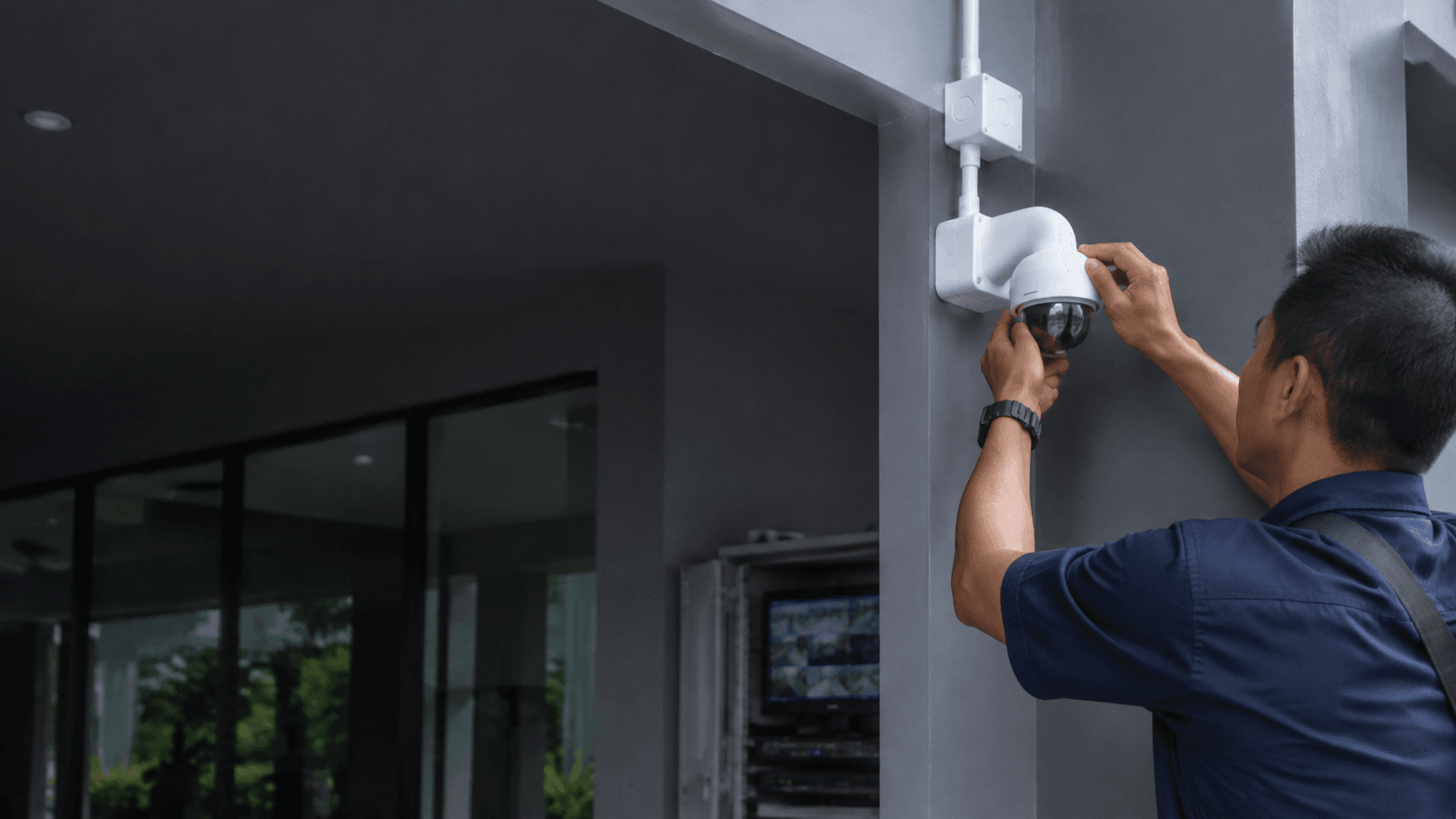
The compatibility question matters because ADT has run several platforms over the years, and each one accepts a different set of cameras. A camera that works on one ADT system may not appear in the app on another. The sections below separate what is known about each platform from what remains uncertain, so the decision rests on documented support rather than on a product photo that looks right.
ADT Compatible Cameras. What Matters Before Choosing
Three things decide whether a camera will actually work: the platform the panel runs, whether the camera is on that platform's approved device list, and whether the homeowner or business wants professional installation or a self-installed device.
ADT Command and ADT Control are the two panel platforms most often discussed in compatibility guides. ADT Command supports ADT-branded indoor, outdoor, dome, and doorbell cameras, and it also works with Alarm.com cameras. ADT Control is the older platform, and its camera support is narrower. ADT Pulse is older still, and its approved-device list is the most restricted of the three.
ADT Blu is a separate, newer line built around ADT-branded 2K cameras with a self-install option. ADT Pro Install is the professionally installed line built around Google Nest cameras. Those two lines do not share the same camera hardware, so a camera bought for one will not necessarily pair with the other.
Choosing the Right ADT Compatible Cameras
The practical sequence below reflects how compatibility is normally confirmed before a camera is purchased. It applies whether the property is a home, a shop, or an office.
- Identify the exact ADT platform in use — Command, Control, Pulse, Blu, or Pro Install — from the panel model or the app name.
- Check that platform's published approved-device list rather than a general product listing.
- Confirm whether the camera is ADT-branded or third-party, because third-party support varies by platform.
- Decide between professional installation and self-install, since that choice narrows the camera options.
- Verify how video is stored and viewed — local recording, cloud storage, or both — before committing.
- Confirm the camera's power and network requirements match the intended mounting location.
Step two is where most mismatches are caught. A retailer listing for an ADT camera does not confirm that the device is approved for a specific panel. The platform's own device list does.
What is adt compatible cameras?
The phrase describes cameras that can be added to an ADT security system and viewed or managed through ADT's app or panel. It is not a single product category. It covers ADT-branded cameras made for a specific platform, and third-party cameras that ADT has approved for that platform.
Because the term is broad, search results mix three different things: ADT's own camera store listings, third-party retailers selling ADT-branded hardware, and general-purpose cameras that have no ADT relationship at all. Only the first two are relevant to a compatibility decision.
R/adt On Reddit. Adding Third Party Cameras And Doorbells
Community discussions on r/adt about adding third-party cameras and doorbells reflect a recurring theme: users want to extend an existing ADT system without replacing the panel. The practical answer depends on which platform the panel runs, because third-party support is platform-specific rather than universal.
Where a platform does support third-party devices, the integration typically runs through the platform's own app rather than through the camera manufacturer's app. That means the camera's native features may be reduced once it is managed inside the ADT environment. Features such as local recording, advanced motion zones, or manufacturer-specific AI detection may not carry over.
This is the main trade-off in the third-party route. It can preserve an existing panel and avoid a full system replacement, but it usually means accepting the feature set the ADT platform exposes rather than the full feature set of the camera.
What Cameras Will Work With The New ADT Command System?
ADT Command supports ADT-branded indoor, outdoor, dome, and doorbell cameras, and it also works with Alarm.com cameras. The ADT Command Indoor HD Camera, the outdoor night HD camera, the dome camera, and the ADT Command doorbell are the models most commonly listed as compatible.
Alarm.com cameras form the main third-party option on this platform. That includes indoor wireless cameras, dome and bullet models, outdoor bullet cameras, and an Alarm.com doorbell camera. Because these are Alarm.com devices rather than ADT-manufactured hardware, support depends on the platform integration rather than on the camera brand alone.
Practical Considerations for ADT Compatible Cameras
Compatibility is only the first filter. The second is whether the camera suits the site. A camera that pairs correctly but is mounted where lighting, angle, or network coverage is poor will still produce unusable footage.
Lighting is the most common oversight. Cameras marketed for low-light or full-colour night performance depend on the actual light available at the mounting point, not on the specification sheet. Checking real conditions at the intended location before confirming placement avoids a camera that performs well in a demo and poorly on site.
Power and network are the next constraints. Wired cameras need a cable route to the mounting point. Wireless cameras need reliable signal at that same point, which is often weaker at the far corner of a building than at the router. Both constraints are easier to resolve before installation than after.
Storage is the third consideration. Cloud storage keeps footage accessible if a camera is removed, but it depends on a subscription and an internet connection. Local recording keeps footage on site and independent of the cloud, but the recorder itself becomes a device that needs protecting. Many installations use both.
How Eyonic Approaches Camera Placement and Installation
Eyonic Sdn Bhd is a security system supplier in Sarawak, Malaysia, working on CCTV and ELV systems for homes, offices, shops, and industrial sites. The company's installation process runs through site survey, system proposal, installation, and handover, with camera placement, NVR setup, and remote viewing handled as part of the scope.
That sequence matters for compatibility work because the survey happens before hardware is confirmed. Placement, lighting, and cabling are checked against the actual site rather than assumed from a floor plan. Eyonic also advises checking real lighting conditions before confirming placement for low-light colour cameras, which is the same constraint described above.
Completed work includes the Kuching Immigration Office, where the focus was arrival flow, staff areas, visitor movement, and dependable daily operation, and KTA Sarawak Sdn Bhd, an engineering consultancy office in Kuching where the priorities were staff movement, visitor handling, and tidy cabling. Both are examples of camera placement being driven by how a site is actually used.
Making an Informed Choice About
The decision usually comes down to one question: extend the existing ADT platform, or build a separate camera system alongside it. Each route has a clear cost.
Extending the ADT platform keeps one app and one point of management. The constraint is that camera choice is limited to what that platform approves, and third-party features may be reduced. Building a separate system opens up the full camera market and usually gives more control over recording and storage. The constraint is that it becomes a second system to manage, with its own app and its own recording setup.
For a property already running ADT Command or ADT Control, staying within the approved device list is the lower-risk path. For a property where the ADT panel covers alarms only, or where the camera requirement is more demanding than the platform supports, a separate CCTV system is often the more practical route.
In either case, the sequence is the same: confirm the platform, confirm the approved devices, then confirm the site conditions at the intended mounting points. Compatibility answers the first two. Only a site check answers the third.
Eyonic works on CCTV and ELV projects across Sarawak, including camera placement, NVR setup, and remote viewing. Sharing the location, property type, and required system with Eyonic on WhatsApp at +60 11-5111 7959 is the next practical step.