
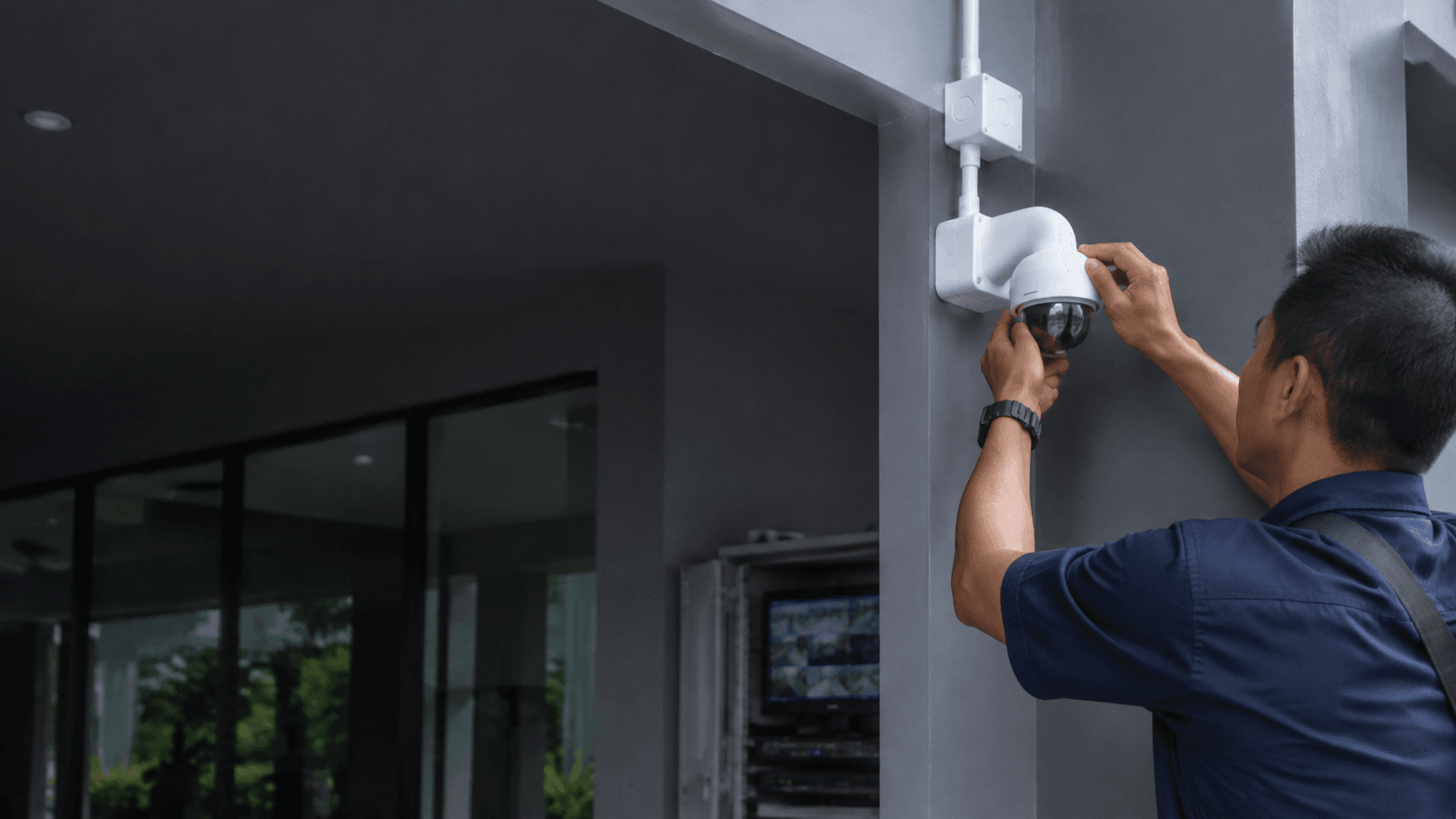
Readers searching for a blink wired camera usually want to know which Blink models run on wired power rather than batteries, what a hardwired installation needs at the mounting point, and how lighting and placement affect the final position. No primary Blink documentation is supplied for this page, so no Blink technical specification, resolution, field of view, power rating, or model list can be stated as fact. The practical route is to plan the wired position with a local installer who can survey the site, confirm the power source, and check the lighting before any commitment.
What a blink wired camera question really asks
A blink wired camera question usually combines three separate decisions: which Blink models are wired rather than battery powered, what a hardwired installation requires at the mounting point, and how wired and battery Blink models differ in daily use. Blink Wired Camera is the main entity here, and the honest position is that the model list and power requirements cannot be confirmed from the evidence supplied to this page.
Competitor pages for this query discuss Blink Outdoor, Blink Mini, the Sync Module, floodlight cameras, wired doorbells, motion detection, and night vision. Those topics describe the wider Blink range, but they are not approved evidence for a Blink technical claim, so this page does not repeat them as fact.
Which Blink models are wired rather than battery powered
No supplied evidence confirms which Blink models are wired rather than battery powered, so this page does not name a model list. A reader who needs that answer should check Blink's own product documentation and support pages before choosing a model.
What can be stated is the planning consequence: a wired model depends on a permanent power source at the mounting point, while a battery model depends on battery access and replacement. That difference shapes where a camera can go and how often someone must reach it.
What a hardwired Blink installation requires at the mounting point
No supplied evidence confirms the electrical requirements, cable type, or mounting hardware for a hardwired Blink camera, so those details are left unstated rather than guessed. The safe planning position is that a hardwired camera needs a confirmed power source, a suitable mounting surface, and a cable route that can be installed tidily.
Eyonic's CCTV installation process includes site survey, system proposal, installation, and handover. [Source: https://www.eyonicsecuritysystem.com.my/cctv-installation-services-sarawak] That sequence applies to wired camera planning in Sarawak: the survey confirms what the site can support before any proposal is made.
Lighting and placement checks before confirming a wired position
Eyonic recommends checking actual lighting conditions before confirming placement for ColorVu-style cameras. [Source: https://www.eyonicsecuritysystem.com.my/product-reviews/hikvision-colorvu-camera-review] The same discipline applies to any wired camera position: confirm what the scene looks like at night before fixing the mount.
Eyonic completed a project for the Kuching Immigration Office, focused on arrival flow, staff areas, visitor movement, and dependable daily operation. [Source: https://www.eyonicsecuritysystem.com.my/our-projects/kuching-immigration-office] That project shows how placement decisions follow the movement and lighting of a real site rather than a generic diagram.
How wired and battery Blink models differ in daily use
No supplied evidence confirms Blink app behaviour, storage options, subscription terms, or battery life, so this page does not compare those details. The reliable difference is structural: a wired camera stays on a fixed power source, while a battery camera depends on a charged battery and a reachable mount.
For a property in Sarawak, that structural difference usually decides the position. A point with permanent power suits a wired camera; a point without power suits a battery model or a different camera brand entirely.
Planning a blink wired camera position with a local installer
Eyonic Sdn Bhd is a security system supplier in Sarawak, Malaysia, specialising in CCTV and ELV systems, with planning, supply, and installation for homes, offices, shops, and industrial sites. [Source: https://www.eyonicsecuritysystem.com.my/] A site survey is the first step for a blink wired camera position, because the survey confirms the power source, the mounting surface, and the lighting before any equipment is chosen.
Where Blink evidence is missing, an installer can still plan the position and confirm whether a wired camera is the right fit for the property. If Blink is not suitable, the same survey supports a Hikvision CCTV package at RM 1,599, which covers camera supply and setup, basic recording configuration, and mobile viewing handover. [Source: https://www.eyonicsecuritysystem.com.my/]
Practical steps before committing to a wired camera
- Confirm the exact Blink model and its power requirement from Blink's own documentation, because no primary Blink documentation is supplied here.
- Book a site survey so the power source, mounting surface, and cable route are checked on site.
- Check the actual lighting at the proposed position at night before fixing the mount.
- Decide between a wired and battery camera based on whether permanent power reaches the position.
- Compare the wired option against a surveyed alternative such as a Hikvision CCTV package at RM 1,599 if Blink does not fit the site.
- Confirm the handover step, including recording configuration and mobile viewing, before installation day.
Share your location, property type and required system with Eyonic on WhatsApp at +60 11-5111 7959 for the next practical step.