
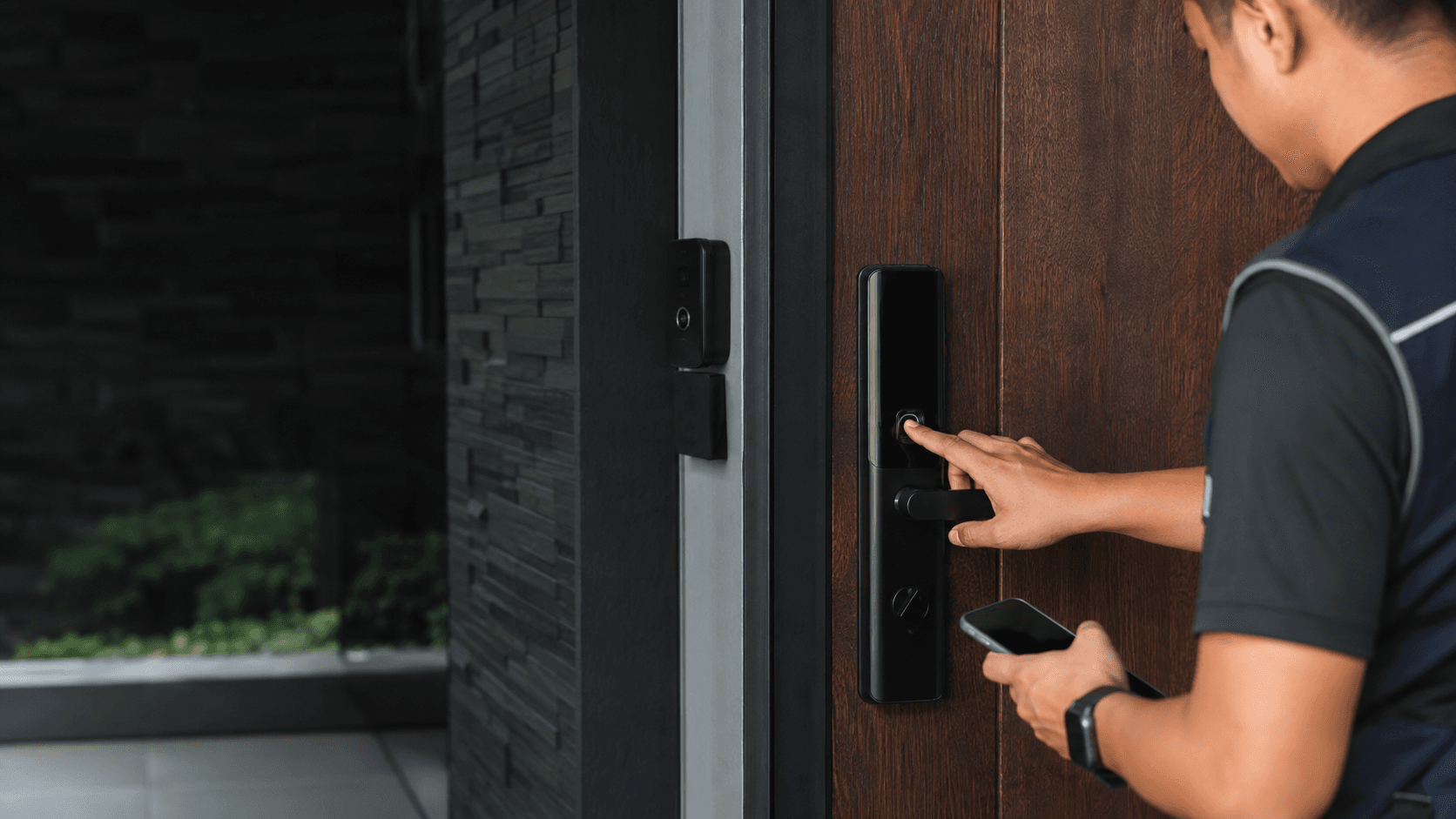
Yale builds both as part of a wider residential and commercial door hardware range, and the two are usually bought together for an entry door. The pairing matters because a knob alone rarely provides the security level of a deadbolt, while a deadbolt alone leaves the door without a convenient everyday handle.
Yale Door Knob And Deadbolt. What Matters Before Choosing
The main decision is not brand preference but door preparation. A knob and a deadbolt each need their own bore hole, and the spacing between them determines whether an existing door can accept a standard combination or needs new drilling.
Yale hardware appears across residential and commercial categories, including levers, knobs, deadbolts, exit devices, cylinders and closers. That breadth means the same brand name covers very different products, so matching the function to the door matters more than matching the logo.
- Confirm the door already has two bore holes, or plan for a locksmith or installer to drill the second one.
- Measure the backset, the distance from the door edge to the centre of the hole, since this must match the latch.
- Decide the knob function. passage for hallways, privacy for bathrooms and bedrooms, or entry for exterior doors.
- Choose the deadbolt type, single cylinder with a key outside and thumb-turn inside, or double cylinder with keys on both sides.
- Check the door thickness and material, because solid wood, hollow core and metal doors take different hardware.
- Match finishes across the knob and deadbolt so the door face looks consistent.
Choosing the Right Yale Door Knob And Deadbolt
Function drives the choice more than appearance. A passage knob turns freely and has no lock, which suits closets and hallways. A privacy knob locks from the inside with an emergency release outside, which suits bathrooms and bedrooms. An entry knob includes a keyed exterior cylinder, and it is normally paired with a deadbolt rather than relied on alone.
Deadbolts divide into single cylinder and double cylinder versions. A single cylinder deadbolt takes a key outside and a thumb-turn inside, which keeps exit simple during an emergency. A double cylinder deadbolt needs a key on both sides, which removes the thumb-turn as a break-in point but also removes a fast exit unless a key is kept nearby.
Knob, Lever or Handleset
A knob is gripped and turned, a lever is pushed down, and a handleset combines a grip with a deadbolt in one unit. Lever handles suit doors where grip strength is limited, while knobs remain common on traditional doors. A handleset replaces separate hardware with a single coordinated piece, which simplifies finish matching but usually costs more than buying a knob and deadbolt separately.
Grade and Duty Rating
Yale hardware is listed across residential and commercial grades, with Grade 1 and Grade 2 products appearing in commercial catalogues alongside residential lines. Higher grades generally mean heavier construction and a longer expected service life under frequent use. A home entry door and a shop front door place very different demands on the same hardware.
What Is Yale Door Knob And Deadbolt Hardware Made Of
Yale door knob and deadbolt products appear in finishes such as satin chrome, oil rubbed bronze, polished brass, satin nickel and dark bronze. The finish is a surface treatment over a base material, and it affects appearance and corrosion resistance rather than lock strength.
Internal components include the cylinder, the keyway, the latch bolt and the strike plate. Keyways differ between product families, so keys are not automatically interchangeable across every Yale lock on a property. Where several doors need one key, keyed-alike ordering is a common option in Yale retail catalogues.
Practical Considerations for Yale Door Knob And Deadbolt
Installation is the point where most problems appear. A deadbolt needs the door edge, the frame and the strike plate to line up within a small tolerance, and a misaligned strike is a frequent cause of a bolt that will not throw.
Door condition matters as much as the hardware. A swollen timber door, a sagging hinge or a frame that has moved can stop even a correctly sized deadbolt from seating. Checking the door before buying avoids returning hardware that was never the problem.
Rental and Strata Properties
Renters and strata-managed units often cannot change the exterior hardware without approval, and drilling a new bore hole may breach a tenancy or building rule. In those cases, replacing an existing knob or deadbolt with a same-size unit avoids new holes and keeps the change reversible.
Smart Locks and Keyless Entry
Yale also produces smart locks and keypad models that sit in the same category as mechanical knobs and deadbolts. Smart locks work best when the door condition, user roles and a backup entry method are reviewed before installation. For business premises, the choice between a standalone smart lock and a wider access-control panel depends on how many doors and users need managing.
Where This Fits a Wider Security Setup
Door hardware is one layer of a property's security. Eyonic Sdn Bhd, a security system supplier in Sarawak, plans, supplies and installs CCTV, alarm, autogate and intercom systems for homes, offices, shops and industrial sites, and its product reviews cover smart lock door access alongside cameras. A completed project for the Kuching Immigration Office focused on arrival flow, staff areas, visitor movement and dependable daily operation, which shows how entry points and movement are treated together on a larger site.
Making an Informed Choice About
The practical sequence is to identify the door, confirm the existing preparation, choose the function, then match the finish. Buyers who start with the finish usually end up compromising on fit.
Three numbers decide most purchases: the backset, the bore hole diameter and the door thickness. A standard residential preparation uses a 2-3/8 inch or 2-3/4 inch backset, and hardware sold for one will not fit the other without an adapter or a new hole.
Where a property has several exterior doors, standardising on one keyway and one finish reduces the number of keys carried and keeps replacements simple. Where security is the priority over convenience, a single cylinder deadbolt with a reinforced strike plate addresses the most common forced-entry method, which is kicking the door at the frame rather than picking the cylinder.
For readers in Malaysia, availability and installation support matter as much as the product specification. Local suppliers can confirm whether a chosen knob and deadbolt combination suits the door in place, and installation is often bundled with wider security work such as alarms, cameras or intercoms. Eyonic's installation process begins with a site survey and a system proposal before any work starts, which is the same order of operations that suits door hardware: inspect the door, confirm the fit, then install.
Share your location, property type and required system with Eyonic on WhatsApp at +60 11-5111 7959 for the next practical step.