
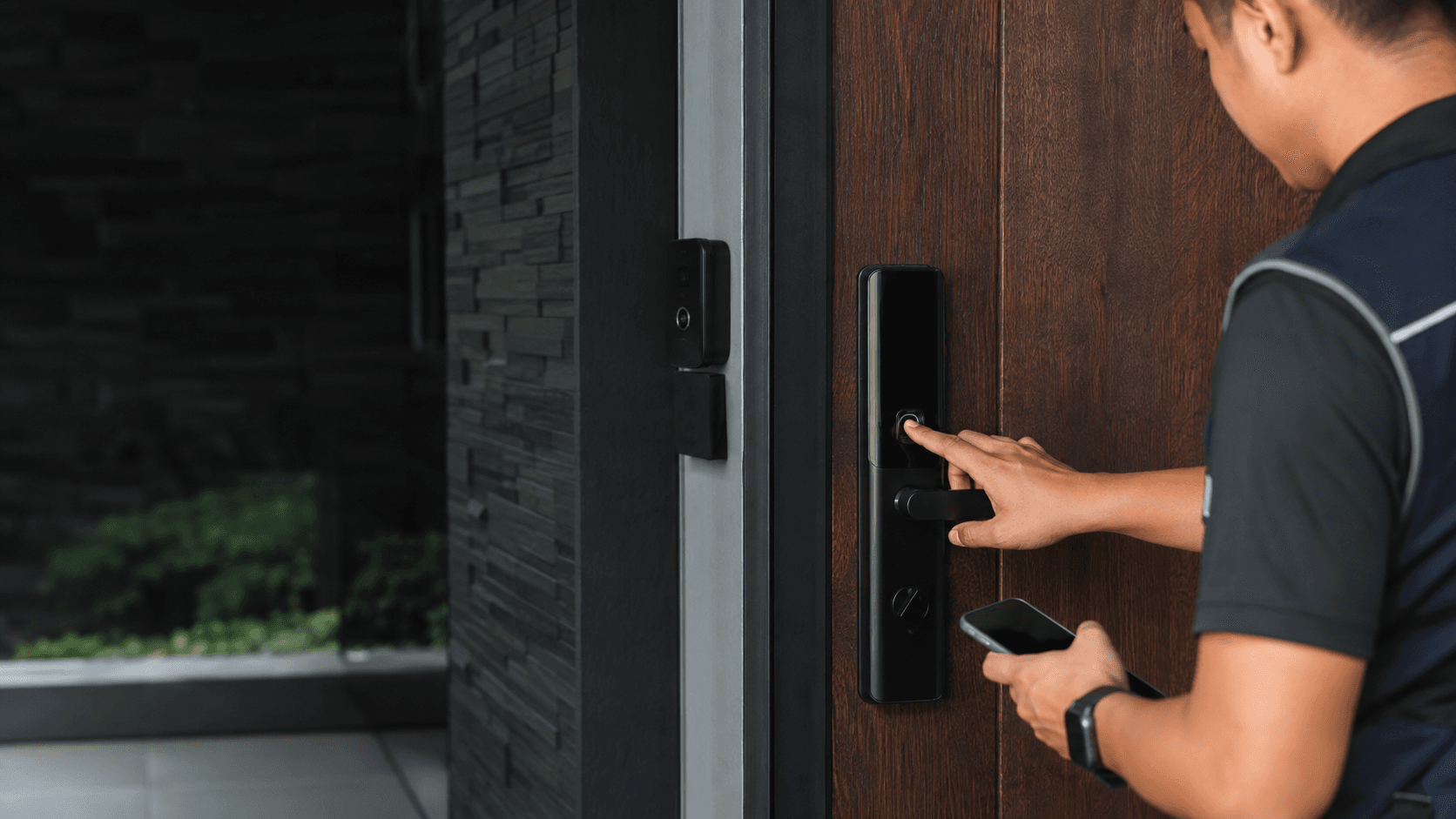
The exact-match query yale door keypad covers two different products that share a name. One is a keypad built into a lock body, where the code pad and the locking mechanism are a single unit. The other is a separate keypad that pairs with an existing Yale smart lock and adds code entry to a door that already has one. Both deliver keypad entry. They differ in what has to be bought, mounted, and maintained.
Yale's own product pages describe the add-on version as an accessory to a Yale smart lock, and note that it works only with smart locks controllable through the Yale Access app. That single line decides whether a separate keypad is even an option for a given door. A lock outside that app ecosystem cannot be extended this way.
Yale Door Keypad. Keyless Entry for Malaysian Doors
Malaysian homes and shop offices commonly run a mix of solid timber doors, metal grille doors, and glass entrances. A keypad lock suits a door that closes cleanly, latches without being pushed or lifted, and has enough clear space around the handle for a hand to reach the pad. A door that needs a shoulder to shut will keep needing that shoulder after the lock is swapped.
Keyless entry changes who carries what. Instead of issuing keys that get copied without record, a code can be given to a family member, a tenant, a cleaner, or a delivery contact and withdrawn later. That is the practical case for a Yale door keypad in a rental unit, a small office, or a home where several people come and go on different schedules.
Two limits are worth stating plainly. A keypad does not make a weak door strong; the frame, strike plate, and hinge carry most of the resistance to forced entry. And a keypad is not a substitute for a camera or an alarm where the goal is to know what happened rather than to control who enters. Eyonic supplies and installs both, and treats them as separate decisions.
What a Yale Door Keypad Does at the Door
A code is entered on the pad, the lock verifies it, and the bolt or latch retracts. On models with app support, the same event can appear in an activity feed so the time and method of entry are recorded. Some keypads also support one-touch locking, where a single press secures the door on the way out.
Codes are the working part of the system. Yale's published material for its smart keypad describes creating unique codes for family and guests, and states that up to 256 users can be created on that accessory. That figure belongs to that specific Yale product, not to every Yale keypad, and it should be confirmed against the exact model before it is used in planning.
What a keypad does not do is decide who should have a code. That is an operational question, and it is usually where installations go wrong — not at the wiring, but at the point where a code was shared and never removed.
Yale Door Keypad Options and Compatibility
Yale's range separates into three shapes. A standalone keypad deadbolt or keypad lever carries the pad and the lock in one unit and needs no separate accessory. An add-on keypad pairs with a compatible Yale smart lock and adds code entry to it. A keypad lock with a physical keyway keeps a mechanical key as a second route in.
Compatibility is the constraint that decides the shortlist. Yale states that its smart keypad works only with smart locks controllable through the Yale Access app, and that remote functionality requires a Yale Connect Wi-Fi bridge. A lock that is not in that ecosystem cannot take that accessory, regardless of how similar it looks.
Because no verified compatibility list is available here for every Yale keypad and lock combination, the model number on the existing lock is the starting point. Matching that number against Yale's own documentation for the intended keypad is the only reliable check. Assumptions based on brand alone are not safe.
Door Condition and User Roles Before Installation
Two questions settle most of the design. First, will the existing door and frame accept the hardware without modification, or does the door need preparation work? Second, who needs entry, on what schedule, and how is that access removed when it is no longer needed?
For business premises, the choice between a standalone smart lock and a wider access-control panel matters more than the keypad itself. A single keypad on one door is a convenience. Multiple doors, staff turnover, and a need for records point toward a panel-based approach instead. Eyonic reviews door condition, user roles, and backup method before recommending either, and applies the same sequence used on its other installations: site survey, system proposal, installation, and handover.
Door condition checks that matter in practice include whether the door is timber, metal, or glass; whether the existing cutouts match the new hardware; whether the door is exposed to direct rain; and whether the frame is solid enough to hold a strike plate under load. None of these can be judged from a photograph of the lock alone.
Backup Entry and Daily Reliability
Every keypad lock needs a second way in. Options include a mechanical key, a smartphone app, or a physical key override. The choice should be made before installation, not after the first lockout.
Battery is the other daily factor. A keypad that runs on batteries will eventually run flat, and the failure usually happens at an inconvenient time. Yale's published material for its smart keypad describes it as battery-powered with no wiring needed, and notes that a door can still be unlocked if a phone battery is flat or a phone or keys are lost. Those statements apply to that product; battery life figures for other models are not verified here and should come from the model's own documentation.
Reliability also depends on the environment. A pad exposed to direct rain and sun ages differently from one under a porch. Where the door is fully exposed, the mounting position and any cover matter as much as the lock specification.
Yale Door Keypad Installation and Handover
Installation is short when the door is already prepared and the hardware matches. It becomes a longer job when the door needs new cutouts, when the frame needs reinforcement, or when the lock must be integrated with an existing system.
Handover is where the value is confirmed. Codes should be created and tested, the backup method should be demonstrated, and the person responsible for adding and removing access should know how to do it. On a multi-user site, that responsibility should be named rather than left to whoever holds the phone.
Eyonic's project work has covered public and commercial premises in Sarawak, including the Kuching Immigration Office, where the focus was arrival flow, staff areas, visitor movement, and dependable daily operation. That is the same set of concerns a keypad decision raises: who arrives, by which door, and how the arrangement holds up on an ordinary working day.
Practical Checks Before Choosing a
These four checks cover the decisions that are expensive to reverse after the hardware is mounted.
- Confirm the door condition. identify the door material, check that it latches without lifting or force, confirm the existing cutouts match the intended hardware, and note whether the door is exposed to direct rain.
- Define user roles. list who needs entry, whether access is permanent or temporary, and who will add or remove codes after handover.
- Settle the backup entry method. decide between a mechanical key, a smartphone app, or a key override, and confirm it works before the primary method is relied on.
- Test at handover. create a code, enter it, confirm the lock responds, verify the backup route, and walk the responsible person through adding and removing a user.
Where a site has several doors, staff movement, and a need for records, a standalone keypad lock is usually the wrong shape for the problem. A panel-based access-control arrangement handles multiple doors and changing user lists more cleanly. Eyonic checks that distinction before quoting, because the two paths lead to different hardware and different budgets.
For a single residential door with a few regular users, a keypad lock is a straightforward fit provided the door closes properly and a backup route exists. For a shop office with shift changes, the same hardware works but the code management process matters more than the lock.
Pricing for a Yale door keypad in Malaysia is not verified here, and local availability and warranty terms should be confirmed with the supplier before committing. Eyonic's published package pricing covers CCTV, alarm, and autogate systems at RM 1,599 each, which are separate scopes from door access hardware.
Share the location, property type, and required system with Eyonic on WhatsApp at +60 11-5111 7959 to move the decision forward.