
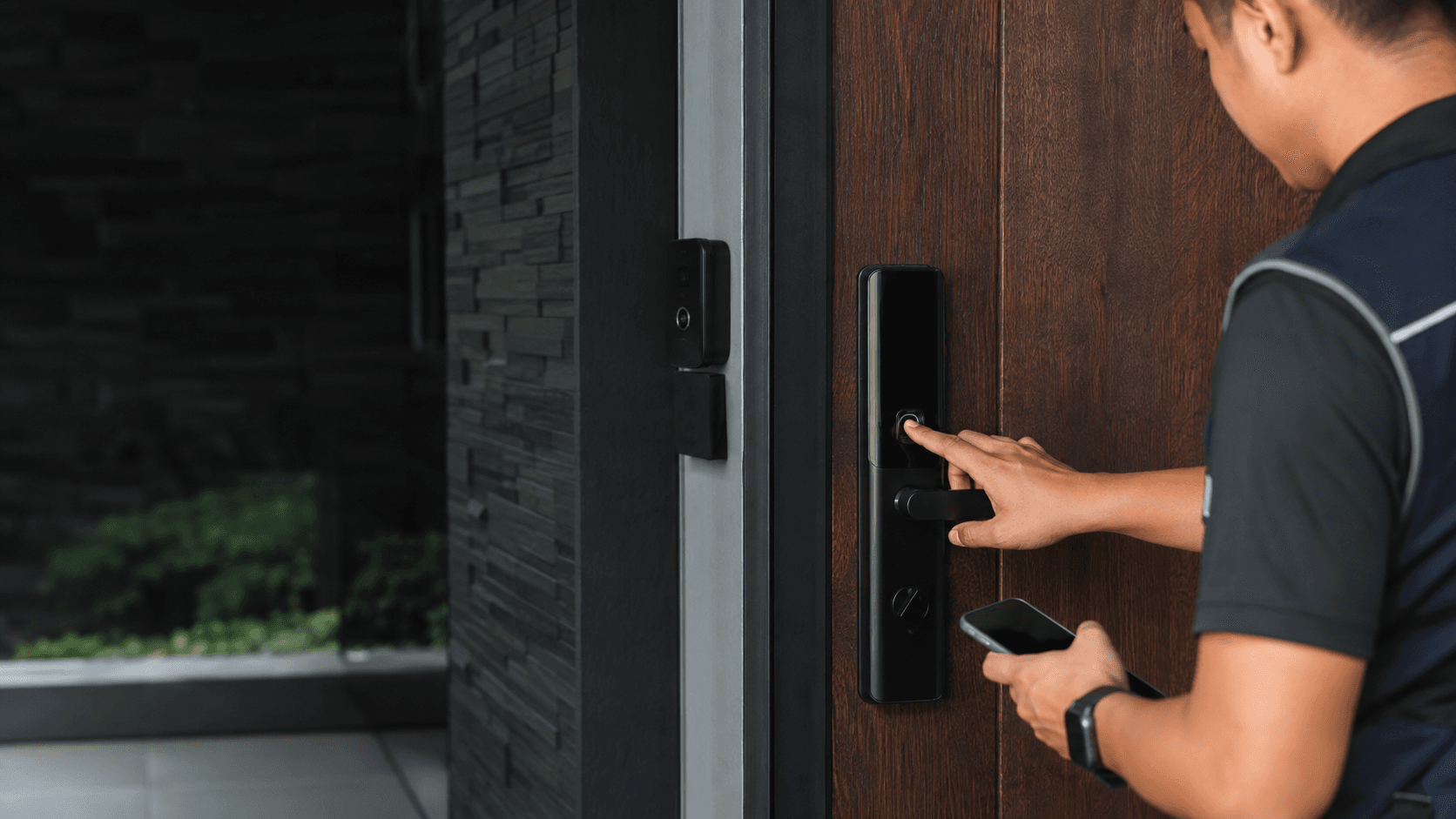
The phrase covers two different purchases. One is a biometric safe or cabinet locker that stores documents, jewellery, or small valuables inside the home. The other is a fingerprint lock fitted to a door, gate, or cabinet so entry no longer depends on a key or a remembered code. Both use a fingerprint sensor as the primary credential, and both raise the same practical questions about door or cabinet condition, user permissions, and backup entry.
Fingerprint Locker For Home. What Matters Before Choosing
Most buyer disappointment traces back to a mismatch between the unit and the opening it must secure. A sensor that reads reliably in a showroom can behave differently on a metal cabinet in a humid utility room, and a safe sized for documents will not hold a laptop plus files.
Four checks decide most purchases:
- Confirm what is being secured — documents and valuables inside a safe body, or an existing door or cabinet that needs a new locking mechanism.
- Measure the opening or storage volume, since safe capacity is quoted in litres and door locks depend on door thickness and existing cut-outs.
- Decide how many people need access and whether each person needs a separate fingerprint slot or a shared code.
- Agree on the backup method before installation, because a fingerprint-only device with no key, code, or external power option becomes a problem when the sensor or battery fails.
Eyonic's own product review guidance makes the same point for smart locks: they work best when the door condition, user roles, and backup method are reviewed before installation. For business use, Eyonic usually checks whether a standalone smart lock or an access-control panel is more appropriate. The same logic applies at home, where a single door and a household of four people is a much simpler case than a gate plus three external doors.
Choosing the Right Fingerprint Locker For Home
Capacity is the clearest dividing line for safes. Ozokart's biometric safe range includes the Ozone Safilo Bio- Z at 16 litres, the Ozone Safilo Bio- 1 at 40 litres, the Ozone Safilo Bio- X at 40.8 litres, the Ozone Safilo Bio- 2 at 55 litres, and the Ozone Fort AB Bio 66 at 78 litres. The 16-litre unit suits passports, certificates, and small jewellery boxes. The 40 to 41 litre units cover A4 documents and a modest valuables tray. The 55 and 78 litre units suit households storing larger items or a mix of documents and equipment.
Anti-burglary construction is a separate consideration from capacity. The Ozone Fort AB Bio 66 is described as an anti-burglary fingerprint safe, which places it in a different category from a light document box. A heavier body, stronger door, and anchoring provision matter more than sensor speed when the threat model includes forced entry rather than casual access.
For door-mounted locks, the deciding factors are different. Door thickness, existing deadbolt cut-outs, whether the door is exposed to rain, and whether the household wants app control or a purely offline device all shape the choice. A fingerprint deadbolt with Wi-Fi and app control adds remote management and lock history, but it also adds a network dependency and a battery to monitor. A standalone fingerprint lock with a keypad backup keeps the system simpler and removes the app from the failure chain.
What is fingerprint locker for home?
In practice the term describes any home security device that grants access through a fingerprint scan rather than a key or combination. That includes biometric safes, fingerprint cabinet and locker locks, fingerprint deadbolts, and fingerprint padlocks used on storage boxes or outdoor cabinets. The common thread is the credential, not the form factor.
Biometric Safes – Ozokart
Ozokart's biometric safe collection is the clearest example of the storage side of this query. The range is organised by capacity in litres, with fingerprint access as the shared feature across the Ozone Safilo Bio and Ozone Fort AB Bio lines. Buyers comparing these units are effectively choosing a storage volume and a security level, then confirming that the fingerprint sensor and backup entry suit the household.
Practical Considerations for Fingerprint Locker For Home
Fingerprint sensors degrade in predictable ways. Moisture, dust, and oily residue on the sensor window cause more failed reads than the underlying technology. A household in a humid climate should expect to clean the sensor periodically and should register more than one finger per person so a minor cut or abrasion does not lock anyone out.
Battery life is the second recurring issue. A lock that reports low battery in advance gives the household time to replace cells before failure. A lock that simply stops responding turns a convenience feature into an access problem, which is why the backup method deserves as much attention as the sensor.
User management matters more as the household grows. A device with a small number of fingerprint slots suits a couple or a small family. A device with separate user roles and a temporary code option suits a home that regularly hosts cleaners, contractors, or short-stay guests. Eyonic's smart lock guidance frames this as a permissions question: the right device depends on who needs access and how often that list changes.
Installation conditions decide whether a door lock performs as advertised. Frame alignment, door material, and exposure to direct rain all affect reliability. For a safe, the equivalent conditions are floor or wall anchoring, humidity in the storage room, and whether the unit sits somewhere a thief can simply carry away.
Fingerprint Locks for Keyless Home Security
Keyless entry removes the two most common household key problems: lost keys and copied keys. It also introduces a new dependency on power and on the sensor itself. The trade is reasonable for a main entrance where the household wants convenience, and less reasonable for a rarely used back door where a mechanical lock would sit untouched for years without a battery to maintain.
Fingerprint Smart Locks. Secure and Convenient Home Access
Smart locks add app control, remote management, and access history on top of fingerprint entry. Those features suit landlords, households with frequent visitors, and anyone who wants a record of when a door was opened. They also add setup steps, a network requirement, and another device to keep updated. A household that wants none of that is better served by a standalone fingerprint lock with a keypad and key backup.
Making an Informed Choice About
The decision usually resolves into one of three situations. A household that needs to protect documents and valuables buys a biometric safe sized to the contents and anchored in place. A household that wants to stop carrying keys buys a fingerprint deadbolt matched to the door. A household that needs both treats them as separate purchases with separate budgets, because a safe does not secure a doorway and a door lock does not protect a passport.
For readers in Sarawak, Eyonic Sdn Bhd plans, supplies, and installs security systems for homes, offices, shops, and industrial sites, and its product range includes Hikvision cameras and smart locks. The company's documented process runs through site survey, system proposal, installation, and handover, which is the same sequence that applies when a fingerprint lock or safe has to fit an existing property rather than a showroom display.
Eyonic's project record shows the range of conditions involved. The Kuching Immigration Office project focused on arrival flow, staff areas, visitor movement, and dependable daily operation, with an approximate budget of RM 12,000 to RM 28,000 for that type of work. The KTA Sarawak Sdn Bhd project covered a practical office setup in Kuching supporting staff movement, visitor handling, tidy cabling, and clearer daily site control, with an approximate budget of RM 8,000 to RM 18,000. Both illustrate that access decisions are usually part of a wider layout question rather than a single device purchase.
Eyonic's published packages are priced at RM 1,599 each for the Hikvision CCTV package, the Hikvision alarm system, and the autogate package. Those cover camera supply and setup with basic recording configuration and mobile viewing handover, control panel and sensors with siren and zone setup plus user testing and handover, and motor recommendation with remote-control setup plus safety testing and handover. A fingerprint lock or safe is a separate item from these packages, so a household planning both should treat them as distinct line items.
Share your location, property type and required system with Eyonic on WhatsApp at +60 11-5111 7959 for the next practical step.