
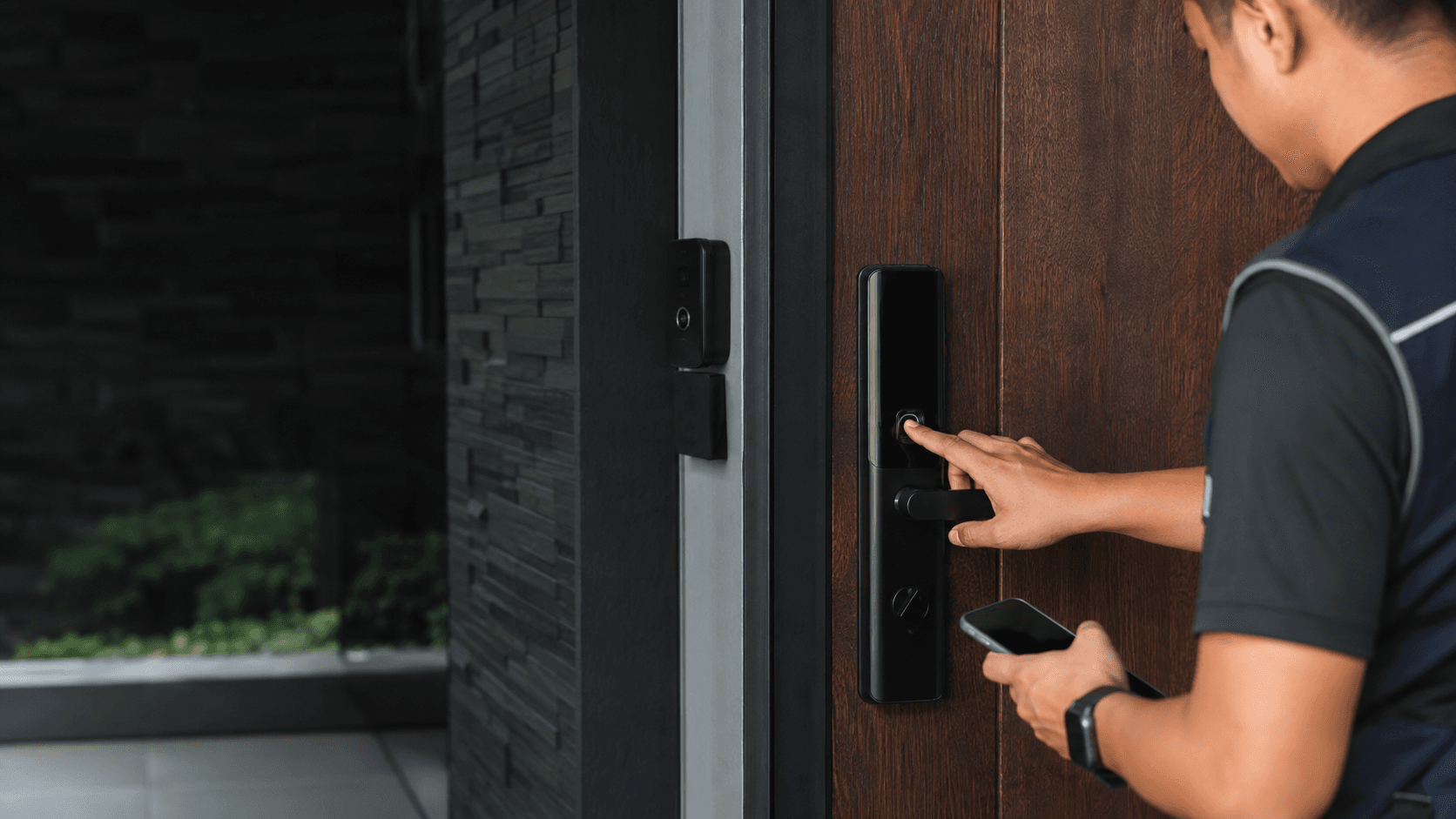
The symptom pattern matters more than the brand name. A deadbolt that grinds, a thumb-turn that barely moves, or a keypad that beeps and refuses to lock all point to different causes. Separating door-side problems from lock-side problems prevents unnecessary part replacement.
Kwikset Smart Lock Sticking. What the Symptoms Point To
Three symptom groups cover most cases. Each one narrows the likely cause before any tool comes out.
- A deadbolt that extends freely with the door open but binds when the door is closed points to strike plate alignment or a shallow frame hole.
- A deadbolt that binds even with the door open points to the latch, the mounting plate, or the interior assembly.
- A lock that beeps, flashes alternating symbols, or fails to complete its handing routine points to battery level or a handing process that never finished.
Door handing describes which side the hinges sit on and which way the door swings. A smart lock needs to know this so it turns the bolt the correct direction. When handing is wrong or was never set, the motor drives against resistance and the bolt appears to stick.
Door-Open Test and Manual Handing Reset
The door-open test is the fastest way to split door-side causes from lock-side causes. Run it before adjusting anything.
- Open the door and operate the lock. If the bolt extends and retracts smoothly, the lock itself is fine and the frame is the problem.
- Close the door and operate the lock again. Binding here confirms a strike or latch alignment issue rather than a failed motor.
- Remove the interior assembly and confirm the torque blade sits in the correct slot for the door's swing direction.
- Reinstall the interior assembly and run the handing process so the lock learns the bolt direction.
- Test the bolt with the door open, then closed, and note where resistance begins.
If handing does not run automatically when batteries are installed, it can be triggered manually. A handing routine that reports a failure usually means the bolt could not move freely during the test, so the mechanical checks come first.
Why handing fails on a door that worked before
Handing rarely changes on its own. What changes is the door. Seasonal swelling, a loosened hinge screw, or a sagging frame shifts the door just enough that the bolt now meets the strike at an angle. The lock reads that resistance as a failed handing cycle.
Strike Plate and Latch Hole Alignment Checks
Alignment problems account for a large share of sticking complaints because the lock is doing its job against a frame that moved.
Check the strike plate first. The plate should sit square to the latch bolt, with the bolt entering the frame hole without touching the plate edges. A plate that sits slightly high, low, or angled will scrape the bolt on every cycle. Loosening the strike screws and repositioning the plate often clears the bind without any filing.
Check the frame hole depth next. The hole behind the strike must be deep enough that the fully extended bolt does not bottom out. A bolt that reaches the back of a shallow hole stops short and the lock reports a jam. Deepening the hole is a frame repair, not a lock repair.
Check the lower latch and lower strike as well. On a door with both a knob or lever latch and a deadbolt, a misaligned lower latch loads the door and pushes the deadbolt out of line. Fixing the deadbolt alone will not hold if the lower latch still binds.
Door frame hole depth and the drive-in latch
Some installations use a drive-in latch instead of a faceplate latch. A drive-in latch presses into a round bore rather than screwing to a flat face, so the bore must be clean and correctly sized. If a drive-in latch was fitted into a bore that is slightly off, the bolt can sit at an angle and scrape on every extension.
Latch, Battery, and Cylinder Checks
Once alignment is ruled out, the remaining causes sit inside the lock or its power supply.
A low battery is a common cause of intermittent sticking. As voltage drops, the motor loses torque and the bolt may stop partway. Replacing batteries with a fresh set is a fast test, and it separates a power problem from a mechanical one.
The mounting plate can also create resistance. If the plate sits under tension, it presses on the torque blade and the bolt drags. Loosening the mounting plate screws and repositioning the plate relieves that load.
The cylinder is the last mechanical check. A SmartKey cylinder that feels gritty or stiff when turned by hand points to debris or wear inside the cylinder rather than the bolt. Cleaning and light lubrication of the cylinder is a different job from aligning the strike, and mixing the two wastes time.
When the clutch or the latch is the real fault
A disengaged clutch means the motor runs but does not drive the bolt. The lock may sound normal and still fail to extend. A wrong or worn latch produces a similar result, because the bolt geometry no longer matches the strike. Both are lock-side faults, and neither improves with strike adjustment.
When to Stop and Call Support
Some faults are not field-fixable. Stop and contact the manufacturer's support when the bolt binds with the door open after handing has been reset, when the lock reports a handing failure on a door that closes cleanly, or when the clutch is disengaged.
Also stop when the frame hole needs to be drilled deeper or the strike needs to be relocated. Those are door repairs, and a lock replacement will not correct them. Replacing a lock to solve a frame problem produces the same sticking on the new unit.
For properties in Sarawak, a security system supplier can review the door condition, user roles, and backup entry method before recommending hardware. Eyonic Sdn Bhd plans, supplies, and installs security systems for homes, offices, shops, and industrial sites, and its smart lock guidance notes that door condition and backup entry should be reviewed before installation. The company completed a project for the Kuching Immigration Office covering arrival flow, staff areas, visitor movement, and dependable daily operation.
Prevention and Maintenance Habits
Most repeat sticking is preventable with a short routine.
Check the strike plate screws every few months. Loose screws let the plate drift, and a plate that has moved a millimetre will scrape the bolt. Tighten them before the scraping starts.
Watch the door through wet and dry seasons. Doors that swell in humid weather will bind in one part of the year and clear in another. If sticking follows the weather, the frame is moving and the strike position may need seasonal adjustment.
Replace batteries on a schedule rather than waiting for a low-battery warning. Intermittent sticking that appears without any frame change is often the first sign of dropping voltage.
Keep the cylinder clean and avoid heavy lubrication that attracts grit. A dry, clean cylinder turns more freely than one packed with residue.
Test the lock with the door open once a month. A bolt that moves freely with the door open but drags when closed gives early warning of an alignment shift, well before the lock fails to lock at all.
Share the property location, door type, and the symptoms observed with Eyonic on WhatsApp at +60 11-5111 7959 for the next practical step.