
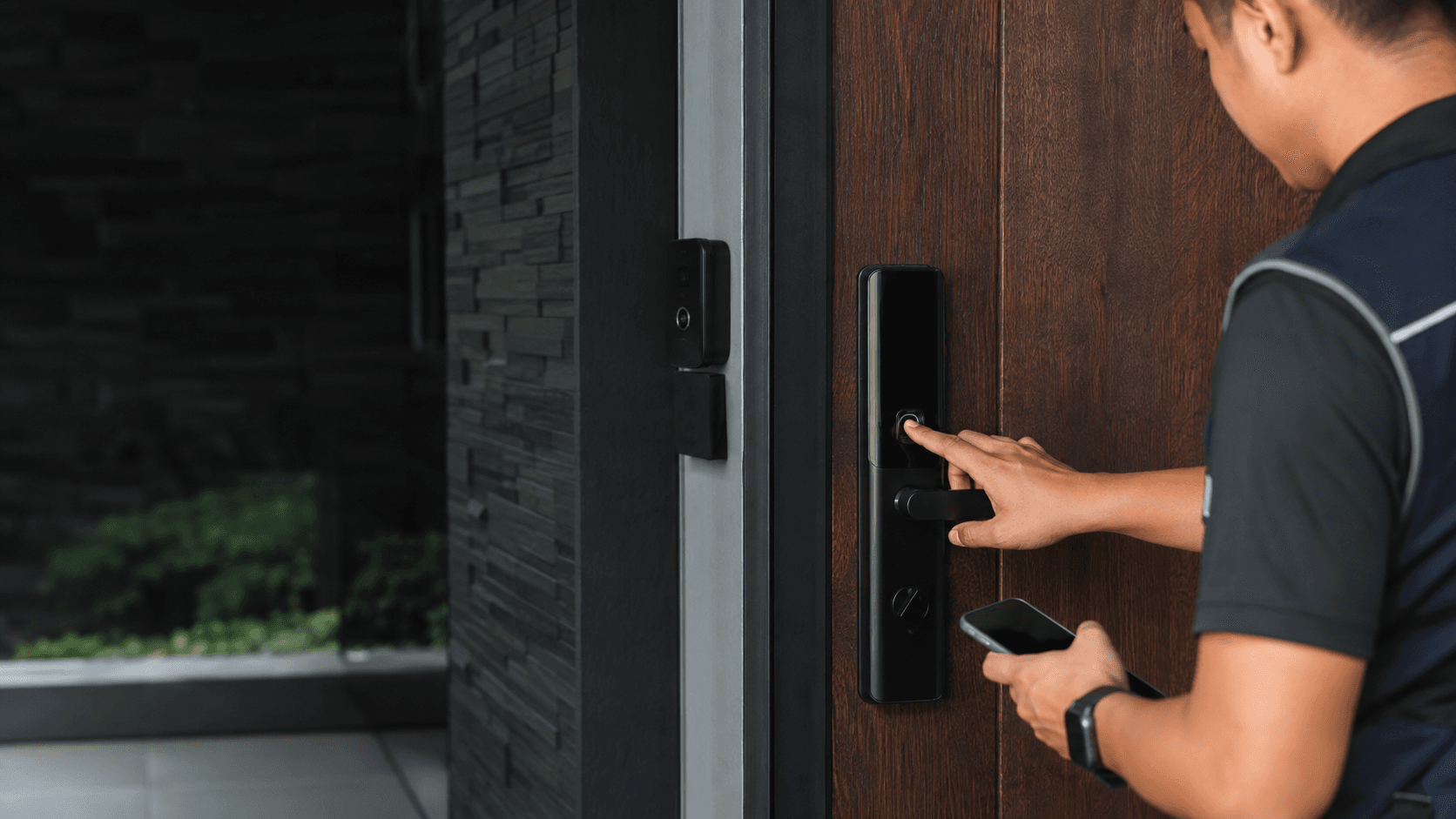
The phrase mixes a mechanical door knob with smart lock electronics, so the first job is deciding which one the door actually needs. Kwikset's own product pages separate knobs, deadbolts, handlesets, levers and electronic security sets into distinct categories, and the SmartKey re-key system appears across the mechanical side of that range. Retail listings for Kwikset SmartKey knobs sit under door hardware rather than under smart locks, which is the clearest sign that the two families are sold and supported separately.
Kwikset Smart Lock Door Knob. What Matters Before Choosing
A mechanical Kwikset SmartKey knob and an electronic Kwikset smart lock solve different problems. The mechanical knob is a keyed or non-keyed turning piece that can be re-keyed without a locksmith. The electronic lock adds keypad or app entry, batteries, and a motor or clutch that retracts the latch. Buying the wrong one is the most common mistake behind this query.
Three practical checks decide the answer before any model is compared.
- Confirm whether the door needs a knob, a lever, or a deadbolt, because the opening in the door edge and the bore holes differ between them.
- Confirm whether keyless entry is required, because that moves the purchase from mechanical hardware into a battery-powered electronic lock.
- Confirm the door thickness and backset, since these determine whether a replacement fits the existing preparation.
- Confirm who needs access and how backup entry works if batteries run flat or a code is forgotten.
- Confirm the finish and function, because passage, privacy and entry knobs look similar but behave differently.
Kwikset's support material describes the SmartKey re-key procedure in mechanical terms: insert the current key, rotate it a set number of degrees, insert the SmartKey tool, remove the current key, insert the new key, and rotate back. That procedure belongs to the mechanical lock family. An electronic lock with a keypad is configured through its own programming steps instead, so a re-key guide does not transfer across.
Choosing the Right Kwikset Smart Lock Door Knob
Fit comes before features. A knob and a lever are not interchangeable on a prepared door without checking the bore and latch, and a deadbolt occupies a separate bore above the knob. Kwikset lists knobs, levers, handlesets and deadbolts as separate product categories for that reason.
Where the door is a main entrance, the security load normally sits with the deadbolt rather than the knob. Where the door is internal, a passage or privacy knob is usually enough and electronics add cost without adding much. Where the door is a rental or a short-term let, keyless entry changes how access is handed over, which is the scenario most electronic Kwikset locks are marketed around.
Eyonic, a security system supplier in Sarawak, reviews smart lock door access on the same principle: door condition, user roles and backup method are checked before installation, and for business premises the choice between a standalone smart lock and a wider access-control panel is made deliberately rather than by default. That review step applies whether the hardware is Kwikset or another brand.
What is kwikset smart lock door knob?
It is a search phrase rather than a single catalogue item. Kwikset makes mechanical knobs with SmartKey re-keying, and it makes electronic locks that add keyless entry. A product that is both a knob and a smart lock in one unit is not the standard configuration in the Kwikset range, where electronic entry is normally built around deadbolts and handlesets.
That distinction matters for support. Re-keying instructions, keyway questions and mechanical warranty queries belong to the knob. Battery life, code management, app pairing and motor behaviour belong to the electronic lock. Mixing the two leads to the wrong manual and the wrong troubleshooting path.
Door Locks, Door Hardware, Smart Locks & Smartkey Technology
Kwikset organises its range into door locks, door hardware, smart locks and SmartKey technology, and the four overlap without being the same thing. Door hardware covers the visible fittings: knobs, levers, handlesets and deadbolts. Door locks covers the locking mechanism inside them. Smart locks covers the electronic entry products. SmartKey technology is the re-key system that appears on mechanical products.
SmartKey re-keying lets a homeowner change which key operates a lock without replacing the lock cylinder. The trade-off is that re-keying is a mechanical procedure with a specific sequence, and doing it with the door locked or the key in the wrong position is the usual cause of a failed attempt. Kwikset publishes a re-keying manual and instructional video for that reason.
Electronic Kwikset locks sit in a different support world. They depend on batteries, they may pair with a phone or a smart home platform, and they fail in ways a mechanical knob cannot. A dead battery on a mechanical knob is not a concept; a dead battery on an electronic lock is the single most predictable failure mode.
Practical Considerations for Kwikset Smart Lock Door Knob
Several constraints decide whether either product is the right purchase.
Door preparation. Existing bore holes, backset and door thickness determine what drops in without drilling. A door already prepared for a knob will not accept a deadbolt without a new bore.
Backup entry. Every electronic lock needs a plan for a flat battery or a lost phone. A mechanical key override, a second code holder, or a physical key kept elsewhere are the usual answers, and the plan should exist before installation rather than after.
User roles. A household with two or three regular users has simple needs. A rental, an office or a shop with changing users needs a way to add and remove access, which is where a standalone smart lock and a wider access-control system start to diverge.
Environment. Exterior doors in humid or coastal conditions put more stress on electronics and finishes than internal doors do. Sarawak's climate is a reasonable example of the humid end of that range, and it favours hardware that is specified for exterior use.
Maintenance. Mechanical locks need occasional lubrication and a working key. Electronic locks need battery replacement on a schedule and firmware or app attention if they are connected.
For readers in Malaysia, availability and support matter as much as the model number. Kwikset hardware is widely listed through international retailers and brand pages, while local supply, installation and after-sales support vary by supplier. A lock that cannot be serviced locally is a different proposition from one that can.
Making an Informed Choice About Kwikset Smart Lock Door Knob
The decision narrows quickly once the door and the user list are known. If the requirement is a re-keyable mechanical knob, the purchase is door hardware and the SmartKey procedure is the main thing to understand. If the requirement is keyless entry, the purchase is an electronic lock, and battery management, backup entry and user roles become the main things to understand.
Where the door is part of a wider security setup, the lock is one component among several. Eyonic's project work in Sarawak has covered public offices and engineering consultancy sites where staff movement, visitor handling and daily operation were the design drivers, and door access was reviewed alongside cameras, alarms and intercoms rather than in isolation. The Kuching Immigration Office project is one published example of that approach.
For a single home door, the practical sequence is to identify the door, confirm the preparation, decide whether keyless entry is genuinely needed, and only then compare finishes and functions. For a business premises, the sequence adds a step: decide whether a standalone smart lock is sufficient or whether access control across multiple doors is the real requirement.
Readers who want the hardware reviewed against their actual door and usage can share the location, property type and required system with Eyonic on WhatsApp at +60 11-5111 7959.