
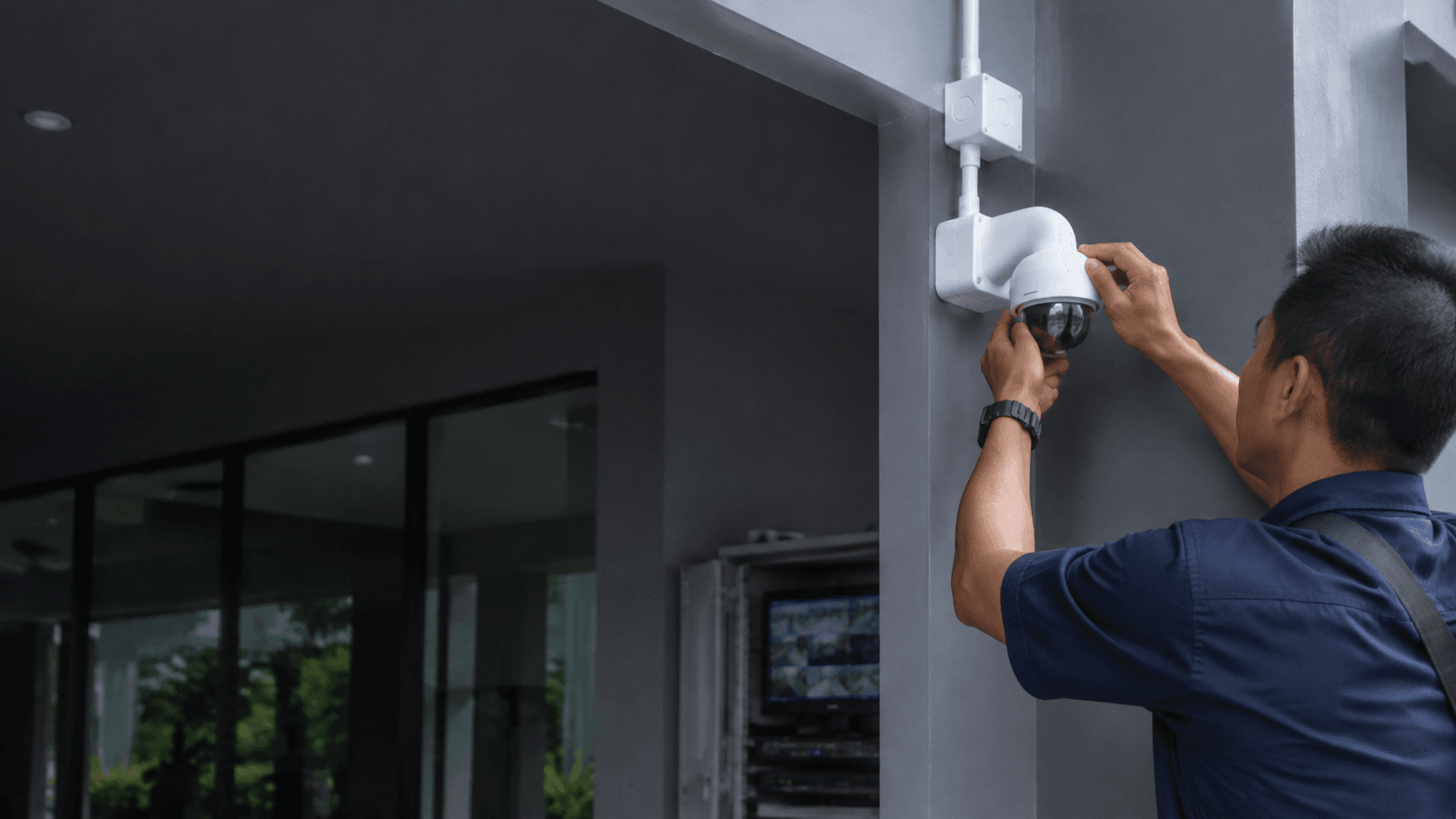
The exact-match query "brinks security cameras" covers a specific product family rather than a generic camera category. Brinks Home builds its camera line around Alarm.com hardware, and the cameras are designed to work inside a Brinks Home security plan rather than as standalone devices. That distinction shapes almost every practical decision: what the cameras cost, how they record, where footage is stored, and whether a buyer can use them without a monitoring subscription.
Competitor pages for this query cluster around three angles. Retail listings such as Walmart and Amazon show Brinks-branded hardware alongside unrelated brands, which makes it hard to tell which products are genuinely part of the Brinks camera line. Review sites such as SafeWise and Security.org focus on the camera models themselves and how they compare with Ring, Arlo, Wyze and similar brands. Pricing pages focus on the wider Brinks Home system cost. A useful article has to separate those three threads instead of blending them.
Brinks Security Cameras. What Matters Before Choosing
Brinks Home does not sell cameras as a standalone retail product in the way Ring or Wyze does. The camera line sits inside a monitored security system, and the equipment is tied to the Alarm.com platform that Brinks Home uses for its app, automation and video features. That single fact drives most of the trade-offs.
Three practical consequences follow. First, camera functionality depends on the monitoring plan, so a buyer comparing camera specifications alone will miss the subscription requirement. Second, installation and setup are handled through the Brinks Home account rather than a generic camera app. Third, expanding the system later means adding compatible Brinks or Alarm.com devices rather than mixing in arbitrary third-party cameras.
For a Malaysian property owner, the more relevant question is usually whether a monitored, subscription-based camera system fits the site at all. A Sarawak home, shop or office with unreliable broadband may struggle with cloud-dependent cameras, while a site with stable internet and a genuine need for remote monitoring may find the model workable. Eyonic, a security system supplier in Sarawak, plans, supplies and installs CCTV and ELV systems for homes, offices, shops and industrial sites, and its installation process runs through site survey, system proposal, installation and handover. That sequence exists because camera placement and lighting conditions have to be checked on site before a design is confirmed.
Choosing the Right Brinks Security Cameras
Choosing between Brinks camera models comes down to where the camera will be mounted and what it needs to capture. The line generally splits into indoor cameras, an outdoor camera and a video doorbell, and each has a different job.
- Decide which areas need coverage — entry points, driveways, back doors, interior rooms or a reception area.
- Match the camera type to the location: doorbell camera at the main entrance, outdoor camera for perimeter views, indoor camera for interior spaces.
- Confirm the monitoring plan supports the video features required, since recording and playback depend on the subscription tier.
- Check the property's internet connection and power availability at each mounting point before committing to placement.
- Plan for expansion, so additional cameras or sensors can be added later without replacing the existing setup.
The order matters because plan selection constrains what the cameras can actually do. A buyer who picks hardware first and discovers the recording limits afterward usually ends up paying for features the plan does not unlock.
What is brinks security cameras?
Brinks Security Cameras are the camera products offered within the Brinks Home security ecosystem, covering indoor cameras, an outdoor camera and a video doorbell. They connect to the Brinks Home app for live viewing and integrate with the wider alarm system rather than operating as independent consumer cameras. The cameras are built on Alarm.com technology, which is the platform Brinks Home uses for automation, alerts and video.
That definition matters because it explains why the cameras are not sold the way a typical retail camera is. There is no standalone Brinks camera app separate from the security account, and there is no path to use the cameras without the associated system.
Outdoor Security Cameras to Secure Your Property
The outdoor camera is the model most buyers search for first, because perimeter coverage is usually the primary concern. Outdoor placement raises issues that indoor cameras do not face: weather exposure, night-time image quality, cable routing and the distance between the camera and the nearest power source or network connection.
Lighting is the most common failure point. A camera that performs well in daylight can produce unusable footage at night if the area has no ambient light and the camera relies on infrared. Eyonic recommends checking actual lighting conditions before confirming placement for ColorVu-style cameras, and the same principle applies to any outdoor camera decision: the site conditions determine whether the chosen model will deliver usable footage after dark.
For larger properties, a single outdoor camera rarely covers the full perimeter. Multiple cameras with overlapping fields of view give better coverage than one camera positioned to cover too much ground, because wide coverage usually means less detail on faces and number plates.
Practical Considerations for Brinks Security Cameras
Several constraints shape whether this camera line is a good fit. None of them are deal-breakers on their own, but together they define the situations where the system works well and the situations where it does not.
Subscription dependency is the biggest one. Camera recording, storage and remote viewing are tied to the monitoring plan, so the total cost of ownership includes ongoing fees rather than a one-time hardware purchase. Buyers who want cameras without a monthly commitment typically look at standalone brands instead.
Contract terms are the second consideration. Brinks Home has historically used multi-year agreements, and review sites consistently flag contract length as a drawback. A buyer should confirm the current terms before signing rather than assuming month-to-month flexibility.
Equipment compatibility is the third. The cameras work within the Brinks and Alarm.com ecosystem, so mixing in cameras from other brands is not straightforward. A property that already has a working CCTV system from another supplier may find it simpler to extend that system than to add a second, separate platform.
For buyers in Sarawak and across Malaysia, local installation support matters as much as the hardware. A monitored system still needs correct camera placement, tidy cabling and a handover that explains how to use the app. Eyonic's work for the Kuching Immigration Office focused on arrival flow, staff areas, visitor movement and dependable daily operation, which illustrates the kind of planning that public and commercial sites typically need. Eyonic's project work for KTA Sarawak Sdn Bhd covered a practical office setup in Kuching supporting staff movement, visitor handling, tidy cabling and clearer daily site control.
How Brinks Security Cameras Compare With Local CCTV Options
The comparison that matters most for a Malaysian buyer is not Brinks versus Ring. It is a subscription-based monitored camera system versus a locally installed CCTV system with on-site recording.
A locally installed system using Hikvision or similar hardware typically records to an NVR on the premises, which means footage remains accessible without a monthly fee and without depending on cloud connectivity. The trade-off is that remote viewing still requires an internet connection, and someone has to manage the recorder. Eyonic's Hikvision CCTV package is priced at RM 1,599 and covers camera supply and setup, basic recording configuration and mobile viewing handover, which gives a concrete reference point for what a locally installed system costs at entry level.
A monitored system such as Brinks Home adds professional monitoring and a managed app experience, at the cost of a recurring fee and a longer commitment. Neither model is universally better. The deciding factors are whether the site needs professional monitoring, whether the owner wants to manage recording hardware, and whether the property's internet connection can support cloud video reliably.
Making an Informed Choice About
The decision comes down to fit rather than product quality. Brinks Security Cameras are a reasonable choice for a property that wants a single integrated system covering alarms, cameras and app control, and that is comfortable with a monitoring subscription. They are a poor fit for a buyer who wants cameras only, wants no recurring cost, or wants to mix hardware from several brands.
For a Sarawak property, the practical starting point is a site assessment. Camera positions, lighting conditions, cable routes and internet availability all need to be checked before a design is confirmed, and that is true whether the final system is a monitored platform or a locally installed CCTV setup. Eyonic's installation process begins with a site survey and a system proposal for exactly that reason.
Buyers who want to compare a locally installed alternative can share the location, property type and required system with Eyonic on WhatsApp at +60 11-5111 7959 to work out the next practical step.