
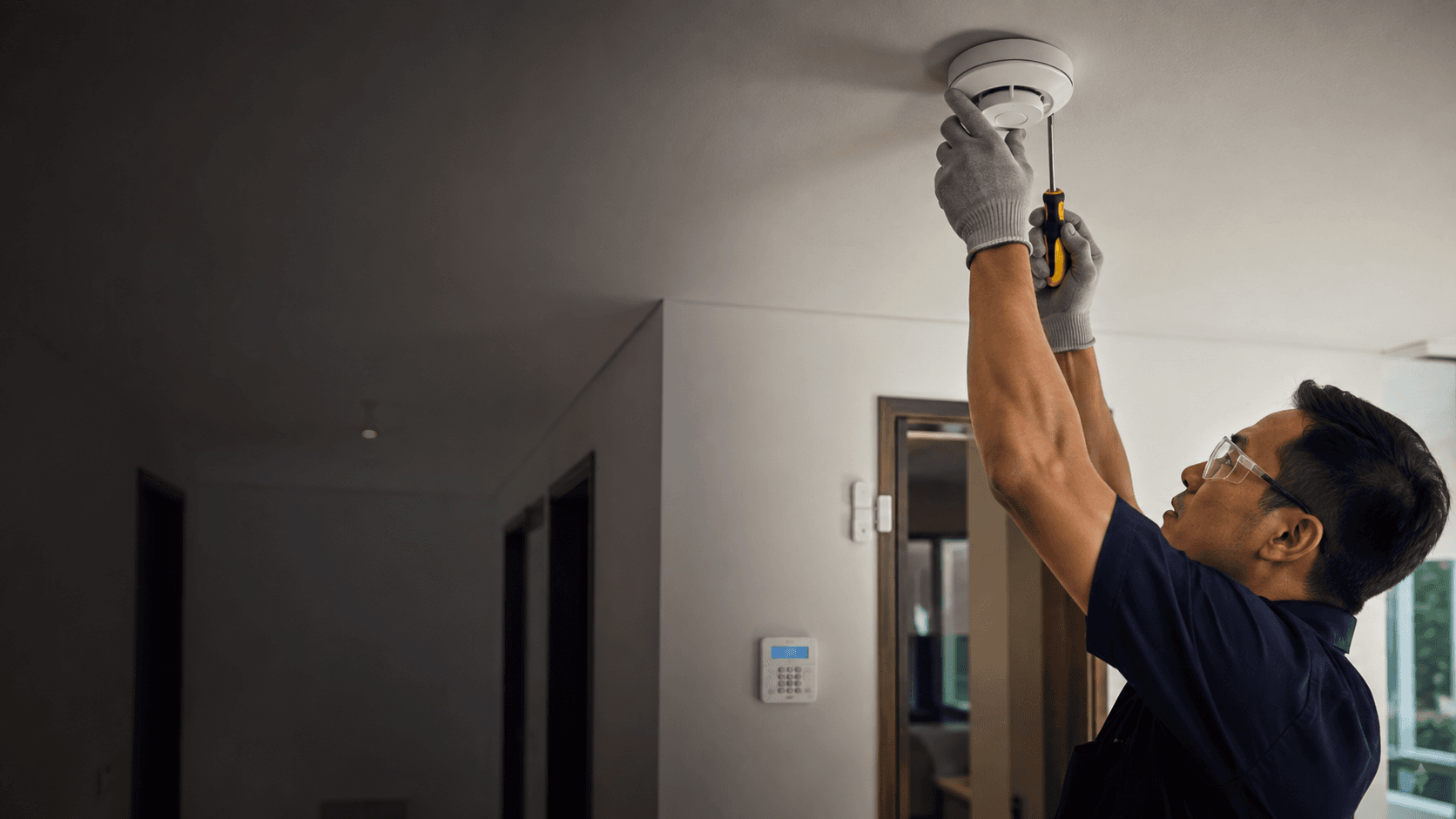
diy burglar alarm system setup steps
A practical diy burglar alarm system follows the same sequence Eyonic uses for its CCTV installations: site survey, system proposal, installation, and handover. The difference is that the homeowner handles the physical mounting and wiring while the supplier provides the equipment plan and technical backup.
- Walk the property and note every entry point, blind corner, and area where a pet or curtain movement could trigger a false alarm.
- Place door and window contacts on the ground floor first, then add motion sensors in hallways and rooms where an intruder would naturally pass.
- Mount the control panel near the main entrance or a central hallway where the keypad is reachable and the siren is audible from all bedrooms.
- Test each zone, confirm remote viewing works from a phone, and complete the handover checklist with the supplier before relying on the system.
The ordered list above reflects the four-stage method Eyonic applies to security installations in Sarawak. A diy burglar alarm system still benefits from that discipline even when the owner performs the work.
Diy Burglar Alarm System Components for Sarawak
A diy burglar alarm system in Sarawak needs components that tolerate tropical conditions: high humidity, frequent thunderstorms, and occasional power fluctuations. Door and window contacts form the first layer, motion sensors cover interior spaces, and a control panel ties the zones together with a siren and communication module.
Eyonic does not publish a specific diy burglar alarm system kit or component list. The company's alarm system installation services page confirms that planning, supply, and installation are handled as a package, which means component selection is matched to the site rather than sold as a fixed box.
For a self-install project, the practical component set includes:
- Door and window magnetic contacts for perimeter entry points
- Passive infrared motion sensors for interior coverage
- A control panel with keypad, siren, and backup battery
- A communication module for phone alerts or monitoring
- Optional cameras where visual verification adds value
The Hikvision alarm system package listed at RM 1599 gives a reference point for entry-level equipment, though the exact sensor count and battery backup are not confirmed in published materials. Buyers should confirm those details directly with the supplier before purchase.
Site Survey and Sensor Placement
Eyonic's CCTV installation process begins with a site survey, and the same logic applies to a diy burglar alarm system. The survey identifies where an intruder could enter, where valuables sit, and where movement patterns would trigger sensors during normal household activity.
Sensor placement decisions matter more than brand choice. Door contacts belong on the frame and the moving edge of every accessible door and window. Motion sensors should face across the path of entry rather than toward a window where direct sunlight or passing traffic could cause false triggers.
Eyonic recommends checking actual lighting conditions before confirming placement for ColorVu-style cameras. That guidance transfers to alarm sensors: a motion detector aimed at a heat source, a reflective surface, or a spot where the afternoon sun moves across the floor will produce nuisance alarms that erode trust in the system.
For a typical Malaysian terrace house, the priority order is the front door, the rear door, ground-floor windows, then interior motion coverage. For a shop lot or office, the survey shifts toward the main entrance, the cash or storage area, and any rear access used by staff.
Control Panel and Remote Viewing
The control panel is the decision point of a diy burglar alarm system. It receives signals from every sensor, decides whether a condition is an alarm or a false trigger, and communicates the event through the siren and the notification channel.
Entry and exit delays need to match how the household actually moves. A short exit delay forces a rushed departure and a higher chance of an accidental alarm. A long entry delay gives an intruder more time inside before the siren sounds. Most panels allow these delays to be programmed per zone, and getting them right is part of the setup that a supplier can guide.
Remote viewing and phone alerts depend on the communication module and the home internet connection. Eyonic's work with Starlink internet installation services in Sarawak reflects a broader reality: alarm and camera systems rely on stable connectivity, and properties with unreliable broadband need a backup path such as a cellular module or a local siren that works without the network.
The Kuching Immigration Office project focused on arrival flow, staff areas, visitor movement, and dependable daily operation. That project brief shows how Eyonic approaches security for spaces where people move predictably and the system must operate without interruption during working hours.
Kuching Immigration Office Project Notes
Eyonic completed a project for the Kuching Immigration Office, a public office where the security concern was not a single entry point but the flow of visitors through arrival, staff-only zones, and waiting areas. The approximate budget for that type of work was RM 12,000 to RM 28,000.
That project is not a diy burglar alarm system, but it demonstrates the planning method that applies to one. The office needed practical support focused on how people actually moved through the building. A home diy burglar alarm system benefits from the same thinking: map the movement, protect the boundaries, and make sure the system operates dependably every day.
For a homeowner considering a diy burglar alarm system, the lesson from the Kuching Immigration Office project is that a security system succeeds when it matches the site's real conditions. A sensor placed without checking the room layout, the lighting, or the household routine will generate false alarms and eventually get ignored.
Practical Next Step for Malaysian Homes
A diy burglar alarm system is a realistic option for Malaysian homeowners who want to control costs and installation timing, but the equipment choice and the site plan still benefit from supplier input. Eyonic's alarm system installation services in Sarawak cover the full package, and the same team can advise on a self-install approach.
The practical path is to share the location, property type, and required system with Eyonic on WhatsApp at +60 11-5111 7959. That single step replaces guesswork about sensor counts, panel compatibility, and local conditions with a recommendation grounded in the supplier's installation experience.
Malaysian buyers should note that a diy burglar alarm system is not the same as a no-plan purchase. The equipment still needs correct placement, programmed delays, and a tested communication path. The value of a Sarawak-based supplier like Eyonic lies in the site survey and handover support that turns a box of components into a working security layer.