
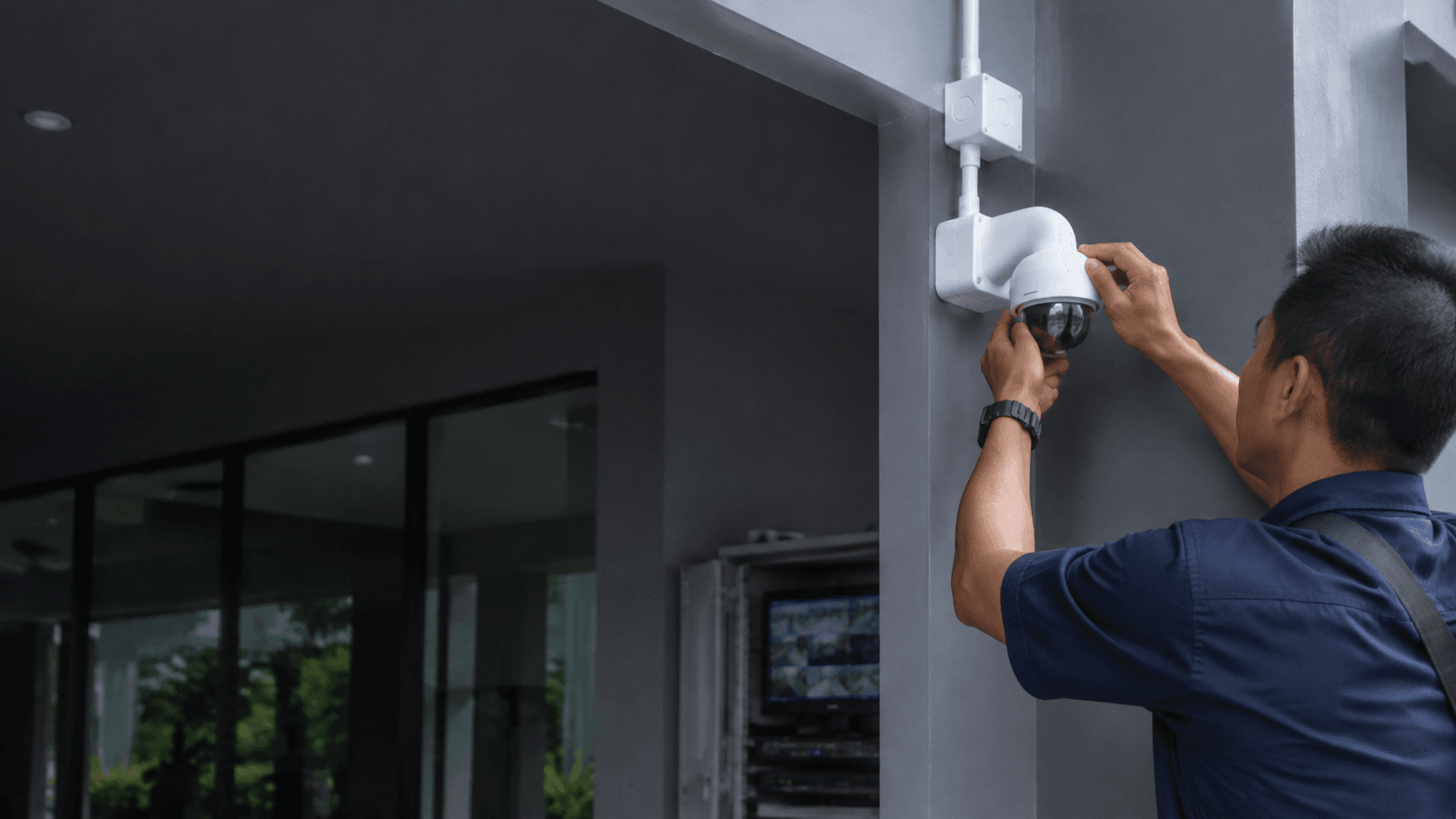
An Arlo Pro 4 camera runs on a rechargeable battery, so an outdoor position without a nearby power point eventually means a ladder, a removal, a recharge and a refit. A solar panel changes that routine by trickling charge into the camera during daylight. The catch is that the accessory market is fragmented: connector types differ between Arlo generations, panel wattages differ between brands, and Malaysian sunlight varies by state, roof overhang and time of year. The checks below cover what can be confirmed before ordering and what genuinely needs a site visit.
Arlo Pro 4 Solar Panel: what the accessory is for
The purpose of the accessory is continuous top-up charging rather than a single full recharge. A panel mounted near the camera connects to the camera's charging port and feeds power whenever the panel receives light. On a good day the panel may cover the camera's daily consumption; on a heavily overcast week it may only slow the drain.
That distinction matters for expectations. A camera recording frequently, running spotlight or colour night vision, or streaming to remote viewing will draw more power than a small panel can replace. A camera that records occasional motion events in a low-traffic area draws far less. The same panel can therefore look excellent on one property and inadequate on another, without anything being faulty.
Arlo's own product line includes a solar panel charger positioned as a wireless power accessory for its camera ranges, and Wasserstein sells a solar panel with an outdoor magnetic charging cable listing Arlo Ultra, Ultra 2, Pro 3, Pro 4 and Pro 5S among compatible models. Those two listings show the accessory category is real and actively sold; they do not by themselves confirm which specific panel suits a given Arlo Pro 4 camera in Malaysia.
How an Arlo Pro 4 Solar Panel keeps an outdoor camera charged
Solar charging works as a trickle. The panel converts daylight into a small electrical output, the cable carries that output to the camera's charging input, and the camera's internal battery management decides whether the incoming power is used to run the camera, to recharge the battery, or split between both.
Three practical consequences follow.
- Confirm the camera model, because Arlo generations do not share one connector type.
- Confirm the charging connector type on the camera and match it to the panel's cable end.
- Confirm the mount surface, whether wall, fascia, pole or bracket, and whether the panel can be angled toward the sun.
- Confirm how many hours of direct light the intended position receives across a normal day.
- Confirm cable reach from the panel position to the camera's charging port, allowing slack for adjustment.
Battery behaviour also depends on camera settings rather than the panel alone. Motion sensitivity, recording length, night vision mode and how often the live view is opened all change daily consumption. A panel sized for light use will fall behind on a camera configured for constant activity, and no mounting adjustment fixes that mismatch.
Compatibility and connector checks before ordering
Connector compatibility is the single most common reason a solar panel purchase goes wrong. Arlo has used different charging interfaces across its camera generations, and third-party panels are frequently sold as compatible with a list of models rather than a single model. A panel described as fitting Arlo Pro 3, Pro 4 and Pro 5S is not automatically the right panel for every Arlo camera on the same property.
Two further compatibility questions sit alongside the connector. The first is whether the panel is a model-specific design or a universal panel with an adapter cable; universal panels can work but add a connection point that needs to survive weather. The second is whether the panel's mount suits the surface available. A panel supplied with a wall bracket is not directly usable on a round pole without an additional bracket.
Where the camera is an Arlo Pro 4 and the panel is a third-party product, the safest position is to verify the connector against the camera itself rather than against a marketing list. Photographing the camera's charging port and comparing it with the panel's cable end removes most of the uncertainty before money changes hands.
Mounting position and sunlight in Malaysian conditions
Malaysia sits close to the equator, so daylight hours are relatively consistent through the year. What varies far more is cloud cover, and Sarawak in particular sees frequent heavy cloud and regular rain. A panel that performs well in a clear-sky climate can underperform in Kuching or Sibu without any fault, simply because the daily light received is lower than the panel's rated conditions assume.
Mounting position therefore matters more than panel marketing. A panel on a shaded wall under a deep roof overhang may receive almost no direct light even on a bright day. A panel angled toward the prevailing sun on an open fascia will receive far more. Trees, neighbouring buildings and the panel's own tilt all change the outcome.
Eyonic's own guidance on camera placement is to check actual lighting conditions at the intended position before confirming it, rather than assuming from a plan or a product rating. The same discipline applies to a solar panel: the position that looks convenient for cabling is not always the position that receives usable light.
Where a site survey changes the plan
A site survey answers the questions that cannot be settled from a product listing. It establishes how much light the intended camera position actually receives, whether a panel can be mounted where light is available, whether the cable run from that point to the camera is practical, and whether the camera's likely recording load is small enough for solar top-up to keep pace.
Eyonic's CCTV installation process runs through site survey, system proposal, installation and handover, and the survey stage is where placement decisions are tested against the real property. For a public office project in Kuching, the work focused on arrival flow, staff areas, visitor movement and dependable daily operation, which is the kind of brief where camera positions are chosen for coverage and reliability rather than convenience.
The survey also surfaces the cases where solar is the wrong answer. A camera position in permanent deep shade, a camera configured for heavy continuous recording, or a property where a mains supply is already available at the camera point may all be better served by a different power arrangement. Establishing that before purchase avoids buying a panel that cannot do the job.
For properties in Sarawak, Eyonic plans, supplies and installs monitoring systems with camera placement, recording and remote viewing for homes, offices, shops and industrial sites. Where a solar accessory is part of the plan, the survey is the point at which connector, mount and light are confirmed together rather than separately.
Practical next step with Eyonic
Share your location, property type and required system with Eyonic on WhatsApp at +60 11-5111 7959 for the next practical step.
Useful details to have ready are the camera model, the intended mounting position, whether mains power is available at that point, and how the camera is expected to be used. Those four answers determine whether an Arlo Pro 4 Solar Panel is a sensible fit or whether the position needs rethinking.