
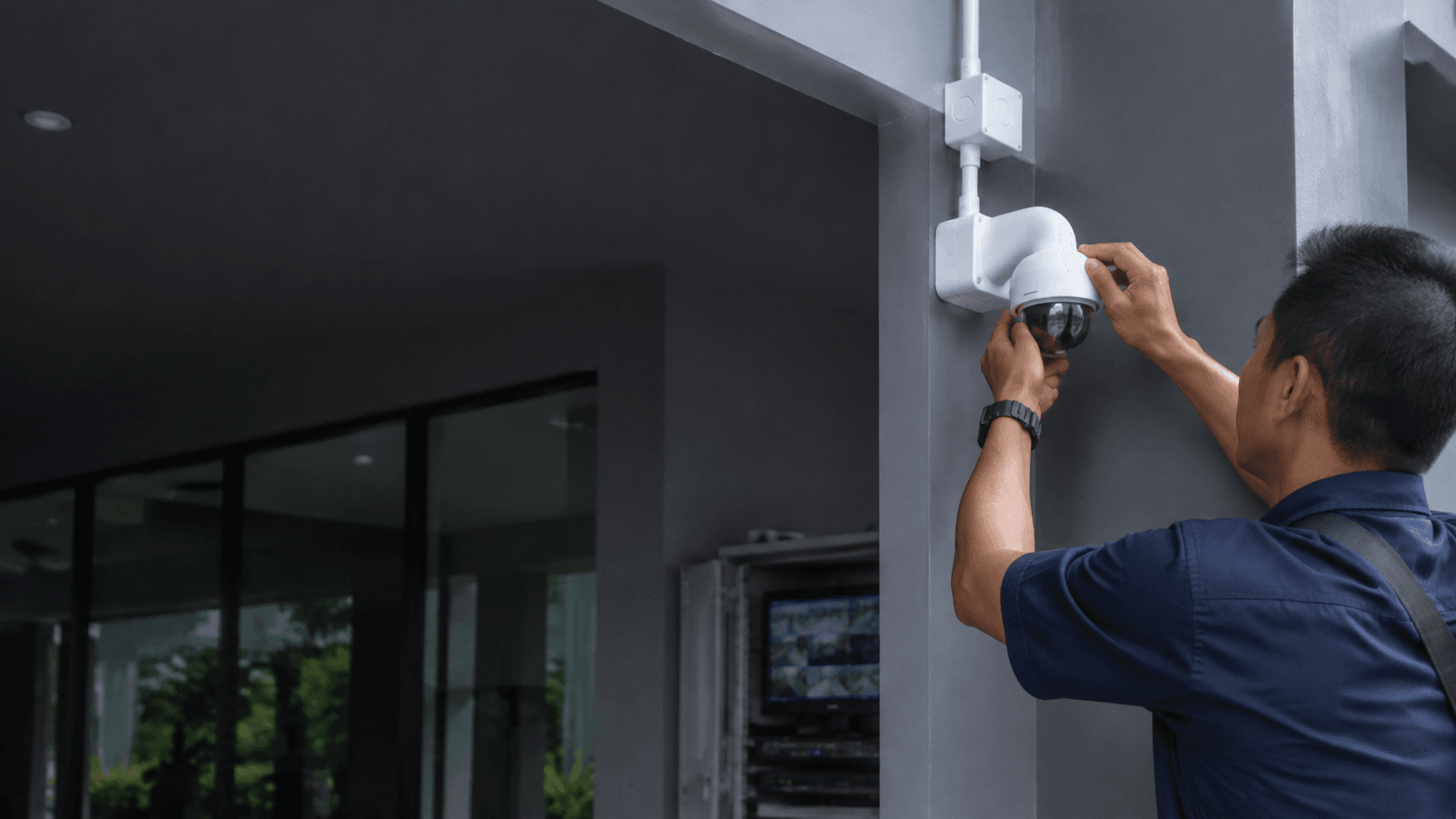
The exact-match query "wireless cctv camera for home with mobile connectivity" describes a system where the camera talks to the network without a video cable, and the phone becomes the main screen. That combination changes what matters during planning. Instead of asking which camera has the longest feature list, the useful questions become: where does the signal actually reach, what happens when the internet drops, who sets up the app, and who fixes it when the view stops loading.
Eyonic Sdn Bhd plans, supplies and installs monitoring systems with camera placement, recording and remote viewing for homes, offices, shops and industrial sites. The company is based in Sarawak, Malaysia, and its founder Eric Yong has worked in the industry for more than 10 years, with experience in technical installation of digital security solutions for commercial businesses in Sarawak.
Wireless Cctv Camera For Home With Mobile Connectivity: What Matters Before You Choose
Mobile connectivity moves the viewing experience off a dedicated monitor and onto a phone. The camera still captures footage, but the path from lens to screen now runs through a home network, a router, and an app. Each link in that chain can fail independently, which is why a wireless setup needs more planning than a plug-in-and-forget device suggests.
The practical consequence is that signal quality matters as much as camera quality. A camera mounted at the far corner of a double-storey house may sit at the edge of Wi-Fi coverage, and the resulting footage can stutter or drop even though the camera itself is working. Placement decisions therefore need to account for where the router sits, what walls and floors sit between router and camera, and whether a repeater or a different mounting point solves the problem.
Power is the second variable. A wireless camera still needs electricity unless it runs on battery or solar, and battery models trade convenience for maintenance. Someone has to recharge or replace cells, and the interval depends on how often the camera records and how much motion it detects. A camera pointed at a busy road will drain faster than one covering a quiet side gate.
Storage is the third. Footage can sit on a memory card inside the camera, on a recorder such as an NVR, or in a cloud plan. Local storage keeps working when the internet is down but is vulnerable to theft or damage if the camera is reachable. Cloud storage survives a stolen camera but depends on a subscription and a stable connection. Many homes end up with a mix, and the right balance depends on what the footage is meant to prove.
Night performance is the fourth. Cameras that rely on infrared produce black-and-white images in low light, while colour-capable models need some ambient light to work as intended. Eyonic recommends checking actual lighting conditions before confirming placement for ColorVu-style cameras, because a position that looks well lit during a daytime survey can behave differently after dark.
Camera Placement And Lighting Checks Before Confirming A Position
Placement decides what the system can and cannot show. A camera that covers an entrance but misses the approach path records a face without context. A camera aimed too high catches ceilings and light fittings. A camera pointed at a reflective surface or a bright streetlight can wash out the image at night.
The checks that matter before confirming a position are straightforward. Walk the property at the time of day the camera will matter most, and look at what the lens would actually see from the proposed height and angle. Note where shadows fall, where headlights sweep across the view, and whether a wall or tree blocks the line of sight. For colour night performance, confirm there is enough light at that exact spot rather than assuming the streetlamp covers it.
Coverage also needs to be deliberate rather than maximal. One camera covering a front gate, a second covering a back door, and a third covering a parking area often does more useful work than four cameras overlapping the same corridor. The Kuching Immigration Office project shows the same logic at a larger scale: the work focused on arrival flow, staff areas, visitor movement and dependable daily operation rather than blanket coverage.
Wireless adds one more constraint to placement. Every camera needs a workable signal at its mounting point, and the signal has to hold up in rain and at peak household usage. A position that tests well on a quiet afternoon may behave differently when several devices are streaming. Testing the actual spot before drilling is cheaper than relocating a camera afterwards.
Power, Recording And Storage Choices
Power options fall into three broad groups. Mains-powered wireless cameras need a nearby outlet but avoid battery maintenance. Battery cameras mount almost anywhere and need periodic charging or cell replacement. Solar-assisted cameras reduce the charging burden but depend on sunlight reaching the panel, which rules out deeply shaded positions.
Recording choices follow from that. Continuous recording captures everything and fills storage quickly. Motion-triggered recording saves space but can miss the moments just before movement is detected. Scheduled recording suits homes that only care about certain hours. The right choice depends on whether the footage is needed for a quick check-in or for evidence after an incident.
Storage location is a separate decision from recording mode. A memory card inside the camera is the simplest option and keeps recording alive during an internet outage, but the card has a finite life and the footage is only as safe as the camera. An NVR centralises footage and supports multiple cameras, which suits homes adding coverage over time. Cloud storage adds off-site protection and usually a recurring cost.
Retention is worth deciding early. A home that reviews footage weekly needs far less capacity than one that wants a month of history. Setting retention deliberately avoids the common situation where storage fills up and the oldest footage silently overwrites before anyone has reviewed it.
Installation And Handover. Site Survey, Proposal, Installation, Handover
Eyonic's CCTV installation process runs through four stages, and the sequence matters because each stage feeds the next.
- Site survey. the property is assessed for camera positions, signal reach, power availability and lighting conditions at the times that matter.
- System proposal. the survey findings become a recommended setup covering camera placement, recording and remote viewing.
- Installation. cameras are mounted, cabling and power are handled, and the recorder and network are configured.
- Handover. the mobile viewing setup is demonstrated and tested so the system is usable from a phone before the job closes.
The handover stage is where wireless systems most often fall short. A camera that records correctly but cannot be viewed reliably from a phone has not delivered what the buyer wanted. Testing the app on the actual phone, confirming notifications arrive, and checking playback from outside the home network are the steps that turn an installed system into a working one.
Eyonic's Hikvision CCTV Package covers camera supply and setup, basic recording configuration and mobile viewing handover at RM 1,599. The same RM 1,599 figure applies to the Hikvision Alarm System, which includes a control panel and sensors, siren and zone setup, and user testing and handover, and to the Autogate Package, which covers motor recommendation, remote-control setup, and safety testing and handover. These are package prices rather than a wireless-specific quote, and the final scope depends on the property.
For homes that want more than cameras, the same installation discipline applies to related systems. Eyonic also handles alarm systems, autogate installation, keyphone intercom and Starlink internet installation in Sarawak, which matters when a home needs the network side of a wireless setup addressed alongside the cameras.
Practical Next Step With Eyonic
The most useful starting point is a site survey, because wireless performance depends on the specific property rather than on a general recommendation. Signal reach, lighting, power access and camera positions all vary from house to house, and a survey resolves those variables before any equipment is committed.
Share your location, property type and required system with Eyonic on WhatsApp at +60 11-5111 7959 for the next practical step. Details about the property help narrow the options, and the survey confirms what the installation will actually involve.
For homes in Sarawak weighing a wireless CCTV camera for home with mobile connectivity, the deciding factors are usually signal reliability at each camera position, how footage is stored and for how long, how the system performs after dark, and whether the mobile viewing setup is tested and handed over properly. Those four points determine whether the system gets used daily or quietly ignored.