
Those two subjects rarely overlap in practice. One is a shopping question about hardware on a shelf. The other is a privacy and regulation story about a retailer's internal camera network. Readers in Malaysia also arrive with a third question underneath both: whether a retail box or a planned installation is the better route for a home, shop, or office.
Bunnings Cctv. What the Search Actually Covers
The phrase pulls together three distinct intents. The first is availability. whether cameras can be bought at a Bunnings store, and what kind. The second is news. Bunnings' own use of CCTV and facial recognition, which drew regulatory attention in Australia. The third is comparison. whether buying a camera kit and installing it personally beats paying a specialist to survey, supply, and install a system.
Australian coverage dominates the first two intents. SafeWise publishes a ranked review of Bunnings security cameras aimed at Australian shoppers, while the ACS Information Age article and broadcast segments cover the facial recognition story. No competitor page in the analysed set uses the exact query in its H1, and none carries the entity in a heading, which leaves the topic open for a page that treats all three intents honestly.
Malaysian readers sit outside that Australian retail context. There is no verified evidence that Bunnings operates physical stores or sells CCTV products in Malaysia, and no evidence that it ships to or serves Malaysian customers. That gap matters, because a reader planning a Kuching shopfront or a Kuala Lumpur office cannot assume an Australian retail answer applies locally.
What the evidence does and does not establish
What is established. Bunnings is a hardware retailer with a documented security camera category in Australia and New Zealand, and its facial recognition trials were reported in 2024 amid privacy scrutiny. What is not established. specific Bunnings camera models, prices, warranty terms, installation support, or any Malaysian retail presence. Those gaps should shape expectations rather than be filled with guesses.
Retail Camera Availability and In-Store Options
Retail availability is the simplest of the three intents and the easiest to answer badly. A hardware store camera aisle typically carries consumer-grade kits: a small number of cameras, a recorder, and a mobile app for remote viewing. The appeal is immediate possession and a fixed shelf price. The limitation is that nothing in the box surveys the property, and nothing in the box decides where each camera should point.
SafeWise frames its coverage around the best cameras Australians can buy at a local Bunnings Warehouse, which confirms the category exists in that market. It does not confirm model numbers, prices, or specifications that would transfer to Malaysia. Readers comparing retail kits against installed systems should treat the Australian range as evidence that the category exists, not as a local product list.
The Spy Store positions itself as a Bunnings alternative for wireless cameras, and its page structure is dominated by repeated price and sale labels across dozens of listings. That pattern is useful as a signal of how e-commerce camera pages are built, but it is not proof of any Bunnings product claim.
Where retail kits fit and where they do not
A retail kit can suit a small, simple property where one or two cameras cover the only entry points, where cabling is not a concern, and where the buyer is comfortable configuring recording and remote viewing personally. It fits poorly where coverage must be proven, where cable runs cross finished walls, where recording retention matters, or where more than a handful of cameras must work together reliably.
The Bunnings CCTV and Facial Recognition Controversy
Bunnings' own surveillance drew attention in 2024 when the retailer released CCTV footage of violent attacks on staff while defending its use of facial recognition technology. The ACS Information Age article covers the privacy debate, the role of the Office of the Australian Information Commissioner, and the argument that staff safety justifies biometric monitoring. Broadcast coverage from Sunrise and 7NEWS followed the same thread.
The substance of the dispute is a trade-off, not a simple wrongdoing. Facial recognition can flag banned individuals before an incident escalates. It also processes biometric data on every person who walks through the door, including people with no history of any offence. Australian privacy regulation treats that collection as a serious obligation, and the reporting centres on whether the retailer met it.
For anyone evaluating surveillance for their own premises, the practical lesson is narrower than the headlines. Recording staff areas and public entrances is routine. Adding biometric matching changes the legal and ethical weight of the system entirely, and it should be a deliberate decision with a documented purpose, not a feature enabled because the software offers it.
What this means for a Malaysian property
Malaysian readers are not bound by Australian privacy rulings, and the reporting should not be read as local law. The transferable point is that surveillance scope should match a stated purpose. A shop that records its entrance for theft deterrence is doing something different from a shop that builds a biometric watchlist, and the two should not be sold as the same product.
Comparing Retail Purchases With Professional Installation
The comparison comes down to who carries the risk. A retail purchase transfers configuration, placement, cabling, and troubleshooting to the buyer. A professional installation transfers those tasks to a specialist who has already solved them on comparable sites.
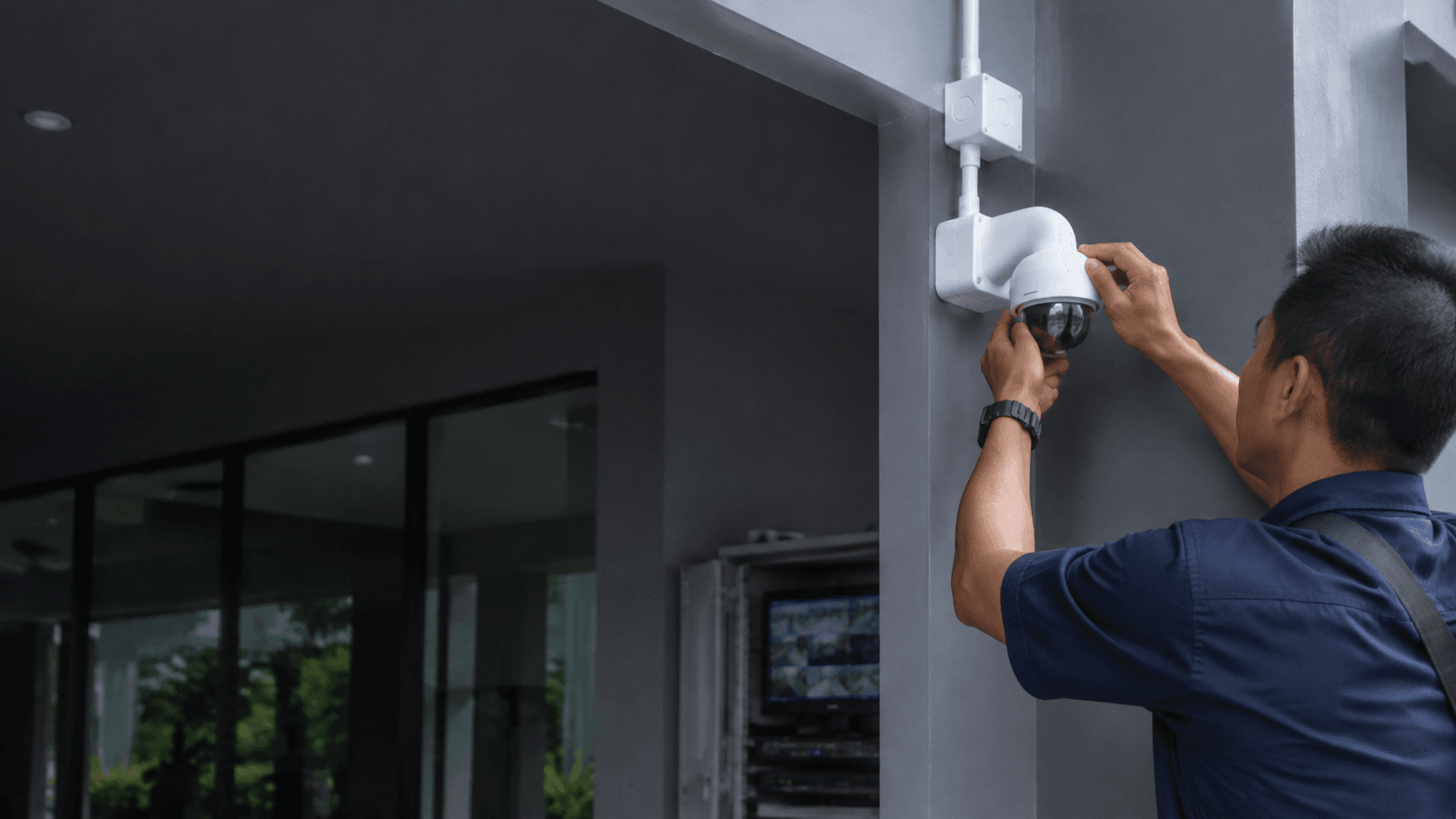
Eyonic's CCTV installation process runs through four stages: site survey, system proposal, installation, and handover. That sequence exists because placement decisions made before a survey are guesses. A survey establishes where cameras can actually see, where cable can actually run, and where the recorder can live without disrupting daily operations.
Completed work shows what that looks like at scale. Eyonic's project for the Kuching Immigration Office focused on arrival flow, staff areas, visitor movement, and dependable daily operation, with an approximate budget of RM 12,000 to RM 28,000 for that type of work. A separate project for KTA Sarawak Sdn Bhd addressed staff movement, visitor handling, tidy cabling, and clearer daily site control, with an approximate budget of RM 8,000 to RM 18,000.
Those figures sit far above a retail camera kit, and the difference is not the cameras alone. It is the survey, the cabling, the recorder configuration, the remote viewing setup, and the handover that leaves someone on site able to use the system. Eyonic's published package pricing starts at RM 1,599 for a Hikvision CCTV package covering camera supply and setup, basic recording configuration, and mobile viewing handover.
Choosing between the two paths
Retail suits a single-room or single-entry property, a buyer with technical patience, and a tolerance for adjusting placement after the fact. Professional installation suits multi-area premises, businesses that need consistent recording, sites where cabling must be tidy, and anyone who would rather not discover a blind spot after an incident. The deciding question is usually whether a missed angle would cost more than the installation.
Camera Placement and Lighting Checks Before Buying
Placement decides whether a camera is useful. A camera aimed at a doorway records faces. A camera aimed at a corridor records backs. A camera mounted too high records the tops of heads. None of these problems appear in a product specification, and none are fixed by buying a higher-resolution model.
Lighting is the second constraint. Eyonic recommends checking actual lighting conditions before confirming placement for ColorVu-style cameras, because low-light performance depends on what the scene actually looks like at night rather than what a datasheet claims. A street-lit entrance and an unlit back lane need different answers even when the camera model is identical.
Three practical checks reduce most placement errors. First, stand where the camera will be mounted and confirm the intended subject is visible at that angle. Second, revisit the same spot after dark and confirm the scene is still readable. Third, trace the cable route before committing, because a camera position that cannot be cabled neatly will be cabled badly.
Practical Steps for Choosing a CCTV Approach
The sequence below reflects how a planned installation proceeds, and it works as a decision checklist even for someone leaning toward a retail purchase.
- Survey the property and list every area that needs coverage, separating entry points, staff areas, and visitor movement.
- Check lighting at each candidate position after dark, not from a specification sheet.
- Confirm the cable route and recorder location before any camera position is fixed.
- Compare a retail kit against a proposed system on coverage, recording retention, and who handles faults.
- Agree the system scope in writing, including camera positions and what remote viewing will cover.
- Complete installation, then test recording, playback, and mobile viewing before accepting handover.
Steps one through three cost nothing and prevent most of the problems that make a camera system disappointing. Steps four through six decide whether the system still works six months later.
For readers in Sarawak weighing a retail purchase against a planned installation, Eyonic can review a location, property type, and required system on WhatsApp at +60 11-5111 7959.