
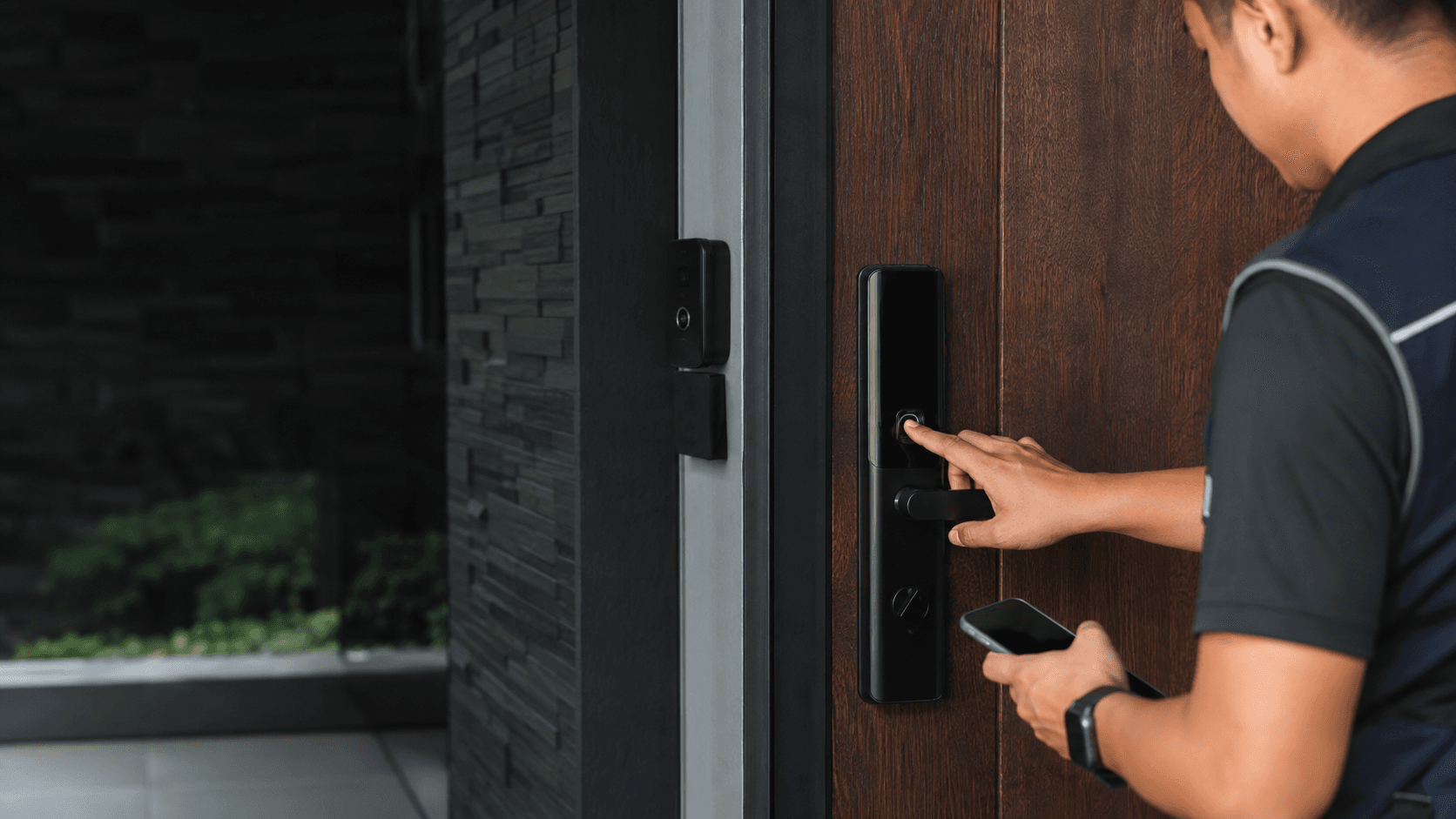
The exact-match query kwikset smart lock front door describes a specific decision rather than a single product. Readers in Malaysia researching this topic are usually weighing three things at once: whether the door itself can carry the hardware, who needs daily access, and what happens when the electronics or the network fail. Competitor pages in this space concentrate on smart locks, keyless entry, electronic deadbolts, remote locking and unlocking, and smart home compatibility, which confirms the intent is practical fit rather than brand history.
What follows is a decision framework. It covers what a Kwikset smart lock front door setup actually includes, how door condition and user roles shape the choice, how entry modes and backup entry interact, and what to verify before committing. Where evidence is not available, this article says so rather than filling the gap with invented specifications.
What a Kwikset smart lock front door setup covers
A Kwikset smart lock front door setup is an access layer, not a standalone gadget. It replaces or augments the mechanical locking point on the entry door with an electronic deadbolt that can be operated by code, by app, or by a physical key, depending on the model. Around that core sit the supporting decisions: how codes are issued and revoked, how the lock reports activity, and how it connects to the rest of the property's systems.
The recurring topics across competitor pages point to five functional areas. Keyless entry removes the need to carry or hand over a physical key. An electronic deadbolt provides the motorised locking action. Remote locking and unlocking lets an authorised person operate the door without being present. Smart home compatibility determines whether the lock can be grouped with other devices. User permissions control who can enter and when.
One important limit applies here. No supplied evidence verifies Kwikset smart lock front door technical specifications, model names, wireless protocols, battery life, ratings, certifications, or pricing. That means any article claiming a specific protocol, a specific battery duration, or a specific model number for this query would be inventing detail. The honest position is that the framework below holds regardless of which model is eventually selected, and the model-specific facts must come from the manufacturer's own documentation for that unit.
Eyonic's own product review position on smart lock door access is that the category is good for controlled convenience when user permissions and backup entry are planned properly. That is a fit statement, not a performance claim, and it matches the structure of the decision rather than the specification of any one lock.
Door condition and user roles before choosing a Kwikset smart lock front door
Two checks come before any product comparison: the physical door and the people who use it. Skipping either one is the most common reason a smart lock installation disappoints.
Door condition
An electronic deadbolt is heavier and less tolerant of misalignment than a simple mechanical lock. A door that has swollen, dropped on its hinges, or never latched cleanly will fight a motorised bolt. The relevant checks are whether the door closes and latches under its own weight, whether the existing bore and backset match what the new hardware expects, and whether the frame has a solid strike position. No supplied evidence verifies compatibility between a Kwikset smart lock front door unit and specific doors, frames, or existing access-control systems, so this must be confirmed on site against the actual door rather than assumed from a product listing.
Eyonic's stated review position is that smart locks work best when the door condition, user roles and backup method are reviewed before installation. That ordering is deliberate. door condition is first because it is the constraint that cannot be configured away in software.
User roles and permissions
User permissions are the second filter. A single household with two or three regular occupants has a simple permission model. A rental, a shop, or an office has a different one, because access has to be granted and revoked repeatedly, and because the record of who entered matters as much as the entry itself.
For business use, Eyonic usually checks whether a standalone smart lock or an access-control panel is more appropriate. That distinction is worth stating plainly. A standalone smart lock manages one door and its own user list. An access-control panel manages multiple doors, multiple credential types, and a central record. Choosing a standalone lock for a multi-door commercial site creates a management problem later, and choosing a panel for a single home front door adds cost and complexity without benefit.
Entry modes, backup entry and daily operation
Entry modes determine how the door is opened on a normal day. Backup entry determines how it is opened on a bad day. Both need a decision before installation, because the backup method often constrains which hardware is suitable.
Typical entry modes across the category include a keypad or touchscreen code, an app-based unlock, and a physical key override. Some models add voice assistant control or integration with a broader smart home platform. The practical question is not which modes exist but which ones the daily users will actually use, and whether the least technical person in the group can operate the door without assistance.
Backup entry deserves separate attention. Three failure paths are worth planning for: a flat battery, a lost or forgotten credential, and a network or hub outage. A physical key override addresses the first two if the key is stored somewhere reachable but not accessible to an intruder. A mechanical key stored inside the property is useless if the occupant is locked outside. For a business, the backup plan usually needs to be documented rather than remembered, because staff turnover will erase informal knowledge.
Daily operation is where small frictions accumulate. Auto-lock behaviour, the delay before the bolt throws, the volume of the motor, and the number of actions required to unlock all affect whether the lock is used as intended or bypassed. A lock that is inconvenient gets propped open, and a propped front door defeats the purpose of the installation.
Kwikset smart lock front door checks before installation
These checks are sequential. Each one can change the answer to the next, so working through them in order avoids rework.
- Inspect the door and frame. Confirm the door closes and latches cleanly, check hinge condition, and measure the existing bore and backset against the requirements of the specific hardware being considered.
- Map the user roles. List every person or group who needs entry, how often, and whether access must be time-limited or revocable. This determines whether a simple code list is sufficient or whether a managed system is needed.
- Choose the backup entry method. Decide how the door opens during a battery failure, a lost credential, or a network outage, and confirm that the chosen hardware supports that method.
- Decide between a standalone smart lock and an access-control panel. A single front door with a small user group suits a standalone lock. Multiple doors, staff turnover, or a need for central records point toward a panel.
- Confirm the model-specific facts from the manufacturer. Specifications, entry modes, compatibility, and support details must come from the documentation for the exact unit, because those details are not verifiable from general category information.
The fifth check is the one most often skipped. Category-level content can describe how smart locks work in general, but it cannot confirm that a particular unit fits a particular door or supports a particular credential type. That confirmation belongs to the manufacturer's documentation and, where the door is unusual, to an on-site assessment.
Practical next step for a
The decision reduces to three answers: the door can carry the hardware, the user roles match the management model, and the backup entry method is defined and reachable. When all three hold, a Kwikset smart lock front door installation is a straightforward access upgrade. When any one of them fails, the failure will show up in daily use rather than at installation.
For properties in Sarawak that combine door access with wider security systems, the same survey discipline applies across categories. Eyonic's CCTV installation process runs through site survey, system proposal, installation, and handover, and the same sequence is what makes a door access decision safe: look at the actual door and the actual users before proposing hardware. Eyonic's completed work for the Kuching Immigration Office focused on arrival flow, staff areas, visitor movement, and dependable daily operation, which is the same set of concerns a front door access decision raises at a smaller scale.
Where a property needs door access alongside cameras, alarms, or intercom, the systems are usually planned together rather than separately, because credential management, recording, and entry all touch the same front door. Eyonic supplies and installs security and ELV systems for homes, offices, shops, and industrial sites in Sarawak, and reviews smart lock door access as part of that range.
Share the location, property type and required system with Eyonic on WhatsApp at +60 11-5111 7959 for the next practical step.