
The phrase pulls in two different crowds. One group wants to buy cameras and recorders without going through a chain of resellers. The other group already owns a system and wants to see it from a phone. A page that serves only one of those groups leaves the other searching again.
Eyonic Sdn Bhd is a security system supplier in Sarawak that plans, supplies and installs monitoring systems for homes, offices, shops and industrial sites. That combination matters, because a direct purchase still has to end with cameras mounted in the right places and a recorder that someone can actually operate.
Cctv Direct Online. What the Direct Route Actually Involves
Buying direct means dealing with the party that supplies the equipment rather than a retail counter. In practice the work splits into four stages, and skipping any one of them tends to surface later as a coverage gap or a recorder nobody can reach.
- Site survey to establish where cameras can be mounted and how cable will run.
- System proposal covering camera placement, recording and remote viewing.
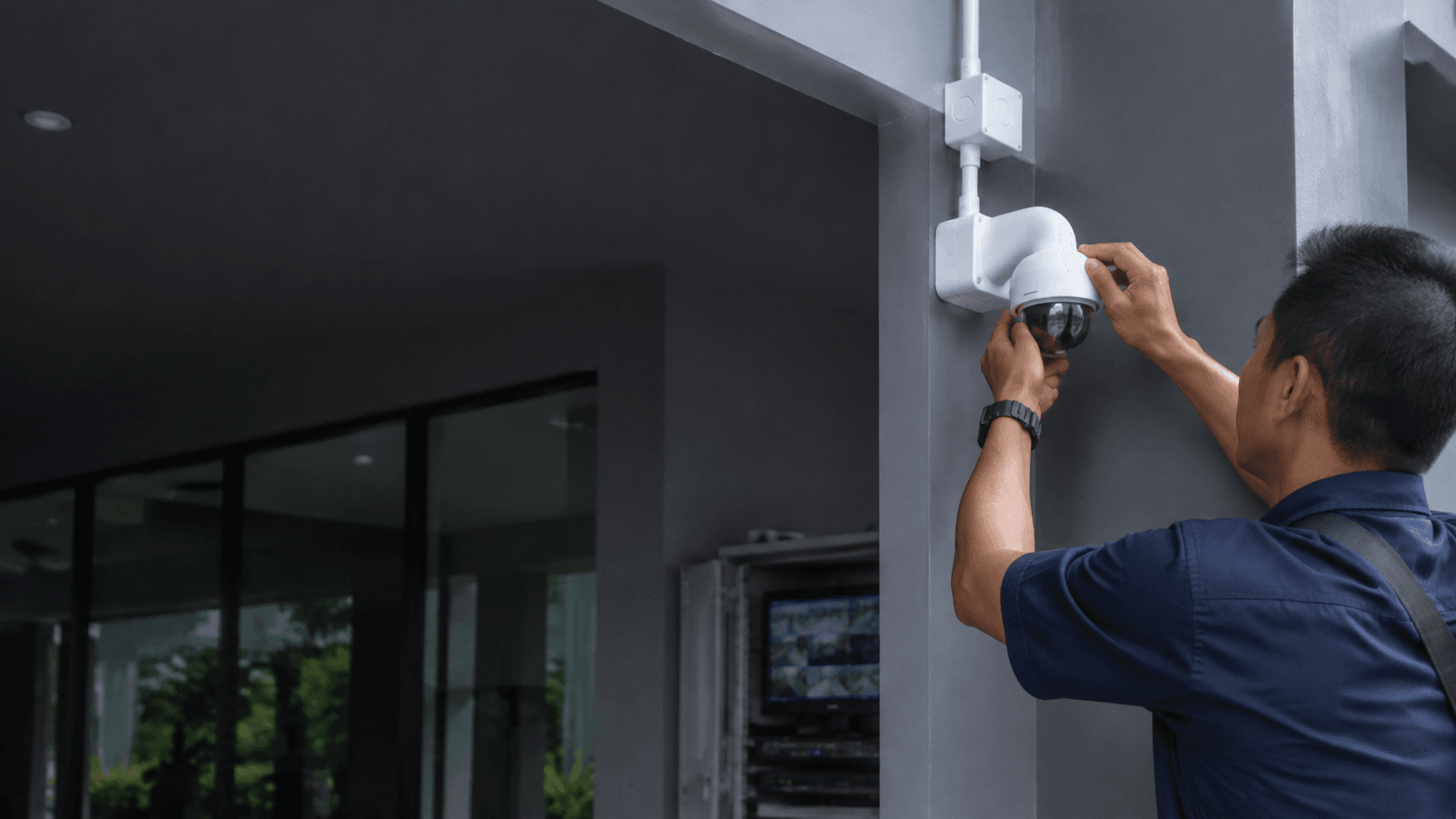
- Installation of cameras, recorder and cabling.
- Handover so the people who use the system know how to operate it.
That sequence is how Eyonic describes its own CCTV installation process in Sarawak. The order is not decorative. A survey done after purchase often reveals that the chosen camera cannot see the gate at night, or that the recorder has to sit somewhere without power.
Why the survey comes before the shopping list
Camera placement decides most of the outcome. A camera aimed at a bright doorway will expose for the light and leave the approach dark. A camera mounted too high loses facial detail at the door. These are physical constraints, not brand differences, and they are cheapest to solve on paper.
Eyonic recommends checking actual lighting conditions before confirming placement for ColorVu-style cameras. That advice applies to any low-light camera: the manufacturer's low-light behaviour assumes some ambient light, and a site with none behaves differently from a site with a porch lamp.
How Eyonic Handles CCTV Supply and Installation in Sarawak
Eyonic operates as a supplier and installer rather than a pure storefront. The company plans, supplies and installs monitoring systems with camera placement, recording and remote viewing for homes, offices, shops and industrial sites.
Completed work includes the Kuching Immigration Office, where the focus was arrival flow, staff areas, visitor movement and dependable daily operation. A public office is a useful reference point because the requirement is not a single dramatic camera angle. It is coverage that keeps working on ordinary days.
Eyonic also completed work for KTA Sarawak Sdn Bhd, an engineering consultancy, where the need was a practical office setup in Kuching supporting staff movement, visitor handling, tidy cabling and clearer daily site control. Tidy cabling is an underrated part of the job. Loose runs fail, and they make later fault-finding slower.
Eric Yong founded Eyonic Security Systems and has worked in the industry for more than ten years, with experience in technical installation of digital security solutions for commercial businesses in Sarawak.
What a direct supplier relationship changes
When one party supplies and installs, the question of who is responsible for a camera that stops recording has one answer instead of two. That is the practical difference between a direct route and assembling a system from separate purchases.
The trade-off is that the supplier's own product range sets the ceiling. A buyer who wants a specific model outside that range will need a different arrangement, and it is better to establish that before a survey than after.
What Remote Viewing Requires Before It Works
Remote viewing is the part most people assume is automatic. It is not. Three things have to be true at once: the recorder must be reachable from outside the local network, the viewing device must be configured to reach it, and the internet connection at the site must stay up.
Eyonic's service scope includes remote viewing as part of the installed system, and the basic Hikvision CCTV Package lists mobile viewing handover among its inclusions. Handover is the step where the person who will actually check the cameras learns how to do it, which is different from a technician confirming it works once.
Where remote viewing commonly breaks
The most frequent failure is not the camera. It is the network. A router that changes address assignments, a broadband line that drops, or a power cut that leaves the recorder off will all produce the same symptom: the app shows nothing.
A second failure is permission. If several people need access, each one needs to be set up, and staff changes mean access has to be removed as well as added. Systems that are never reviewed accumulate old accounts.
Bandwidth is a constraint rather than a blocker. Viewing one stream at low quality is modest; pulling several high-quality streams at once over a slow line will stutter. The practical answer is to view at reduced quality and only raise it when detail matters.
. Costs Packages and Practical Budgets
Eyonic publishes three packages at RM 1,599 each. The Hikvision CCTV Package covers camera supply and setup, basic recording configuration, and mobile viewing handover. The Hikvision Alarm System covers a control panel and sensors, siren and zone setup, and user testing and handover. The Autogate Package covers motor recommendation, remote-control setup, and safety testing and handover.
Those figures describe a starting point for a small installation, not a ceiling. Larger sites cost more because they need more cameras, longer cable runs and more installation time. Two completed Eyonic projects give a sense of the range: the KTA Sarawak Sdn Bhd office work carried an approximate budget of RM 8,000 to RM 18,000, and the Kuching Immigration Office work carried an approximate budget of RM 12,000 to RM 28,000.
Those two ranges are the most useful numbers on this page, because they show how far a small package sits from a multi-area commercial job. A single shop counter and a public office with arrival flow, staff areas and visitor movement are not the same project, and the budgets reflect that.
What drives the number up or down
Camera count is the obvious driver. Cable route is the less obvious one. A camera forty metres away through a finished ceiling costs more to install than a camera four metres away through an accessible void, even though the hardware is identical.
Recording retention also matters. Keeping footage longer requires more storage, and storage is a cost that recurs when drives are replaced. Retention should be decided by what the footage is for, not by a default setting.
Where Direct Online Buying Gets Complicated
Buying equipment online and arranging installation separately is workable, but it moves risk onto the buyer. If a camera arrives and does not suit the mounting position, the return is the buyer's problem. If the recorder and the cameras come from different sources, compatibility becomes the buyer's problem too.
There are also questions that cannot be answered from a product listing. Whether a camera will see a number plate at the gate depends on the angle, the distance and the light at that spot. Whether the recorder will sit somewhere with power and ventilation depends on the building. These are site facts.
Some details simply are not settled by a page like this one. Delivery times, stock availability, warranty terms and return policy vary by supplier and by order, and no general statement about them would be accurate. The same applies to licensing and permit requirements for CCTV in Malaysia, which depend on the property and the use. Those are questions for the supplier handling the specific job.
When the direct route fits and when it does not
A direct supply-and-install route fits a property where the coverage requirement is clear and the supplier's range covers it. It fits less well when the buyer has already specified exact models from another source, or when the site has unusual constraints that need a specialist assessment before any equipment is chosen.
Self-installation is a third option. It suits a small property, an accessible mounting position and a buyer comfortable with network configuration. It suits less well when cable has to run through finished surfaces, or when the system has to keep working without regular attention.
. Questions to Settle Before Ordering
Most of the friction in a CCTV purchase comes from unanswered questions rather than from the equipment. Settling these before an order is placed is cheaper than correcting them afterwards.
- Which areas need coverage, and what does each camera need to show — a face, a vehicle, or general movement?
- Where will the recorder sit, and does that position have power and ventilation?
- How will cable reach each camera position, and what will be disturbed to run it?
- What lighting exists at each position after dark?
- How long does footage need to be kept?
- Who needs remote viewing access, and who removes it when that changes?
Question one is the one that changes the budget most. A camera that needs to identify a face at a door is positioned and specified differently from a camera that needs to show that someone crossed a yard.
Question six is the one most often skipped. Access that is granted and never reviewed becomes a standing risk, particularly in a workplace where staff move between roles.
What to send a supplier first
A supplier can give a useful response from three pieces of information: the location, the type of property, and the system required. That is enough to judge whether a small package covers the job or whether the site sits closer to the range seen in the Kuching Immigration Office and KTA Sarawak projects.
Eyonic can be reached on WhatsApp at +60 11-5111 7959 with those details. Photographs of the property and a rough sketch of the areas needing coverage shorten the process further, because they answer the placement question before anyone visits the site.
The direct route works when supply, placement and handover are treated as one job. Splitting them is possible, but the coordination cost lands somewhere, and it is usually on the buyer.