
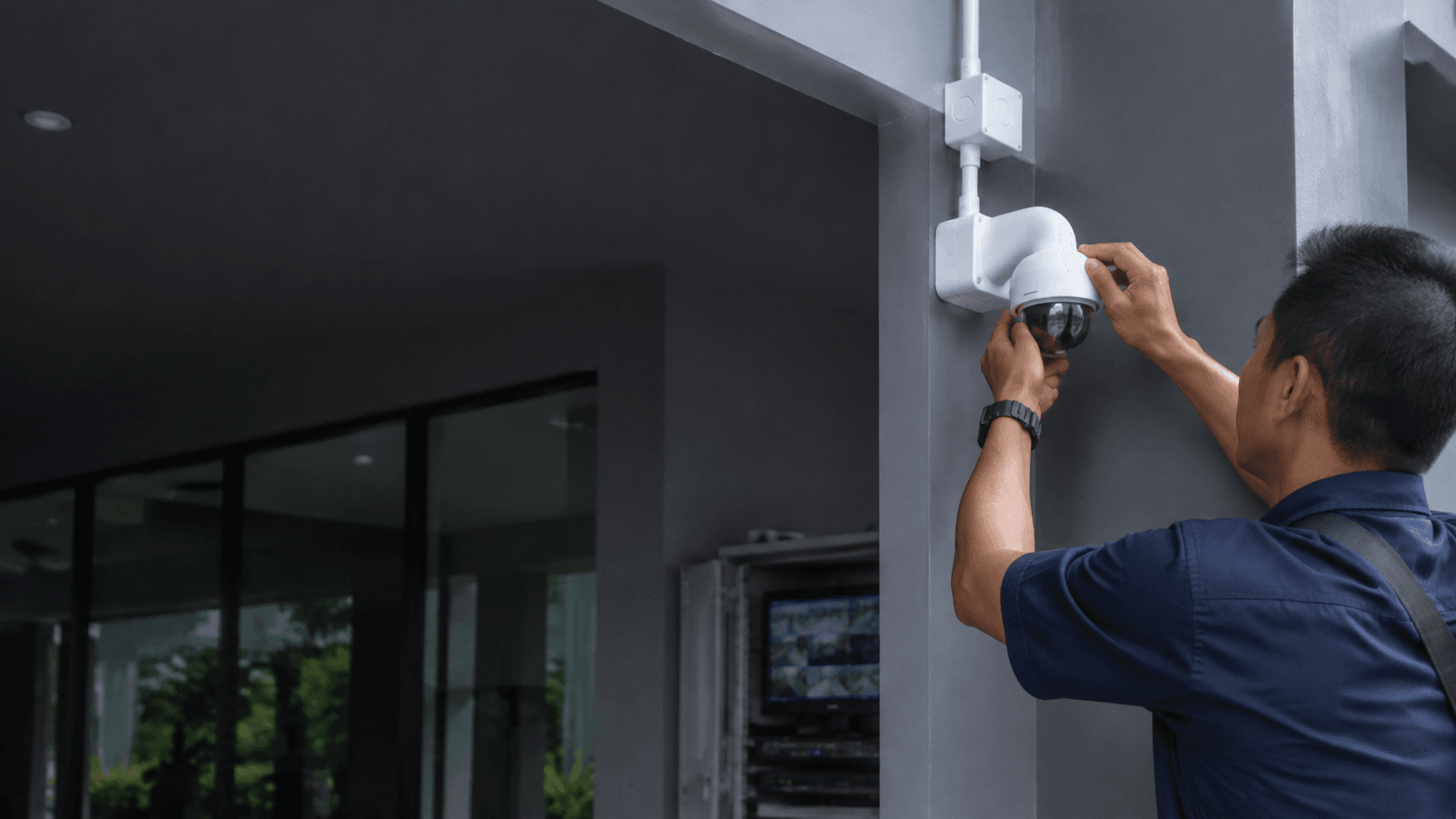
Buyers in Malaysia comparing an indoor camera with audio are usually weighing four things at once: whether the audio channel is genuinely useful, where the unit can sit without being blocked or tampered with, how recordings are stored and reviewed, and who handles the installation. Retail listings answer the first two and stop there. Local installation and support is the part that decides whether the system still works six months after purchase.
Indoor Camera With Audio. What Buyers In Malaysia Compare
Most comparison pages in this category are retail grids. Across five analysed pages, the median word count was 404 and the median heading count was 15, with none using the exact query in the H1 and none carrying the main entity in the H1. That tells a buyer something useful: the pages ranking for this topic are built to sell a unit, not to explain how it fits into a property.
The comparison points that actually matter fall into a short list.
- Site survey to confirm placement, lighting and cabling routes.
- System proposal covering camera supply, recording configuration and viewing setup.
- Installation of the camera, recorder and network connection.
- Handover with mobile viewing tested on the owner's device.
That sequence is how Eyonic describes its CCTV installation process, and it applies to indoor audio cameras the same way it applies to any other camera position. The survey step exists because placement decisions made from a floor plan alone often fail once the room is furnished and the lighting is real.
Price is the other comparison point, and it is where most online listings mislead by omission. A camera unit price does not include cabling, recorder capacity, configuration or the labour to mount it cleanly. Eyonic publishes a Hikvision CCTV Package at RM 1,599 covering camera supply and setup, basic recording configuration and mobile viewing handover. That figure describes a package, not an indoor audio camera on its own, and it should be read that way.
What Two-Way Audio And Sound Detection Actually Change
Two-way audio turns a camera into an intercom. Someone watching a live feed can speak through the camera and hear a reply. In a home, that is useful for checking on a child, a pet or an elderly family member, and for telling a delivery person where to leave a parcel. In a shop or office, it lets a manager address someone at a counter or entrance without walking over.
Sound detection works in the opposite direction. Instead of a person watching, the camera listens for noise above a threshold and raises an alert. That is helpful in a room that is normally silent, because any sound becomes meaningful. It is far less helpful in a room with a television, a busy road outside, or machinery running through the day, because the alerts become constant and get ignored.
The practical constraint is that audio quality depends on distance and background noise. A camera mounted high in a corner picks up room echo and sounds distant. A camera placed closer to the conversation point sounds clearer but is more visible and easier to reach. There is no placement that maximises both, so the choice follows what the room is for.
Audio also changes the privacy picture. A camera that records sound captures conversations, not just movement. Rooms where staff or family hold private discussions deserve a deliberate decision about whether audio recording is switched on at all, and that decision belongs to the property owner rather than the installer.
Where Audio Adds Little
In a corridor used only for passing through, or a storage room checked occasionally, two-way talk rarely gets used. The camera still earns its place for video, but the audio feature should not drive the purchase. Buyers who expect to talk through the camera regularly should place it where a conversation naturally happens, such as a front counter or a living area.
Placement Checks Before An Indoor Camera With Audio Is Fixed
Placement is the decision that is hardest to reverse. Once cable is run and a bracket is fixed, moving the camera means patching and re-running. Eyonic recommends checking actual lighting conditions before confirming placement for ColorVu-style cameras, and the same principle applies to any indoor position: the room should be assessed as it is used, not as it looks on a plan.
Four checks come before a position is confirmed.
Sightline. The camera should see the area that matters without pointing directly at a bright window or a reflective surface. Backlight washes out faces, and reflections can make a feed unusable at the times of day that matter most.
Audio distance. The microphone and speaker need a realistic distance to the people who will use them. A camera at ceiling height in a large room will sound hollow. A camera at head height near a doorway will sound clear.
Reachability. Anything mounted within arm's reach can be covered, turned or unplugged. Higher is safer but worse for audio. Rooms with public access usually favour the higher position.
Power and cable route. Indoor cameras need a power source and, depending on the model, a network connection or a recorder link. The route determines cost and how tidy the finished job looks. Cabling run through ceiling voids and trunking is planned at survey stage, not improvised on installation day.
Rooms That Need A Different Approach
A home office with a door that closes is straightforward. A retail floor with customers moving through needs wider coverage and usually more than one camera. A reception area where staff speak to visitors needs the audio position close to the counter, which may mean a second camera rather than one camera trying to cover the whole room. These are the cases where a survey changes the plan rather than confirming it.
Recording, Storage And Remote Viewing Basics
An indoor camera with audio produces two streams of information, video and sound, and both need somewhere to go. The common arrangements are a recorder on the premises, a memory card inside the camera, or a cloud service. Each has a different trade-off.
A local recorder keeps footage on site and does not depend on an internet connection to keep recording. It needs a physical location, power and ventilation, and it needs to be somewhere a visitor cannot simply walk off with it. A memory card is the simplest option and the easiest to lose or remove. Cloud storage survives a theft at the property but depends on upload bandwidth and, in most cases, a recurring subscription.
Remote viewing is the feature most buyers actually test first. It lets the owner open an app and see the live feed, hear the audio and speak through the camera from anywhere with a connection. The setup work is unglamorous. the camera or recorder must reach the network, the app must be paired to the right device, and the account must be secured. Eyonic includes mobile viewing handover in its Hikvision CCTV Package, which means the viewing setup is tested with the owner rather than left as an instruction sheet.
Two constraints are worth stating plainly. First, upload speed at the property limits remote video quality; a slow connection produces a soft or stuttering feed regardless of camera quality. Second, retention depends on storage size and how many cameras write to it, so the number of days of footage kept is a decision made at configuration time, not a fixed property of the camera.
How Eyonic Plans An Installation
Eyonic Sdn Bhd is a security system supplier in Sarawak working on CCTV and ELV systems for homes, offices, shops and industrial sites. The company plans, supplies and installs monitoring systems covering camera placement, recording and remote viewing. Eric Yong founded the business and has worked in the industry for more than ten years, with experience in technical installation of digital security solutions for commercial businesses in Sarawak.
The planning sequence is the same one used across Eyonic's CCTV work.
- Site survey of the property to confirm camera positions, lighting, cabling routes and power.
- System proposal setting out the cameras, recording configuration and viewing setup.
- Installation of cameras, recorder and network connections.
- Handover with mobile viewing tested and the owner shown how to review footage.
For an indoor camera with audio, the survey carries extra weight because audio placement and video placement do not always agree. A position that gives the best room coverage is often the worst position for hearing a conversation. Resolving that on site, before cable is run, is cheaper than resolving it afterwards.
Eyonic's completed work includes the Kuching Immigration Office, where the focus was arrival flow, staff areas, visitor movement and dependable daily operation. That project is a public office rather than a home, but the planning logic transfers: the camera positions followed the movement that needed watching, not a uniform grid across the floor. A similar project for KTA Sarawak Sdn Bhd covered staff movement, visitor handling, tidy cabling and clearer daily site control in a Kuching office.
What A Survey Cannot Settle In Advance
Some answers only exist on site. Whether a particular wall can take a bracket, whether a ceiling void is accessible, whether the existing router has a spare port, and whether the room's noise level will make sound detection usable are all questions answered by looking. Buyers comparing units online should treat any specification sheet as a starting point rather than a placement plan.
Practical Next Step For Sarawak Properties
For a property in Kuching or elsewhere in Sarawak, the useful first move is to describe the space rather than pick a model. Location, property type and the rooms that need coverage determine which camera suits, where it goes and how the recording is configured. Eyonic can be reached on WhatsApp at +60 11-5111 7959 with those details.
Two limits are worth carrying into that conversation. Audio recording captures speech, so the decision to enable it belongs to the property owner and should be made deliberately for each room. And no camera position is permanent in a way that costs nothing to change, which is why the survey happens before the bracket does.