
The phrase is ambiguous, and the search results reflect that. Most pages ranking for it are directories and viewer tools for public webcams. A smaller group sells equipment and explains remote viewing. Knowing which job applies changes what a reader should do next.
Cctv Camera Online. What the Phrase Covers
Two distinct activities sit under the same words.
The first is watching feeds that someone else published. Networks such as EarthCam and Webcamera24 aggregate live streams from streets, beaches, landmarks and construction sites. Directory sites list cameras by country and city. Browser extensions and mobile apps pull those streams into a single viewer. Nothing is bought, nothing is installed, and the viewer has no control over where the camera points or when it stops streaming.
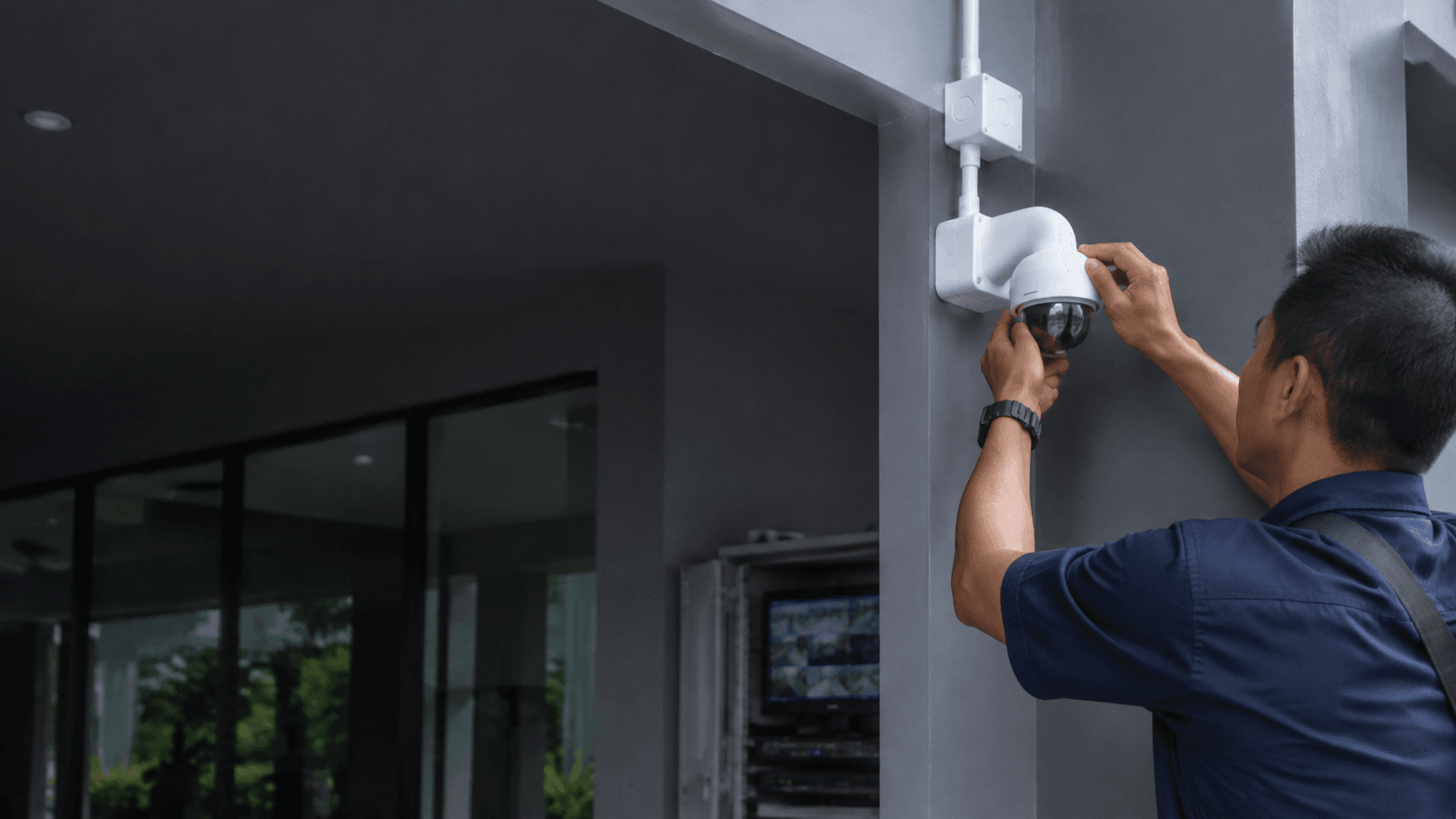
The second is owning a camera and viewing it online. This involves a supplier, a site survey, camera placement, a recorder, and a viewing method that works from a phone or browser. The camera belongs to the property owner, the footage is private, and the system keeps recording when nobody is watching.
Both jobs use the same phrase, but they need different answers. A reader looking for live public feeds will not be helped by installation steps. A reader planning a shop or office system will not be helped by a webcam directory.
Live public camera feeds versus a camera you own
Public feeds are free and immediate. They also come with limits that rarely appear in the marketing copy. Streams go offline without notice. Resolution is often lower than the page suggests. Coverage is fixed, so a camera pointed at a street shows the street and nothing else. Privacy rules differ by country, and a published feed may be removed at any time.
An owned system works the other way. Setup takes time and money up front. In return, the camera covers the entrance, the counter or the yard that matters to the property. Recording continues around the clock, and access is limited to people the owner chooses.
For a business in Sarawak, the owned system is usually the relevant one. Public feeds are useful for checking traffic or weather, not for protecting stock, staff or visitors.
Cctv Camera Online setup. survey, placement, recording, remote viewing
A working remote-viewing setup is built in a fixed order. Skipping a stage usually shows up later as a blind spot, a washed-out night image, or a feed that cannot be opened away from the premises.
- Site survey. The installer walks the property and records where people arrive, where valuables are kept, where lighting changes through the day, and where cabling can run without damage or clutter.
- System proposal. The survey findings become a plan: how many cameras, which positions, what recording equipment, and how the footage will be viewed.
- Installation. Cameras are mounted, cabling is run, the recorder is configured, and recording is tested.
- Handover. The owner is shown how to open the live view and how to find recorded footage.
Eyonic's published installation process follows these four stages: site survey, system proposal, installation and handover. The handover stage is where remote viewing stops being a feature on a page and becomes something the owner can actually operate.
Recording sits between the camera and the viewer. A camera without a recorder shows only what is happening now. A recorder stores footage so it can be reviewed after an incident. The recorder also determines how the feed reaches a phone or browser, which is why the recording setup is decided during the survey rather than after installation.
What Eyonic checks before confirming camera placement
Placement is confirmed only after the conditions at each position are checked. Eyonic's published guidance on ColorVu-style cameras recommends checking actual lighting conditions before confirming placement, because a position that looks adequate in daylight can behave differently at night.
The checks that matter most.
- Lighting at the position through the full day, including the hours when the area is busiest.
- Coverage of the arrival flow, so people entering the property pass through at least one camera's view.
- Staff areas, where movement is routine and a camera should not obstruct work.
- Visitor movement, so the path from entry to counter or reception stays visible.
These checks come from the same pattern used on the Kuching Immigration Office project, where the work focused on arrival flow, staff areas, visitor movement and dependable daily operation. A public office and a shop have different layouts, but the questions asked before mounting a camera are similar.
Kuching Immigration Office. a public-office installation example
Eyonic completed a project for the Kuching Immigration Office. The stated need was practical support for a public office, focused on arrival flow, staff areas, visitor movement and dependable daily operation.
The approximate budget for that type of work is RM 12,000 to RM 28,000. A second reference project, for KTA Sarawak Sdn Bhd, covered a practical office setup in Kuching supporting staff movement, visitor handling, tidy cabling and clearer daily site control, with an approximate budget of RM 8,000 to RM 18,000.
Those figures describe project-scale work, not a single-camera installation. They are useful as a rough sense of scale for an office or public building, and they should not be read as a price list.
What the example shows is the order of decisions. Arrival flow comes before camera count. Staff and visitor movement come before lens choice. Dependable daily operation comes before any feature that only looks good in a demonstration.
Costs, packages and the next practical step
Eyonic publishes three packages at RM 1,599 each.
The Hikvision CCTV Package covers camera supply and setup, basic recording configuration, and mobile viewing handover. The Hikvision Alarm System covers a control panel and sensors, siren and zone setup, and user testing and handover. The Autogate Package covers motor recommendation, remote-control setup, and safety testing and handover.
The CCTV package is the one that answers the Cctv Camera Online question directly, because mobile viewing handover is part of what is delivered. The package does not state which camera models, resolutions, lens sizes, storage capacities or recording durations are included, and it does not name the viewing app or the number of devices that can watch a feed at once. Those details need to be confirmed against the property rather than assumed from the package name.
Two constraints are worth stating plainly. Eyonic's published project and service evidence describes work in Sarawak, so coverage outside Sarawak is not established by the available material. Warranty terms, response times and post-installation support windows are also not published, so they should be asked about directly rather than inferred.
Choosing between the two jobs
If the goal is to watch a street, a beach or a city view, a public webcam network or directory is the right tool, and no purchase is involved. If the goal is to see a specific door, counter, yard or corridor, the owned-system route applies, and the work starts with a survey rather than a camera.
For a home, shop, office or industrial site, the practical sequence is the same: identify what needs to be seen, check the lighting and movement at each position, agree the recording setup, then confirm how the footage will be viewed remotely. The viewing step is the one most often left until the end, and it is the one that determines whether the system is actually used.
Eric Yong founded Eyonic Security Systems and has worked in the industry for more than ten years, with experience in technical installation of digital security solutions for commercial businesses in Sarawak.
Share your location, property type and required system with Eyonic on WhatsApp at +60 11-5111 7959 for the next practical step.