
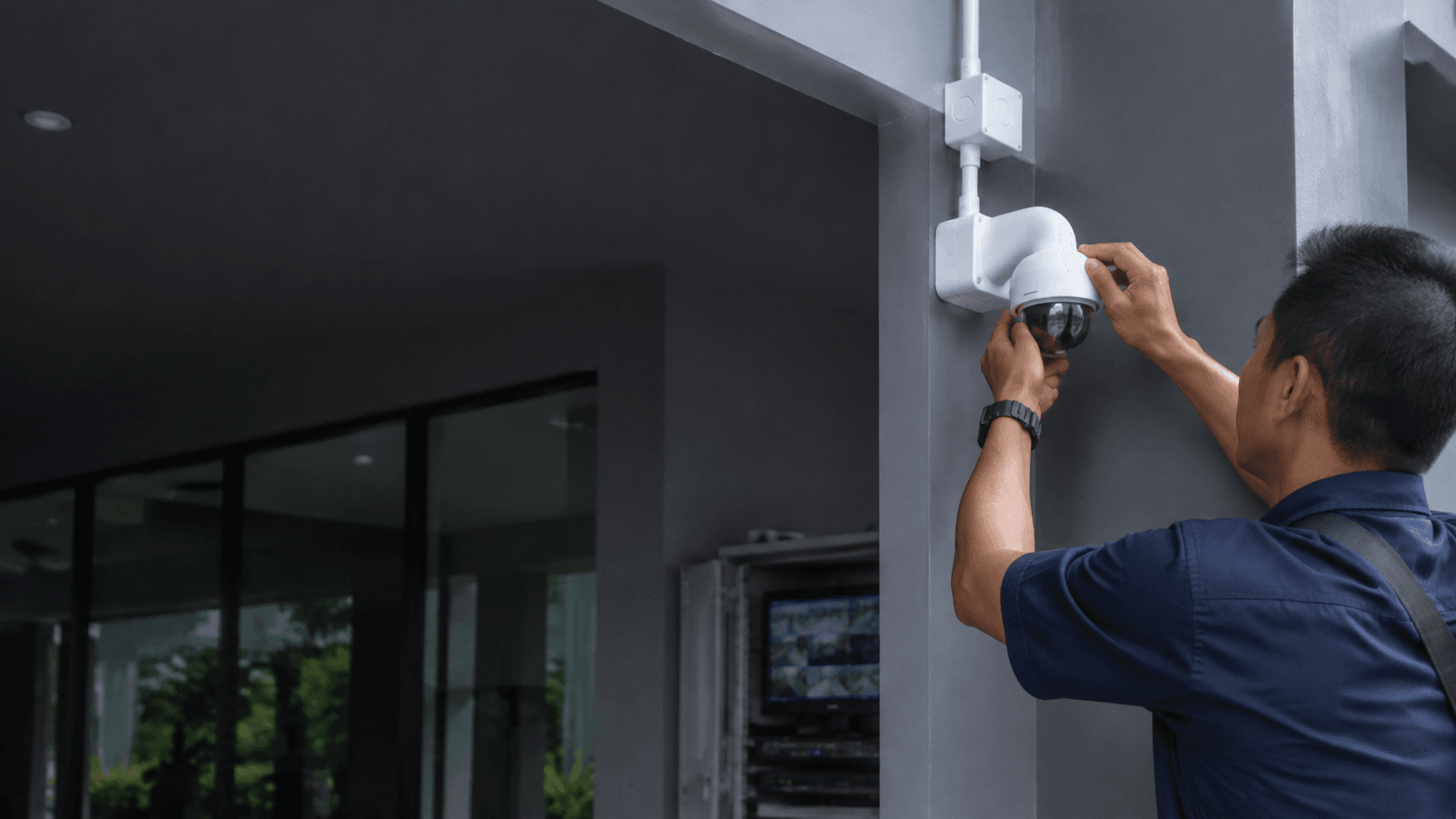
Eyonic Sdn Bhd handles that work across Sarawak, covering CCTV, alarm, autogate, and intercom as one coordinated setup rather than separate purchases. The company's own installation process runs from site survey through system proposal, installation, and handover.
Most buyers arrive with the same starting question: what does an outdoor security system for home actually include once it is installed? The answer is less about a single device and more about how four parts work together — where cameras see, where footage is stored, how the property is watched remotely, and how alarms and gates respond.
Outdoor Security System For Home: What the Setup Covers
A complete outdoor setup usually combines four elements. Cameras cover the perimeter and entry points. A recorder stores the footage. Remote viewing lets the property be checked from a phone. Alarm, gate, and intercom devices handle what happens at the boundary.
Eyonic plans, supplies, and installs monitoring systems with camera placement, recording, and remote viewing for homes, offices, shops, and industrial sites. The same team also installs alarm systems, autogate systems, and keyphone intercoms, which matters because those devices share walls, power routes, and cable paths with the cameras.
Buyers comparing an outdoor security system for home often start with cameras alone and add the rest later. That sequence works, but it costs more in the end. Cabling run for cameras can usually carry alarm or intercom wiring at the same time, and a single survey can position every device instead of returning to the property twice.
Camera Placement, Lighting and Recording Decisions
Placement decides how useful the footage is. A camera aimed at a gate records a gate. A camera positioned to capture faces, vehicle plates, and approach paths records evidence.
Eyonic recommends checking actual lighting conditions before confirming placement for ColorVu-style cameras. That step matters in Sarawak because a position that looks well lit at midday can be dark by eight in the evening, and a camera that relies on available light will perform differently once the sun is down.
Recording is the second decision. Footage has to land somewhere — typically a recorder on site — and that recorder needs a location with power, ventilation, and reasonable protection. Remote viewing then depends on the recorder being reachable over the property's internet connection, which is why the network setup is reviewed alongside the cameras rather than after them.
Three practical constraints shape most home layouts:
- Entry points and vehicle approaches usually matter more than wide garden coverage.
- Overhead cabling is tidier and more reliable than long exposed runs at ground level.
- Camera positions should be decided before alarm sensors and gate motors, not after.
Alarm, Autogate and Intercom Working Together
Cameras record. Alarms react. Gates and intercoms control who gets in. Treating them as one system is what makes an outdoor security system for home useful at night, when nobody is watching a screen.
Eyonic's alarm work covers control panel and sensor supply, siren and zone setup, and user testing at handover. The autogate package covers motor recommendation, remote-control setup, and safety testing. The intercom side handles keyphone installation, which is often the piece that ties a gate to the house.
The trade-off is complexity. A single camera is simple to add. A coordinated alarm, gate, and intercom setup needs zone planning so that a gate sensor and a gate camera describe the same event rather than two unrelated ones. That planning is easier before installation than after.
How Eyonic Plans, Installs and Hands Over
Eyonic's CCTV installation process follows four stages, and the same sequence applies to alarm, autogate, and intercom work.
- Site survey — the property is reviewed for camera positions, lighting, cable routes, and device locations.
- System proposal — the recommended setup is put together based on what the survey found.
- Installation — cameras, recorders, alarms, gate motors, and intercoms are installed and configured.
- Handover — recording, mobile viewing, sensors, sirens, and controls are tested and explained.
The survey stage is where most problems are avoided. Cable routes, power availability, and lighting are all checked while changes are still cheap. By installation day, the positions and device list are already settled.
Handover is the stage buyers underestimate. A system that records correctly but has never been tested with the household's own phones and routines tends to sit unused. Testing mobile viewing, alarm zones, and gate controls before the installer leaves is what turns an installed system into a working one.
Project Evidence and Package Pricing
Eyonic has completed work for the Kuching Immigration Office, focused on arrival flow, staff areas, visitor movement, and dependable daily operation. The approximate budget for that type of work is RM 12,000 to RM 28,000. A second project for KTA Sarawak Sdn Bhd covered a practical office setup in Kuching supporting staff movement, visitor handling, tidy cabling, and clearer daily site control, with an approximate budget of RM 8,000 to RM 18,000.
Those figures describe commercial and public-office scopes, not a typical house. They are useful as a reference point for how project size affects cost, not as a home estimate.
For homes, Eyonic lists three packages at RM 1,599 each:
- Hikvision CCTV Package — camera supply and setup, basic recording configuration, and mobile viewing handover.
- Hikvision Alarm System — control panel and sensors, siren and zone setup, and user testing and handover.
- Autogate Package — motor recommendation, remote-control setup, and safety testing and handover.
Each package covers one part of the system. A property that needs cameras, an alarm, and a gate motor is looking at three separate packages, and the survey determines whether all three are needed at once or can be staged.
Eyonic is led by founder Eric Yong, who has worked in the industry for more than 10 years and specialises in technical installation of digital security solutions for commercial businesses in Sarawak.
Questions Before Confirming an Outdoor Security System For Home
How many cameras does a house need? That depends on the number of entry points, vehicle approaches, and blind spots found during the survey. Eyonic's published package details do not state a camera count, so the number is confirmed after the site is reviewed rather than quoted in advance.
Can cameras and an alarm be installed at the same time? Yes, and it is usually cheaper. Both use similar cable routes and a shared survey, so combining the work avoids a second visit.
What happens if the internet goes down? Recording continues on site. Remote viewing stops until the connection returns, which is why local recording matters for an outdoor security system for home rather than relying on cloud access alone.
Does the RM 1,599 price cover the whole house? No. Each package covers one system — CCTV, alarm, or autogate. A full property setup combines packages, and the survey confirms which are required.
Is coverage limited to Kuching? Eyonic works across Sarawak. Specific locations are confirmed directly, since the published project evidence covers Kuching.
Share the property location, property type, and the systems needed with Eyonic on WhatsApp at +60 11-5111 7959 to arrange the next practical step.