
The exact-match query ip cctv camera price sits at the meeting point of two different buying journeys. One reader wants a single camera to add to an existing network. Another needs a full system for a shop, office, or industrial site. The price answer changes depending on which journey applies, and the biggest source of confusion is comparing a bare camera listing against a supplied-and-installed package.
Eyonic Sdn Bhd is a security system supplier in Sarawak that plans, supplies, and installs CCTV and ELV systems for homes, offices, shops, and industrial sites. Its published Hikvision CCTV package is RM 1,599, covering camera supply and setup, basic recording configuration, and mobile viewing handover. That figure is a useful anchor because it bundles hardware with labour rather than quoting a device alone.
Ip Cctv Camera Price. What Shapes the Number
Four cost drivers explain most of the variation between quotes. Resolution determines sensor and processing cost. Lens type separates fixed-lens models from varifocal and motorised-zoom units. Night-vision technology separates standard infrared from full-colour low-light designs. Recorder channels and storage set the back-end cost that sits behind every camera.
Installation adds a second layer. Cable runs, mounting height, weatherproofing, and whether the site already has network cabling all change labour time. A camera swapped onto an existing PoE run costs far less to add than a camera that needs a new cable path through a concrete wall.
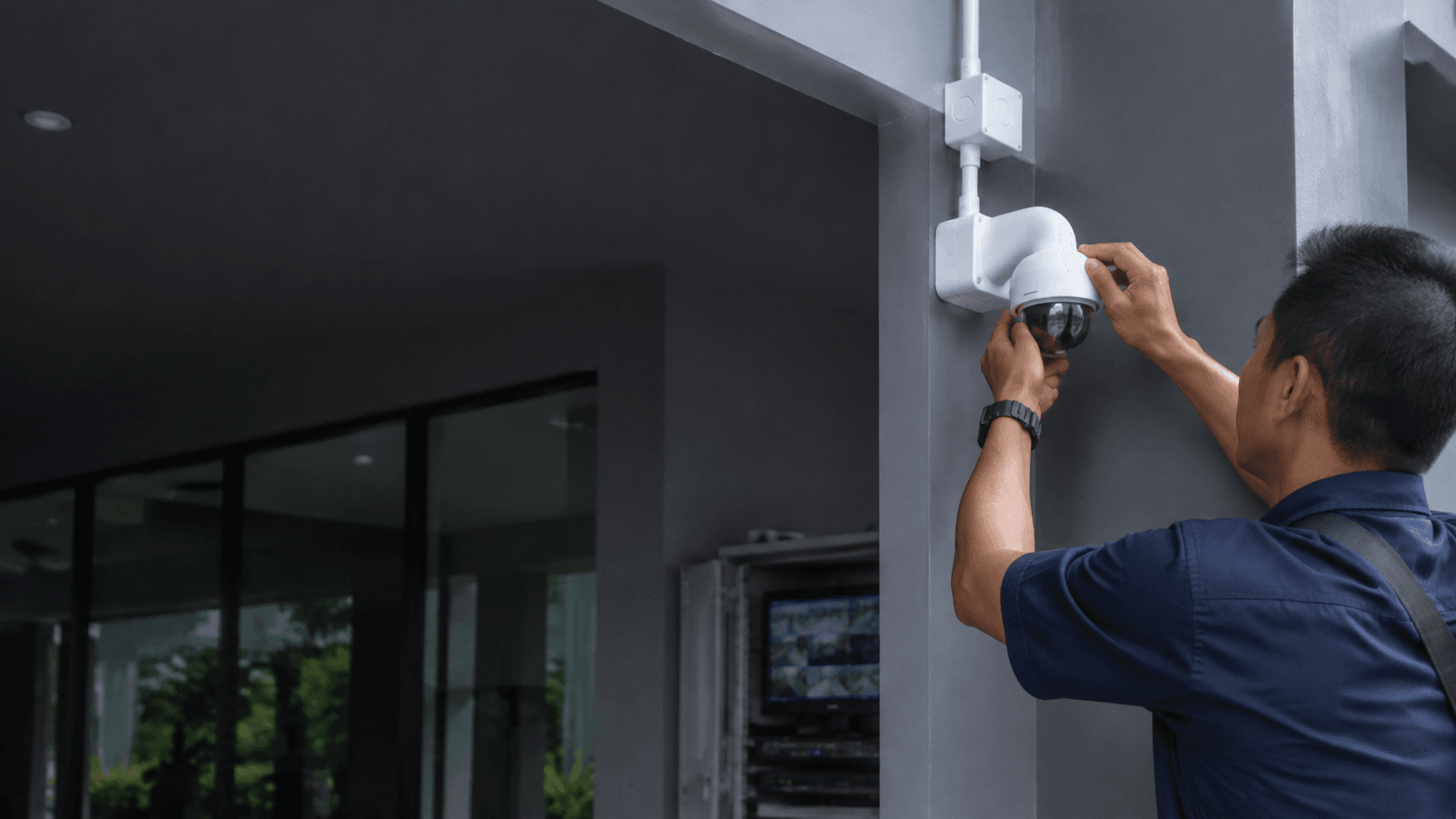
Eyonic's CCTV installation process moves through site survey, system proposal, installation, and handover. The survey stage is where camera placement and lighting conditions get checked before anything is ordered, which prevents paying for a specification the site cannot use.
Why a Single Camera Price Rarely Matches a System Price
A standalone IP camera listing covers the device and sometimes a power adapter. A system price covers cameras, recorder, storage, cabling, connectors, mounting hardware, configuration, and the labour to install it. Comparing the two directly produces a misleading gap, because the system figure includes work the device listing never mentions.
For a small home or shop, the practical question is how many cameras need recording simultaneously and for how long footage must be retained. Those two answers set the recorder and hard-drive cost, which is often the largest single line after the cameras themselves.
Choosing the Right Ip Cctv Camera
Selection should follow the site, not the specification sheet. A camera chosen for its resolution alone may still fail if its lens angle misses the entry point or its night performance collapses under the actual lighting on site.
- Identify what needs to be seen. faces at an entrance, vehicle plates at a gate, or general movement across a yard.
- Match the lens to the distance. Wide fixed lenses cover a broad area; varifocal and motorised lenses narrow the view to a specific target.
- Check the lighting at the exact mounting position, including after dark, before confirming a low-light model.
- Count recording channels and decide how many days of footage must be retained.
- Confirm the cable path and whether power can reach the camera position.
- Verify remote viewing works on the devices the owner actually uses.
Eyonic recommends checking actual lighting conditions before confirming placement for ColorVu-style cameras, because full-colour night performance depends on how much ambient light reaches the scene. A position that looks bright during a daytime survey can behave very differently at night.
Camera Types and Where Each Fits
Turret and dome cameras suit entrances and indoor ceilings where a low-profile housing matters. Bullet cameras suit long outdoor runs where the direction of view is fixed and obvious. PTZ cameras suit large open areas where an operator needs to zoom or track across a wide field. Panoramic and multi-sensor models suit a single mounting point that must cover several directions at once.
Resolution choices commonly range from 2 MP through 4 MP, 5 MP, and 8 MP, with higher figures available on specialised models. Higher resolution increases storage and bandwidth demand, so a 4 MP camera paired with adequate retention often serves a small site better than an 8 MP camera that forces a larger hard drive.
What is ip cctv camera?
An IP CCTV camera captures video and transmits it as digital data over a network connection rather than sending an analogue signal down a coaxial cable. Each camera is a network device with its own address, which is why footage can be viewed remotely and why a single cable can carry both power and data when Power over Ethernet is used.
That architecture produces the practical differences buyers notice. Adding a camera means adding a network point rather than splicing into an existing analogue line. Recording happens on a network video recorder or, on some models, to a local memory card. Remote viewing depends on the network and the recorder's software rather than on a separate video server.
PoE is the feature that most affects installation cost. A PoE camera draws power over the same Ethernet cable that carries video, so a single cable run replaces the separate power feed an analogue camera would need. On sites where cable paths are difficult, that difference is often larger than the difference in camera price.
Where IP Fits Better Than Analogue
IP suits sites that need remote viewing across multiple devices, higher resolution than analogue typically delivers, or integration with access control and alarms. It also suits buildings where network cabling already exists, because the marginal cost of adding a camera drops sharply.
Analogue systems can still make sense where existing coaxial cabling is in good condition and the requirement is basic recording without remote access. Replacing a working analogue backbone purely to change technology rarely pays back on a small site.
Practical Considerations for
Budget planning works better when the scope is fixed before prices are compared. A public office project completed by Eyonic in Kuching focused on arrival flow, staff areas, visitor movement, and dependable daily operation, with an approximate budget range of RM 12,000 to RM 28,000 for that type of work. An engineering consultancy office project in Kuching, covering staff movement, visitor handling, and tidy cabling, carried an approximate budget range of RM 8,000 to RM 18,000.
Those ranges illustrate how site complexity moves the number far more than camera count alone. A single-room installation and a multi-zone public building can use similar cameras and still land in very different budget bands.
| Driver | What changes | Practical effect |
|---|---|---|
| Resolution | 2 MP up to 8 MP and beyond | Higher resolution raises storage and bandwidth needs |
| Lens type | Fixed versus varifocal or motorised | Adjustable lenses cost more but reduce placement risk |
| Night performance | Standard infrared versus full-colour low light | Low-light models need verified ambient light at the position |
| Recorder and storage | Channel count and retention days | Often the largest single line after the cameras |
| Cabling and labour | Existing network runs versus new paths | Reusing PoE runs lowers the added cost per camera |
Retention is the constraint buyers most often underestimate. Storing thirty days of continuous footage from several high-resolution cameras requires substantially more drive capacity than storing seven days, and the recorder must support the resulting load.
Edge Cases Worth Planning For
Sites with unreliable power need surge protection and, in some cases, an uninterruptible supply for the recorder so footage is not lost during an outage. Outdoor positions exposed to direct rain and salt air need housings rated for the environment. Positions where a camera can be reached by hand need vandal-resistant housings or a higher mounting point.
Where a site already runs an alarm system, autogate, or intercom, planning the CCTV alongside those systems avoids duplicated cabling and separate handover sessions. Eyonic supplies and installs alarm systems, autogate packages, keyphone intercoms, and Starlink internet alongside CCTV, which allows a single site survey to cover several systems at once.
Making an Informed Choice About
The most reliable way to price an IP CCTV camera installation is to define the site first and compare quotes against that definition. A quote built on a survey will name camera positions, lens choices, recorder channels, retention days, and the cable route. A quote built on a device list will not.
Three questions separate a useful quote from a vague one. How many cameras record simultaneously, and for how many days? Which positions have been checked after dark? What happens to the recording during a power interruption? A supplier who answers all three has done the survey work that makes the price meaningful.
For readers comparing a single camera against a full system, the honest comparison is device cost against installed cost. The device figure is real but incomplete, and the installed figure is what the site will actually pay.
Share your location, property type and required system with Eyonic on WhatsApp at +60 11-5111 7959 for the next practical step.