
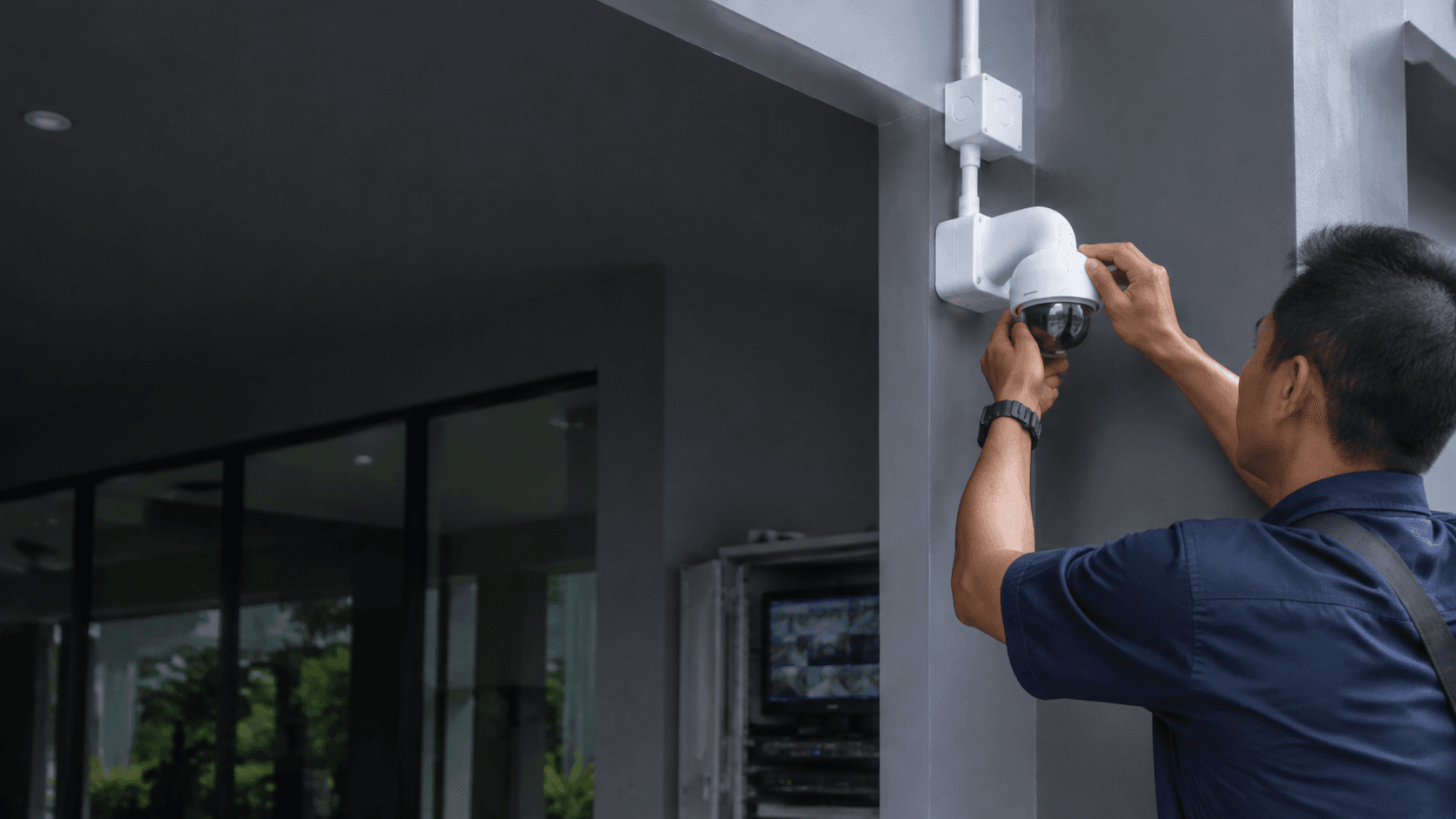
What Is a Dome CCTV Camera?
A dome CCTV camera is a security camera shaped like a half-sphere, with the lens housed behind a tinted or clear dome. The casing makes it harder for people to see which direction the lens points, which can deter tampering and helps maintain discreet monitoring in shops, offices, and homes.
The dome form factor also protects the lens from dust, impact, and casual interference. Many models are rated as vandal-resistant, meaning the housing is built to withstand physical force better than a standard bullet camera. This makes dome CCTV a practical option for areas where cameras are within arm's reach, such as reception counters, corridors, and retail floors.
Dome CCTV vs Bullet Cameras. Which to Choose?
Choosing between dome and bullet cameras depends on the mounting location and the viewing distance required. Bullet cameras are long and cylindrical, designed for long-range viewing down a corridor or across a car park. Dome CCTV cameras offer a wider field of view in a compact footprint, which suits indoor spaces and shorter sightlines.
| Feature | Dome CCTV Camera | Bullet Camera |
|---|---|---|
| Housing shape | Compact half-sphere | Long, cylindrical |
| Best viewing range | Short to medium | Medium to long |
| Tamper resistance | Higher with vandal-resistant dome | Lower unless armoured |
| Discreetness | Lens direction hidden | Lens direction obvious |
| Typical placement | Ceilings, indoor walls | Walls, poles, outdoor perimeters |
| Common use | Shops, offices, corridors | Car parks, building exteriors |
For a shop floor or office lobby, a dome CCTV camera mounted on the ceiling gives broad coverage without drawing attention to the exact viewing angle. For a warehouse entrance or an open yard, a bullet camera often reaches further. Many Malaysian properties use both types in one system, with dome units indoors and bullet units covering the perimeter.
Key Dome CCTV Features to Compare
When comparing dome CCTV options, resolution, night vision, and housing strength matter most for practical use. Higher resolution captures more detail for identifying faces or vehicle plates, while infrared or ColorVu-style colour night vision determines how usable the footage is after dark.
Resolution is measured in megapixels, with common options ranging from 2MP (1080p) up to 4K. A 2MP dome CCTV camera is adequate for a small shop, while a 4MP or higher unit is better for a larger space where detail matters. Night vision range is measured in metres, and the right distance depends on the size of the area being watched.
Vandal resistance is rated with an IK code, such as IK10, which indicates the housing can withstand a set level of impact. An IK10-rated dome CCTV camera is suited to public areas where tampering is a risk. Indoor-only models are lighter and cheaper, while outdoor models carry an IP rating for water and dust protection.
The camera type also affects the system design. IP dome CCTV cameras send video over a network and offer higher resolution and remote viewing. Analog dome cameras use coaxial cable and work with a DVR, which can be a lower-cost path when upgrading an existing system. Eyonic plans, supplies, and installs monitoring systems with camera placement, recording, and remote viewing for homes, offices, shops, and industrial sites, so the right signal type depends on the existing infrastructure and the recording device.
How to Install Dome CCTV Cameras
A dome CCTV installation follows a structured process that starts before any camera is mounted. Eyonic's CCTV installation process covers site survey, system proposal, installation, and handover, which keeps the project aligned with the actual layout and lighting of the property.
- Conduct a site survey to map entry points, blind spots, and the areas that need coverage.
- Review the system proposal, including camera positions, recording capacity, and cabling routes.
- Install the cameras, run the cabling, and configure the recorder and network settings.
- Hand over the system with a walkthrough of viewing, playback, and maintenance basics.
Placement matters more than the camera model. Eyonic recommends checking actual lighting conditions before confirming placement for ColorVu-style cameras, which rely on ambient light to produce colour footage at night. A camera aimed at a bright sign or a dark corner will not perform as expected, so the site survey should note light sources that change through the day.
Ceiling height and mounting surface also affect the result. A dome CCTV camera on a high ceiling covers more floor area but captures less facial detail. A lower mount gives clearer images but narrows the coverage. The installer should balance these factors against the purpose of each camera, such as monitoring a till area versus watching a whole room.
Dome CCTV Maintenance and Common Issues
Dome CCTV cameras need occasional cleaning because the curved housing collects dust and can develop a haze that softens the image. A microfiber cloth and a mild cleaning solution keep the dome clear. Avoid abrasive pads, which scratch the surface and permanently blur the footage.
Condensation is another common issue, especially in humid Malaysian conditions. If moisture appears inside the dome, the seal may be failing, and the camera should be checked before the internal electronics are damaged. Outdoor units need their IP-rated seals inspected after heavy rain or building work.
Image quality problems are often a placement issue rather than a hardware fault. Glare from direct sunlight or reflective surfaces can wash out the picture. Checking the camera's view during the brightest and darkest parts of the day reveals whether the position and settings are correct.
Choosing a Dome CCTV Installer in Malaysia
A reliable installer should start with a site survey rather than a generic quote. The survey informs the camera count, the lens type, and the recording storage needed for the property. Eyonic's process for CCTV installation services in Sarawak follows this sequence, and the same logic applies to projects across Malaysia.
Look for an installer who can show completed work for similar properties. Eyonic completed a project for the Kuching Immigration Office, focusing on arrival flow, staff areas, visitor movement, and dependable daily operation. A public office has different needs from a retail shop, so past projects should match the property type being secured.
The installer should also explain the system in plain terms, covering how to view footage remotely, how long recordings are kept, and what happens during a power outage. A clear handover prevents confusion later. For commercial sites, the installer should confirm whether a standalone system or a networked setup with access control is more appropriate, as Eyonic does when reviewing smart lock and access-control needs.
Share the location, property type, and required system with Eyonic on WhatsApp at +60 11-5111 7959 for the next practical step.