
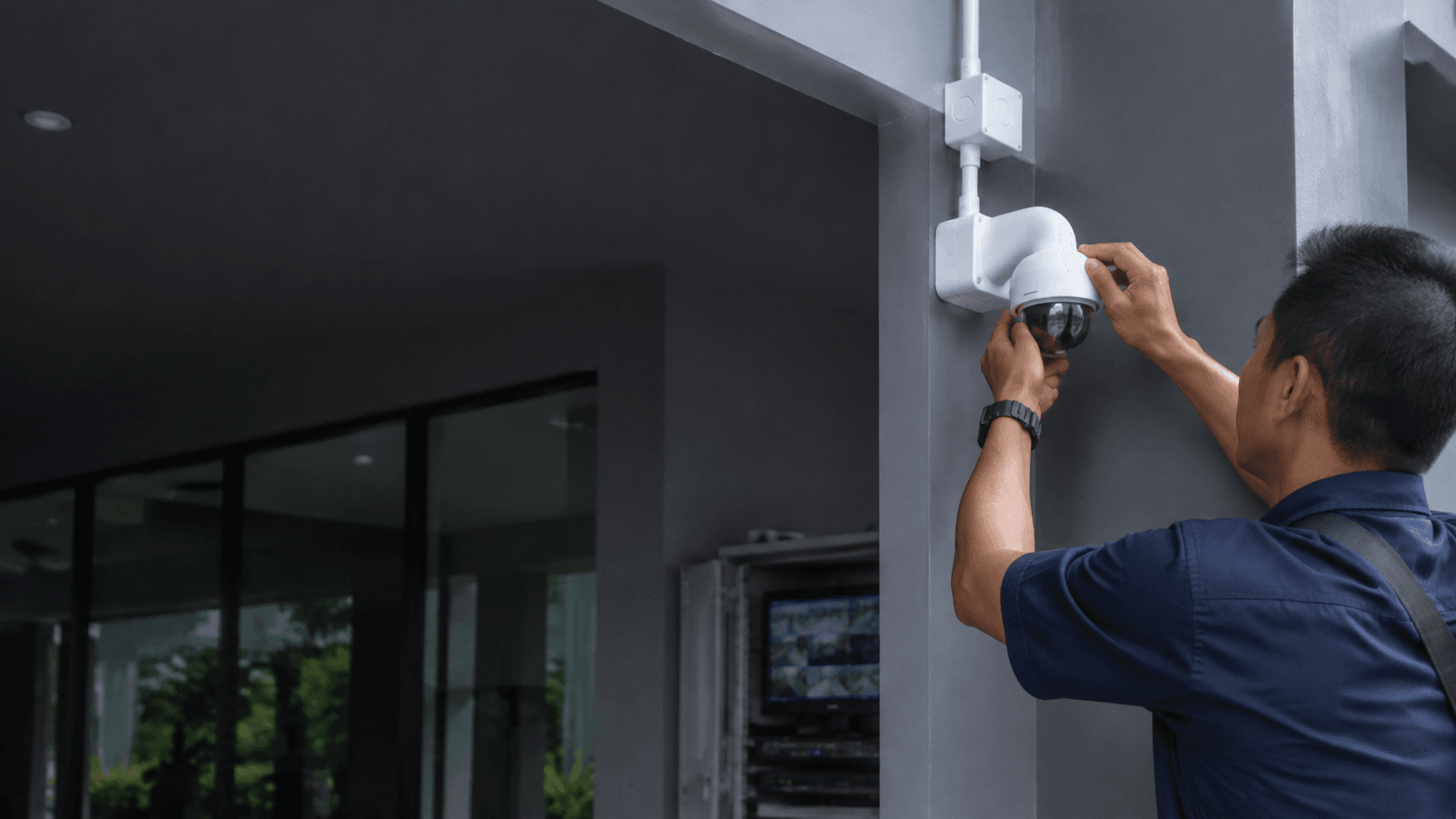
The term covers a wide range of setups, from a single camera watching a shop entrance to a multi-camera system covering an entire office floor. What separates a useful system from a frustrating one is rarely the brand on the box. It is whether the camera positions, lighting, recording capacity, and viewing method match how the property is actually used.
CCTV Surveillance. What Matters Before Choosing
Most buying mistakes happen before any hardware is selected. A camera pointed at a dark corner, a recorder too small for the retention period required, or a viewing app nobody can operate will undercut an otherwise sound purchase.
Eyonic's own installation process reflects this order of priority. The company's CCTV installation service in Sarawak follows site survey, system proposal, installation, and handover. The survey exists because camera placement depends on the building, not on a catalogue.
Lighting is a specific example. Eyonic recommends checking actual lighting conditions before confirming placement for ColorVu-style cameras, which are designed to produce usable colour images in low light. A position that looks adequate during a daytime walkthrough can behave very differently after dark, so the check belongs before installation, not after.
- Survey the site and identify the areas that genuinely need coverage, such as entrances, counters, walkways, and storage.
- Confirm lighting at each proposed camera position, including how the scene looks at night.
- Match camera type and resolution to the distance and detail required at each position.
- Size the recorder and storage so footage is retained for the period the property needs.
- Agree on who will view the system, from where, and on which devices.
- Install, configure recording, and hand over with a walkthrough of live and recorded viewing.
What Is CCTV Surveillance?
CCTV surveillance is the use of cameras connected to a private viewing and recording setup rather than a public broadcast. Footage travels from cameras to a recorder, where it is stored and can be reviewed later, and increasingly it is also streamed to a phone or computer for remote viewing.
Modern systems generally fall into two broad families. Network systems send video over Ethernet cabling to a network video recorder, while older analog systems use coaxial cabling to a digital video recorder. Both remain in service, and the choice usually comes down to existing cabling, budget, and the resolution required.
Camera styles matter less than placement. Dome cameras suit indoor ceilings and areas where a low-profile housing is preferred. Bullet cameras suit longer outdoor runs and clear directional coverage. The practical question is which style gives the required field of view at each position without leaving gaps between cameras.
Closed-Circuit Television in Practice
Closed-circuit television is the full term behind the CCTV abbreviation, and the "closed circuit" part describes the private path the signal takes. That distinction matters for how a system is planned, because the recording device, storage, and network all sit inside the property's own infrastructure.
This is also why recording capacity is a planning decision rather than an afterthought. Higher resolution and more cameras both increase the volume of video produced, and storage must be sized to hold that video for as long as the property needs it. A system that overwrites footage after a few days may be technically working while failing its actual purpose.
Remote viewing adds a second consideration. Viewing footage away from the property depends on the recorder being reachable over the internet, which makes network setup and account security part of the installation rather than separate concerns.
Practical Considerations for CCTV Surveillance
Different property types pull the design in different directions. A home typically needs coverage of entry points and the perimeter. A shop needs the counter, the entrance, and the stock area. An office or industrial site often needs staff movement, visitor handling, and tidy cabling across a larger footprint.
Eyonic's completed work shows how those priorities differ in practice. The Kuching Immigration Office project focused on arrival flow, staff areas, visitor movement, and dependable daily operation for a public office. The KTA Sarawak Sdn Bhd project supported staff movement, visitor handling, tidy cabling, and clearer daily site control for an engineering consultancy office in Kuching.
Both examples point to the same constraint: a public-facing or multi-area site needs coverage that follows how people actually move through the building, not just a camera at each door. Cabling routes and equipment locations also affect how disruptive installation is and how easy later maintenance will be.
Budget is a real constraint rather than a taboo subject. Eyonic's published package pricing places a Hikvision CCTV package at RM 1,599, covering camera supply and setup, basic recording configuration, and mobile viewing handover. Larger or more complex sites sit well above that figure; the Kuching Immigration Office project carried an approximate budget of RM 12,000 to RM 28,000, and the KTA Sarawak Sdn Bhd project an approximate budget of RM 8,000 to RM 18,000.
Making an Informed Choice About CCTV Surveillance
The most reliable way to choose is to work backwards from what the footage needs to show. If the goal is identifying a person at an entrance, resolution and camera height at that entrance matter more than the total number of cameras. If the goal is monitoring a wide yard, coverage and lighting matter more than fine detail.
It also helps to decide early who will review footage and how often. A system that only one person can operate creates a dependency, while a system with clear user roles and a documented viewing method keeps working when staff change.
For properties in Sarawak, working with an installer who surveys the site first reduces the risk of cameras that miss the areas that matter. Eyonic's founder, Eric Yong, has more than ten years in the industry and works on technical installation of digital security solutions for commercial businesses in Sarawak, which is the kind of background that shapes placement decisions during a survey.
The next practical step is to share the property location, property type, and the system required. Eyonic can be reached on WhatsApp at +60 11-5111 7959 to move from general planning to a site-specific proposal.