
The term vision cctv is used loosely in Malaysia. It can describe a brand, a supplier name, or simply the idea of cameras that keep producing usable images when light drops. The supplied evidence does not confirm which of those applies, so this guide treats it as the practical question behind the search: how a surveillance setup is planned, placed, installed and handed over so it still works on an ordinary Tuesday night.
Most disappointment with a camera system traces back to decisions made before anyone drills a hole. A camera aimed at a bright doorway will silhouette every face that walks through it. A camera covering a car park from too far away records movement without detail. Placement and lighting checks exist to catch those problems while they are still cheap to fix.
What vision cctv covers in a working installation
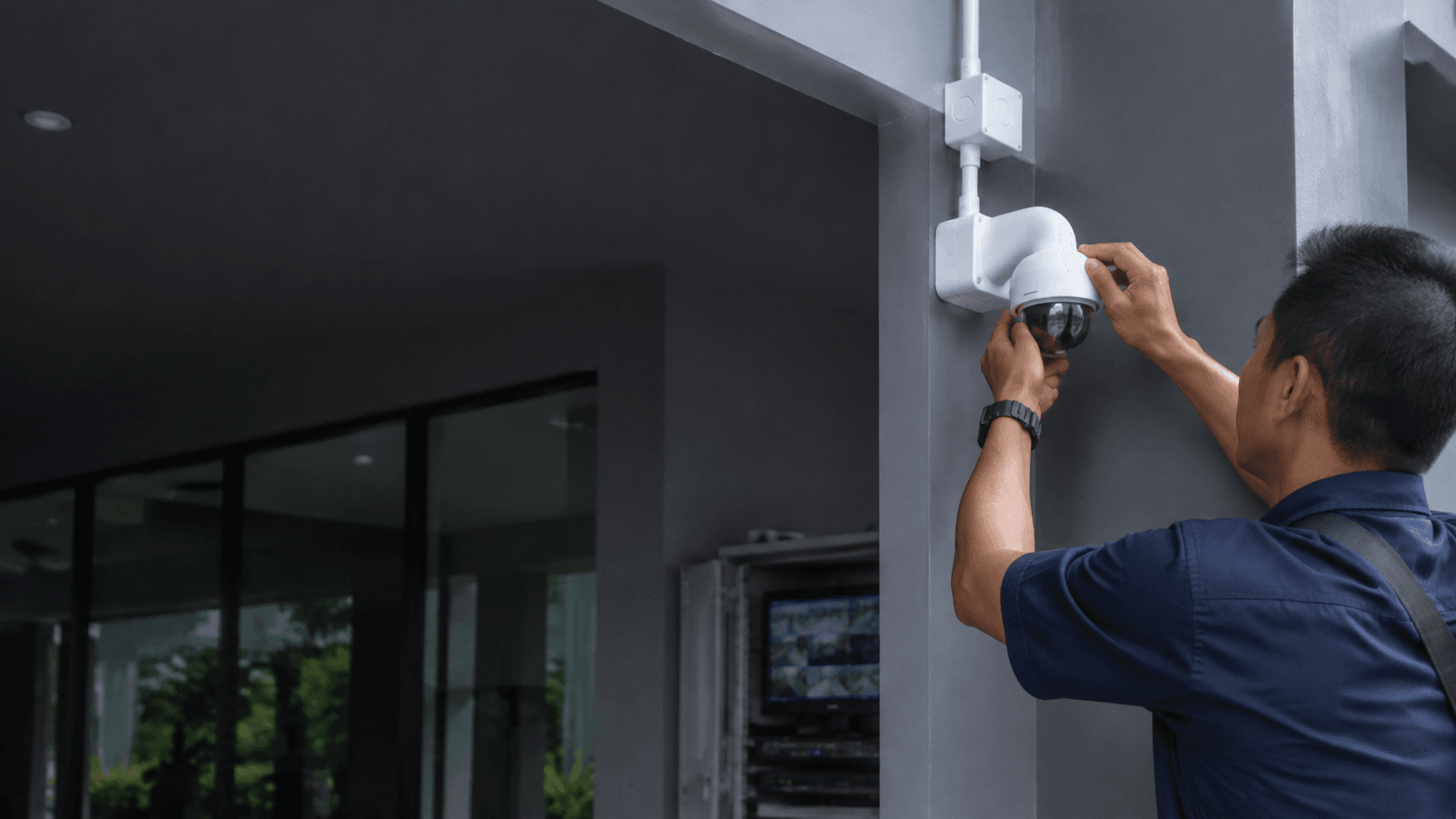
A working installation covers four connected jobs: choosing camera positions, supplying and mounting the cameras, configuring recording on an NVR, and setting up remote viewing so the footage can be checked from a phone or computer. Eyonic describes its CCTV work as planning, supplying and installing monitoring systems with camera placement, recording and remote viewing for homes, offices, shops and industrial sites.
Those four jobs fail in different ways. Poor placement produces blind spots that nobody notices until an incident. Weak recording configuration means footage exists but overwrites too quickly to be useful. Remote viewing that was never tested on the owner's own phone becomes a feature that exists on paper only.
Coverage should follow how a site is actually used rather than how it looks on a floor plan. Entrances, counters, cash handling points, staff routes and vehicle access usually matter more than wide decorative views of a compound. A camera that captures a clear face at the door is worth more than one that records an empty corridor in high resolution.
Where vision cctv fits and where it does not
Camera systems suit sites with repeatable movement: a shop counter, an office reception, a factory gate, a house with a front and back approach. They suit less well where the real problem is something else. A door that needs controlled entry is an access control question, and Eyonic notes that smart locks work best when door condition, user roles and a backup entry method are reviewed first, and that business use sometimes calls for an access-control panel instead of a standalone lock.
Lighting is the other boundary. Cameras that perform well in daylight can behave very differently after dark, and the difference is not always obvious from a product listing. That is why the lighting check described below happens before placement is confirmed rather than after installation.
How lighting and placement decisions are checked before installation
Eyonic recommends checking actual lighting conditions before confirming placement for ColorVu-style cameras. The check is simple in principle: look at the site at the hours that matter, not at midday when everything looks fine.
Night conditions vary more than most owners expect. A porch with a warm bulb, a corridor lit by a single fluorescent tube, a back lane with no lighting at all, and a car park with sodium lamps are four different problems. Each one changes where a camera should point, how high it should sit, and whether supplementary light is needed.
Placement also has to account for what the camera will see behind its subject. A camera facing a window will record reflections at night. A camera facing a road will be washed out by headlights. A camera mounted too low becomes easy to reach; mounted too high, it records the tops of heads instead of faces.
Practical checks that shape a placement plan include:
- Whether the area is lit at night, and by what kind of light.
- Which direction the camera faces relative to windows, roads and bright signage.
- Whether the subject will be front-lit, back-lit or in shadow at the moment that matters.
- How far the camera sits from the point where identification is actually needed.
- Whether cabling can reach the position tidily, since untidy cabling is a common complaint on retrofit jobs.
These checks are the reason a survey happens on site rather than over the phone. Two units in the same row of shops can need different placement because one faces the afternoon sun and the other sits under a covered walkway.
What the installation process includes from survey to handover
Eyonic's CCTV installation process runs through four stages: site survey, system proposal, installation, and handover. The sequence matters because each stage removes guesswork from the next one.
- Site survey. The site is reviewed for layout, lighting, existing cabling and the points that actually need coverage.
- System proposal. The survey findings become a proposed camera layout, recording setup and viewing arrangement.
- Installation. Cameras are mounted, cabling is run, and the recorder is configured.
- Handover. Recording and remote viewing are checked with the people who will use them day to day.
The proposal stage is where cost and coverage get balanced. More cameras do not automatically mean better coverage; overlapping views of the same empty wall add cost without adding information. A tighter layout aimed at entrances, counters and access routes usually serves a site better than a wide spread of general views.
Handover is the stage most often rushed, and it is the one that decides whether the system gets used. If nobody at the site can pull up a recording or check a live view, the installation has not finished in any practical sense. Mobile viewing handover is listed as part of Eyonic's Hikvision CCTV Package, which is priced at RM 1,599 and covers camera supply and setup, basic recording configuration and mobile viewing handover.
What a completed installation should leave behind
A finished job should leave a site where staff know which camera covers which area, where recordings can be found when needed, and where the person responsible can view footage without calling the installer. It should also leave cabling that does not create a new problem, which is a point that shows up in Eyonic's office project work in Kuching, where tidy cabling was part of the brief.
A completed public office project in Kuching
Eyonic completed a project for the Kuching Immigration Office, focused on arrival flow, staff areas, visitor movement and dependable daily operation. The approximate budget for that type of work is RM 12,000 to RM 28,000.
The brief is instructive because it is not a list of camera models. It is a list of movements. people arriving, staff working, visitors passing through. A public office has to keep those flows visible without turning the building into a maze of hardware, and it has to keep working every day without someone adjusting settings.
A second Kuching project, for KTA Sarawak Sdn Bhd, covered a practical office setup supporting staff movement, visitor handling, tidy cabling and clearer daily site control, with an approximate budget of RM 8,000 to RM 18,000. Both projects point the same way: the coverage plan follows the site's daily routine, and the budget reflects the number of points and the cabling work rather than a single headline camera.
For smaller premises, Eyonic's published packages sit at RM 1,599 for the Hikvision CCTV Package, RM 1,599 for the Hikvision Alarm System and RM 1,599 for the Autogate Package. These are separate offerings, and the CCTV package is not tied to a named vision cctv configuration in the supplied evidence.
What to prepare before requesting a site survey
A survey goes faster and produces a better proposal when the site owner arrives with specifics rather than a general request for cameras. The most useful preparation is a short list of the moments that matter: the delivery that went missing, the counter where cash changes hands, the gate that stays open, the corridor where incidents have happened.
Useful items to have ready include:
- The property type and how it is used across a normal day.
- The specific areas that need coverage, and any area that must not be covered.
- Whether the site has lighting at night, and where.
- Whether footage needs to be viewed from outside the site, and on what device.
- Any existing cabling, recorder or camera hardware that will stay in place.
It also helps to decide who will manage the system after handover. A single named person who knows how to retrieve footage prevents the common situation where recordings exist but nobody can find them when they are needed.
Where the requirement is broader than cameras, Eyonic also works across alarm systems, autogate, keyphone intercom and Starlink internet installation in Sarawak, which matters when a site wants one supplier coordinating the low-voltage work rather than several arriving at different times.
Share your location, property type and required system with Eyonic on WhatsApp at +60 11-5111 7959 for the next practical step.