
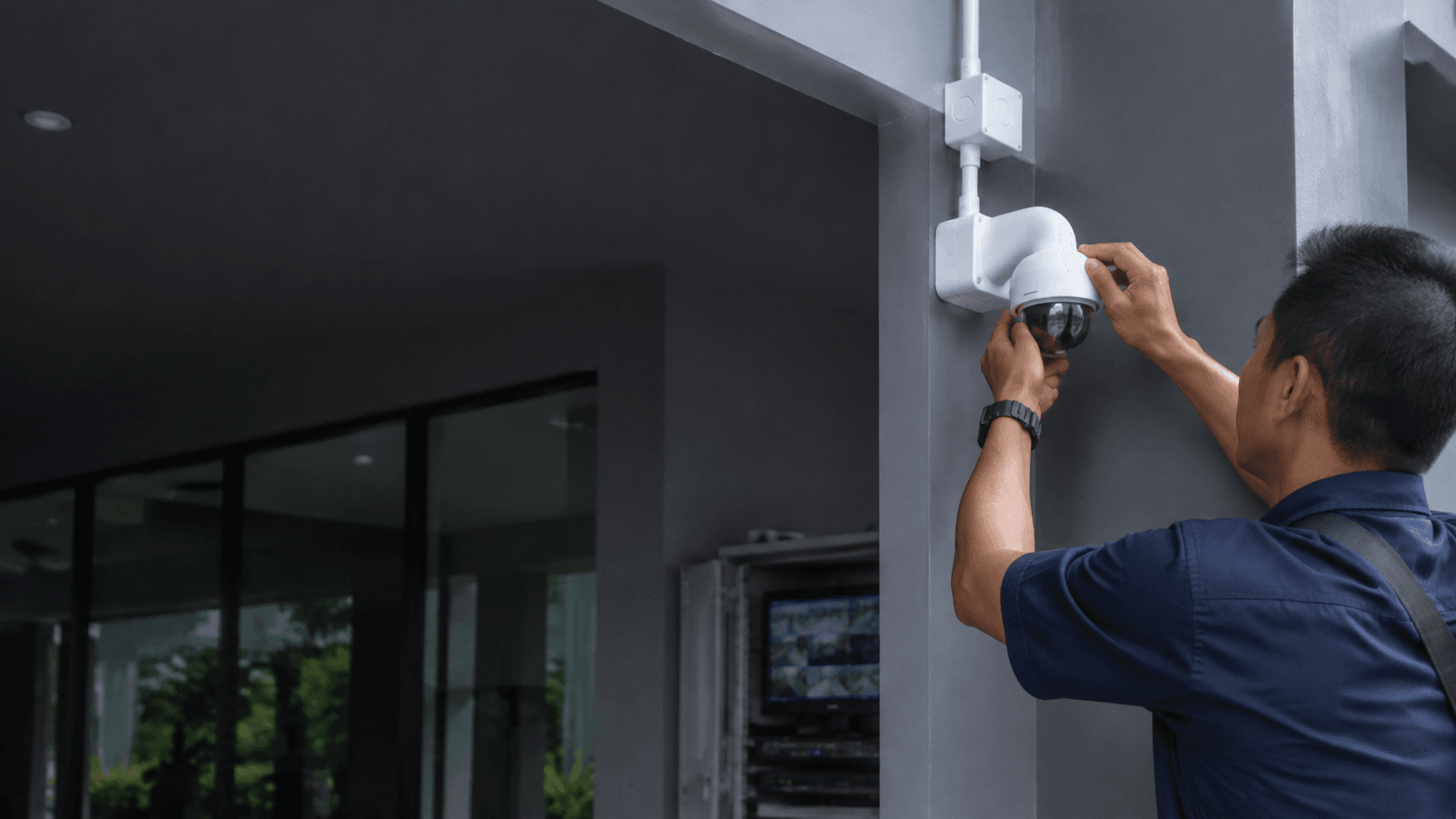
The brand appears mainly through product listings rather than technical documentation, so the practical questions are what arrives in the box, what the camera needs in order to work, and who handles the installation. The notes below cover those points without repeating specifications that cannot be verified.
Oossxx Wireless Camera. what the term covers
The phrase describes a family of products rather than one model. Across the listings reviewed, the range includes indoor and outdoor cameras, pan-and-tilt units, solar-powered models, add-on cameras for an existing system, and complete kits that bundle several cameras with a recorder.
Two features recur often enough to treat as typical of the range. One is a dual-antenna design, which the listings describe as extending wireless transmission distance. The other is a free mobile app used for live viewing and playback, with no monthly fee stated on the product pages.
What the term does not guarantee is a single standard. Resolution, lens width, night vision range, storage capacity, and power source differ between models, and those differences matter more than the brand name when a system is being planned.
What a wireless camera kit usually includes
A kit normally contains the cameras, a recording unit, a power supply arrangement for each camera, mounting hardware, and instructions for pairing the cameras to the recorder and the app. The recorder is the part most buyers overlook. Cameras capture images, but the recorder stores them and serves them to the phone.
Wireless in this context refers to the video link between camera and recorder, not to a camera that runs without power. Each camera still needs electricity, whether from a wall outlet, a battery, or a solar panel. That single point decides where a camera can realistically go.
Add-on cameras are sold separately for buyers extending an existing system. Compatibility depends on the system already in place, so the model of the existing recorder should be confirmed before ordering an add-on unit.
Wireless camera checks before confirming placement
Placement is where most wireless installations succeed or fail, and it is worth settling before any bracket is fixed to a wall. The checks below follow the order used in a site survey.
- Confirm the power source at each proposed position, since a camera without a nearby outlet, battery, or solar panel cannot be mounted there.
- Check the actual lighting at each position at the times that matter, because a view that looks clear in daylight can behave differently after dark.
- Test the wireless signal at the mounting height rather than at floor level, as walls, metal roofing, and distance from the recorder all reduce it.
- Walk the intended coverage area and note what each camera would actually see, including blind spots at entrances and along walkways.
- Agree where the recorder will sit, because it needs power, ventilation, and a position that keeps cable runs short.
Lighting deserves particular attention. Eyonic advises checking actual lighting conditions before confirming placement for cameras chosen for low-light performance, and the same discipline applies to any camera being positioned for night coverage.
How a wireless camera fits a home, shop, or office
For a home, the usual priorities are the main entrance, the car porch, and any rear access point. A small kit of two to four cameras often covers those positions, and the wireless link avoids running video cable through finished walls.
For a shop, coverage tends to follow the counter, the stock area, and the entrance, with the recorder kept somewhere staff can reach it. A shop also benefits from deciding early whether the owner needs to view the cameras remotely, because that affects how the recorder connects to the internet.
For an office, the pattern is closer to the work Eyonic completed for the Kuching Immigration Office, where the focus was arrival flow, staff areas, visitor movement, and dependable daily operation. Offices generally need fewer cameras than a retail floor but more attention to where people enter and move.
The trade-off with any wireless system is that convenience comes with conditions. Wireless links are easier to install but depend on signal quality, and signal quality changes with building materials and layout. A wired camera is less affected by those factors but costs more to install in a finished building.
Oossxx Wireless Camera questions buyers ask
Does a wireless camera need internet? The camera-to-recorder link does not, but viewing footage from a phone while away from the property does. Local recording continues without an internet connection.
Can one camera be added later? Add-on cameras exist for extending an existing system, and compatibility with the recorder already installed should be confirmed first.
Is a wireless camera suitable for outdoor use? Outdoor models are listed with weatherproof ratings, but the rating applies to the camera housing, not to the power connection or the mounting point.
How long does installation take? That depends on the number of cameras, the power available at each position, and whether cable has to be run to the recorder. A site survey is what turns those variables into a plan.
Planning a wireless camera installation in Sarawak
Eyonic's installation process runs through site survey, system proposal, installation, and handover, which suits a wireless camera project because the survey settles the placement questions before any hardware is ordered. The company plans, supplies, and installs monitoring systems with camera placement, recording, and remote viewing for homes, offices, shops, and industrial sites in Sarawak.
For buyers comparing options, Eyonic's published packages start at RM 1,599 for a Hikvision CCTV package covering camera supply and setup, basic recording configuration, and mobile viewing handover. Comparable packages are listed at RM 1,599 for an alarm system and RM 1,599 for an autogate package. These are Eyonic's own package prices and not Oossxx pricing, which is not published for the Malaysian market.
Larger projects sit in a different range. Eyonic's Kuching Immigration Office project had an approximate budget of RM 12,000 to RM 28,000, and the KTA Sarawak Sdn Bhd office project had an approximate budget of RM 8,000 to RM 18,000. Those figures describe completed office work rather than a wireless camera kit, and they are useful mainly for understanding how scope changes cost.
Share your location, property type and required system with Eyonic on WhatsApp at +60 11-5111 7959 for the next practical step.