
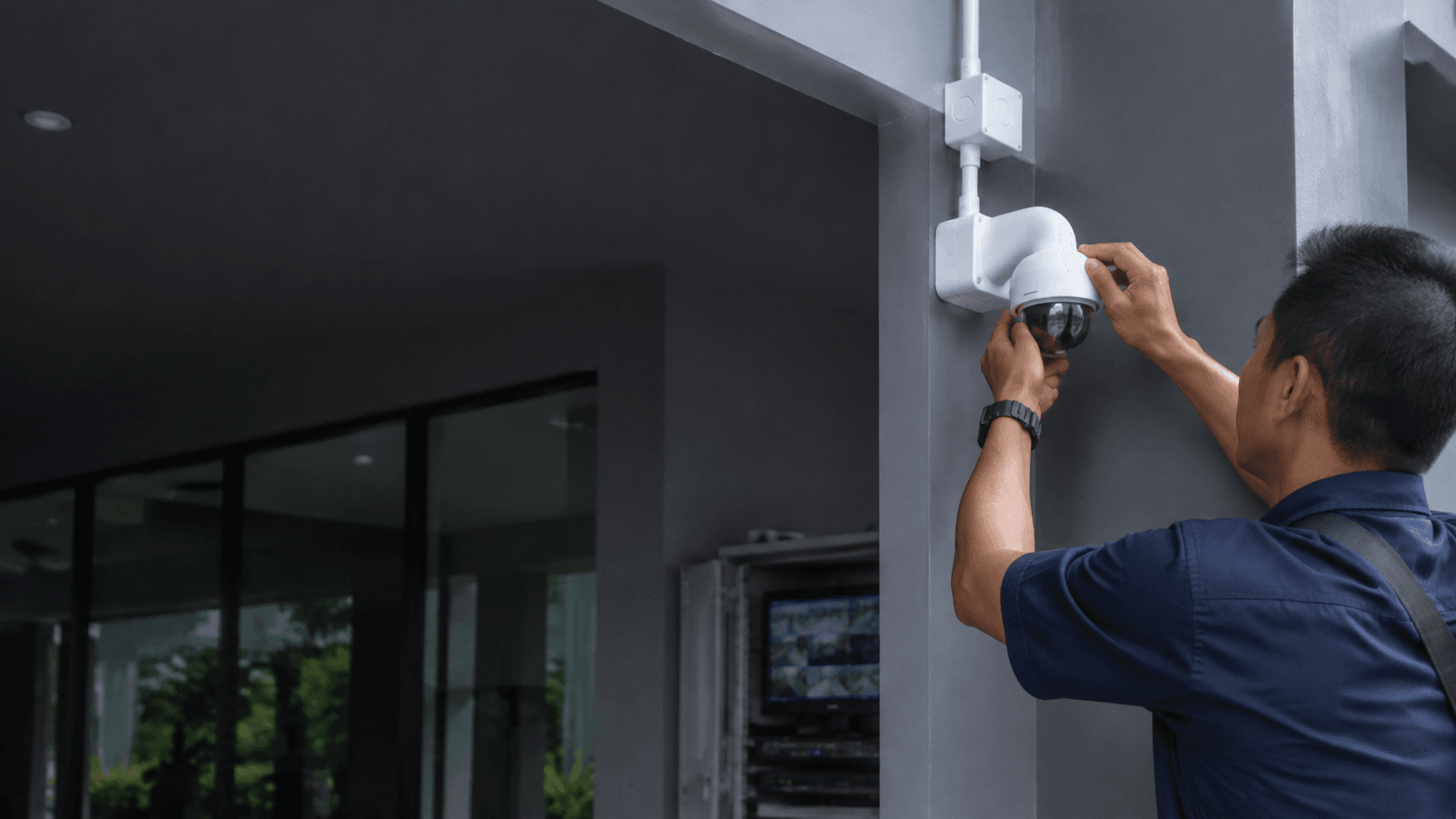
The eufy s300 sits in a crowded field of wireless outdoor cameras, and the useful question is not whether it works but whether its particular trade-offs match a given property. Battery power removes the need to run cable to every corner. Local storage removes a monthly fee. Both choices carry consequences that show up months later, in charging routines and in how much footage is actually retained.
This guide covers what the camera does, how it compares with the alternatives eufy itself now points buyers toward, and where a wired system still makes more sense.
Eufy S300: What Matters Before Choosing
The eufy s300 is a wire-free camera, which means placement is limited by signal range rather than by cable routes. That is the central fact from which most other decisions follow.
Three specifications shape daily use more than any marketing claim. The camera records in 4K resolution, which produces large files and fills storage faster than 1080p. It is rated IP65, meaning it is guarded against rain and dust storms but not designed for submersion. And it pairs with HomeBase 3, the hub that provides the local storage and the AI processing behind facial recognition and object detection.
Storage capacity is the specification most often overlooked. HomeBase 3 supports expandable local storage, and the kit configurations bundle a drive. A single camera recording motion events will fill a drive far more slowly than a multi-camera kit recording the same events across a larger property. Buyers adding cameras later should account for that growth.
What is eufy s300?
The eufy s300 is the retail name used in some markets for the camera eufy also sells as the eufyCam 3C. It is a battery-powered outdoor camera with a motion-triggered spotlight, two-way audio, and compatibility with Alexa, Google Assistant, and Apple HomeKit through the hub.
It is not a continuously recording camera. Like most battery-powered models, it wakes on motion, records an event, and returns to a low-power state. That design is what makes the long battery life possible, and it is also the camera's main limitation for anyone who wants a complete record of everything that happens in front of the lens.
Eufy has published guidance stating that the eufyCam E330 and S300 are discontinued in the US, with the eufyCam S4, SoloCam S340, and eufy PoE NVR Security System S4 Max offered as replacements. Buyers in Malaysia and elsewhere should confirm current availability and support status with the seller before committing, because regional stock and support differ from the US position.
Choosing the Right Eufy S300 Setup
Matching the camera to the property matters more than comparing specification tables. The sequence below reflects how a practical installation decision usually unfolds.
- Confirm whether the site can support battery-powered cameras at all, since signal range to the hub limits placement more than camera capability does.
- Decide how much footage retention is needed, because that determines the HomeBase 3 drive size rather than the camera choice.
- Check the actual lighting at each proposed position, since night performance depends on ambient light and the motion spotlight rather than on the sensor alone.
- Confirm whether continuous recording is a requirement, because a battery camera records events and not a full timeline.
- Verify current availability and support status for the model in the local market before purchase.
The fourth point eliminates the eufy s300 for some buyers entirely. A shop entrance that needs a complete record of every transaction, or a site where an incident must be reviewed frame by frame, is better served by a wired system with continuous recording. A home perimeter where the goal is to know when someone approaches fits the event-recording model well.
Where the camera fits well
Rental properties, homes where cabling is impractical, and locations without a convenient power source are the natural fit. The absence of a monthly fee also matters for buyers who object to subscription storage on principle, since footage stays on the local drive.
Where it fits poorly
Commercial premises needing continuous coverage, sites with weak Wi-Fi reaching the camera positions, and installations where more than a handful of cameras must cover a large area. In those cases the hub's range and the event-recording model both become constraints rather than conveniences.
Practical Considerations for Eufy S300
Battery life figures quoted by manufacturers assume a certain number of motion events per day. A camera overlooking a busy road will trigger far more often than one covering a quiet side gate, and the battery will reflect that difference. Placement decisions therefore affect maintenance frequency directly.
Local storage has a second consequence worth stating plainly. Footage on a drive inside a building is vulnerable to the same event that damages the building. A camera system protecting a property is more resilient when the recording device is not in the room most likely to be affected.
For buyers in Sarawak comparing this camera against wired options, the practical comparison is usually against a Hikvision-based system rather than against another battery camera. Eyonic, a security system supplier in Sarawak, plans, supplies, and installs CCTV systems with camera placement, recording, and remote viewing for homes, offices, shops, and industrial sites. The company's installation process runs through site survey, system proposal, installation, and handover, and its published packages for a Hikvision CCTV setup, an alarm system, and an autogate package are each priced at RM 1,599.
Eyonic's founder, Eric Yong, has worked in technical installation of digital security solutions for commercial businesses in Sarawak for more than ten years. The company completed a project for the Kuching Immigration Office covering arrival flow, staff areas, visitor movement, and dependable daily operation, and a separate office setup in Kuching for KTA Sarawak Sdn Bhd supporting staff movement, visitor handling, and tidy cabling. Those projects illustrate the wired approach: fixed cameras, central recording, and predictable daily operation rather than battery management.
Eyonic also advises checking actual lighting conditions before confirming placement for ColorVu-style cameras, a step that applies equally to any camera chosen for night performance.
Making an Informed Choice About
The decision usually comes down to one question: does the property need a complete record, or does it need to know when something happens? The eufy s300 answers the second question well and the first question not at all.
For a home perimeter, a rental unit, or a site where cabling is genuinely impractical, the combination of 4K resolution, IP65 protection, local storage, and no monthly fee is a coherent package. For a shop counter, a warehouse loading bay, or any location where an incident review needs a continuous timeline, a wired system with central recording is the more appropriate tool, and the cost comparison often favours it once the hub and drive are included.
Buyers should also confirm the model's current status in their market. Eufy's own guidance lists the S300 as discontinued in the US with named replacements, and availability elsewhere may follow a different timeline. Checking with a local supplier before purchase avoids buying into a model whose support path is already changing.
Share your location, property type and required system with Eyonic on WhatsApp at +60 11-5111 7959 for the next practical step.