
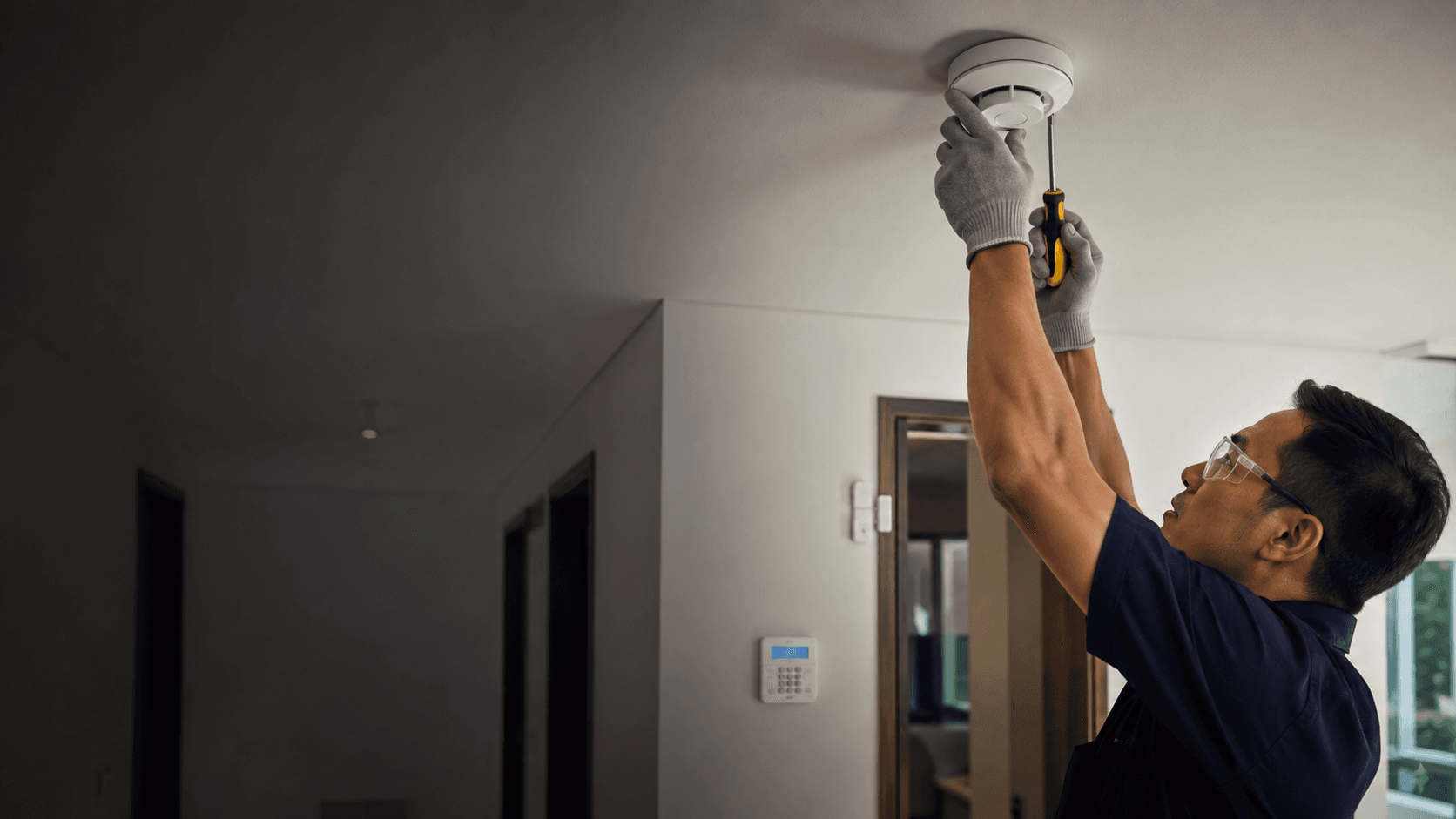
The exact-match query security cameras and alarms describes a combined approach rather than a single product. Cameras supply visual evidence after an event, and alarm sensors supply an immediate signal during one. In Sarawak, Eyonic Sdn Bhd plans, supplies, and installs both as part of its CCTV and ELV work for homes, offices, shops, and industrial sites.
Security Cameras And Alarms. What Matters Before Choosing
Most buyers start with a camera count and a budget, then discover the harder questions later. The decisions that actually shape a working system are placement, lighting, recording, alert logic, and who responds when something triggers.
- Survey the site and list the entry points, blind spots, and areas that need coverage.
- Decide which locations need cameras and which need alarm sensors, or both.
- Check real lighting conditions at each camera position before confirming placement.
- Agree on recording, storage, and remote viewing requirements.
- Confirm the alarm zones, siren behaviour, and who receives alerts.
- Install, test each device, and hand over the system with user guidance.
Eyonic's CCTV installation process follows this shape: site survey, system proposal, installation, and handover. The survey stage exists because camera placement and lighting checks are cheaper to correct on paper than after drilling.
Choosing the Right Security Cameras And Alarms
The right combination depends on what the property needs to detect and prove. A shop with a single entrance has different requirements from a factory with multiple gates and a loading bay.
Cameras. Coverage And Evidence
Cameras answer what happened, who was present, and when. Placement matters more than raw resolution in most cases, because a high-resolution camera pointed at the wrong angle still misses the face or plate that matters.
Lighting is the other decisive factor. Eyonic recommends checking actual lighting conditions before confirming placement for ColorVu-style cameras, which are designed to produce usable colour images in low light. A position that looks adequate during a daytime survey can behave differently at night, so the check belongs before installation, not after.
Alarms. Detection And Response
Alarm systems answer what is happening right now. A control panel, sensors, and a siren form the core, with zones assigned to doors, windows, or specific areas. The value of an alarm is speed. it can trigger attention while an event is in progress, whereas a camera mainly documents it.
Eyonic's alarm system installation work covers control panel and sensor setup, siren and zone configuration, and user testing before handover. That testing stage matters because an alarm that has never been triggered deliberately is an untested alarm.
Where The Two Overlap
Cameras and alarms are stronger together than apart. An alarm sensor can flag movement in a zone, and a nearby camera can show what caused it. This reduces wasted responses to false triggers and gives a clearer picture when a genuine event occurs.
What Is Security Cameras And Alarms?
Security cameras and alarms is the pairing of video surveillance with intrusion detection. The camera side covers recording, storage, and remote viewing. The alarm side covers sensors, a control panel, and a siren or notification path. Neither replaces the other. cameras provide a record, alarms provide a warning.
In practice, a property might run cameras on the perimeter and alarm sensors on internal doors, or combine both at a single entry point. The mix is a design decision, not a package default.
Home Security System Options In Sarawak
Eyonic lists three packages at RM 1,599 each, covering different starting points rather than a single bundled system.
| Package | What It Covers | Best Fit |
|---|---|---|
| Hikvision CCTV Package | Camera supply and setup, basic recording configuration, mobile viewing handover | Properties that need visual coverage and remote viewing first |
| Hikvision Alarm System | Control panel and sensors, siren and zone setup, user testing and handover | Properties that need intrusion detection and immediate alerting |
| Autogate Package | Motor recommendation, remote-control setup, safety testing and handover | Properties with vehicle gates that need controlled access |
These packages are starting points. A larger site with multiple buildings, long cable runs, or several entry points will need a proposal built around the survey rather than a fixed package.
Evidence From Completed Projects
Eyonic completed a project for the Kuching Immigration Office, focused on arrival flow, staff areas, visitor movement, and dependable daily operation. The approximate budget for that type of work was RM 12,000 to RM 28,000.
A separate project for KTA Sarawak Sdn Bhd covered a practical office setup in Kuching to support staff movement, visitor handling, tidy cabling, and clearer daily site control, with an approximate budget of RM 8,000 to RM 18,000.
Both projects show the same pattern: the scope follows the site's movement patterns, not a standard camera count. Public offices and consultancy sites have different traffic, so the placement and zone logic differ accordingly.
Practical Considerations For
Several constraints decide whether a system works as intended after handover.
Cabling and routing. Tidy cabling is part of the KTA Sarawak project scope, and it matters for maintenance as much as appearance. Poorly routed cable is harder to trace when a single camera fails.
Lighting conditions. A camera position confirmed only from a daytime walkthrough may underperform at night. Checking actual conditions before confirming placement avoids rework.
Zone logic. Alarm zones should match how the property is actually used. A zone that triggers on normal staff movement will be ignored within a week.
User roles and access. For access control, Eyonic reviews door condition, user roles, and backup entry method before installation, and checks whether a standalone smart lock or an access-control panel suits the site better.
Handover and testing. Mobile viewing setup and user testing appear in the package scope because a system nobody can operate is not finished.
Common Edge Cases
Older buildings may have door frames or walls that limit sensor mounting options. Sites with unreliable power need the recording and alarm behaviour confirmed for outages. Multi-tenant buildings raise questions about who controls the system and who can view footage. These are survey-stage conversations, not installation-day surprises.
Making An Informed Choice About
The practical sequence is to define what needs to be seen, what needs to be detected, and who acts on an alert. That definition drives camera count, sensor placement, and budget far more than any product specification.
For properties in Sarawak, Eyonic's founder Eric Yong has worked in technical installation of digital security solutions for commercial businesses in Sarawak for more than 10 years. That experience is applied at the survey and proposal stage, where placement and zone decisions are made.
Share your location, property type and required system with Eyonic on WhatsApp at +60 11-5111 7959 for the next practical step.