
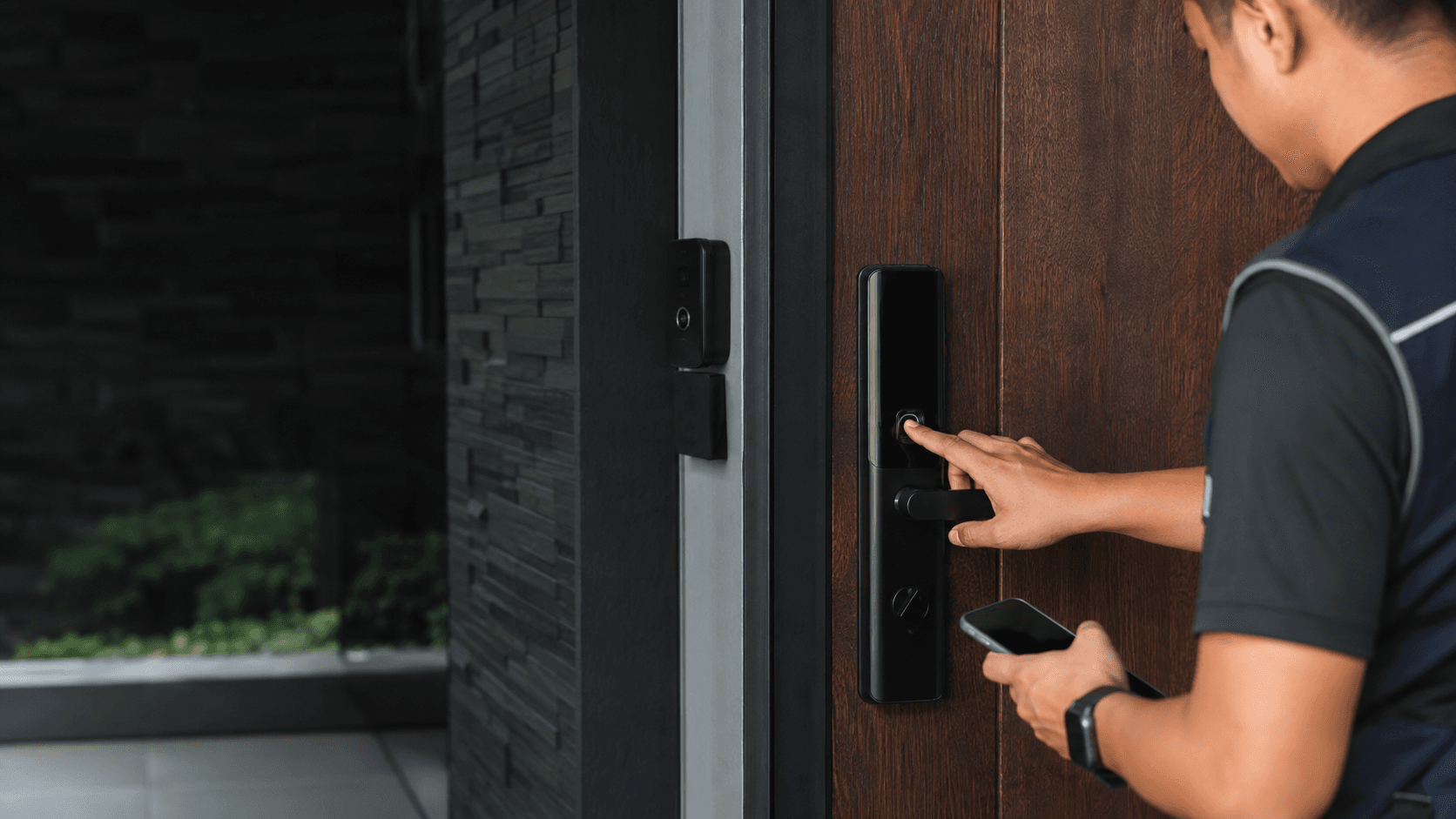
Anker builds the eufy range of smart locks, and the naming is where most confusion starts. Retail listings and support pages place several different products under that umbrella, from touch-and-Wi-Fi deadbolts to palm-vein models, and the model code matters more than the brand name when comparing features.
For buyers in Malaysia, the practical question is not which lock looks best on a product page. It is whether a specific model fits the door, who controls access, and what happens when the battery dies or the network drops. Those three checks decide more outcomes than any feature list.
Which eufy models sit under the Anker Smart Lock name
Anker Smart Lock products appear in retailer and support listings under eufy branding, and the model codes differ enough that they should be treated as separate products rather than one range.
Names that appear in the supplied listings include the eufy FamiLock E34, the eufy Security S230 Smart Door Lock Touch & Wi-Fi, the C210 and E110, and the Smart Lock C220. The FamiLock E34 is described in coverage as using palm vein unlocking, advertised as working with wet hands. The S230 listing describes fingerprint scanning, Wi-Fi connectivity, a touchscreen keypad, and physical key backup.
Those descriptions come from retailer and news listings, not from a manufacturer specification sheet reviewed for this article. Treat them as an indication of what each model family covers, and confirm the exact feature set against the current official product page before committing to a model.
Why the model code matters more than the brand
Two locks sold under the same brand can differ in unlocking method, connectivity, and how they are powered. A buyer comparing "Anker Smart Lock" as a single product will miss those differences. The model code is the only reliable way to match a listing, a manual, and a spare part.
Door, gate, and office entrances where an Anker Smart Lock is considered
Smart locks suit entrances where access needs to be controlled without issuing physical keys to every person who needs entry. That covers more ground than a single front door.
Typical candidates include a home main door, a rented unit where the tenant cannot change the existing lock hardware permanently, an office entrance where staff arrive at different hours, and a shop back door used by a small team. Each of those has a different tolerance for failure. A home main door that fails locked is an inconvenience. An office entrance that fails during a morning arrival window disrupts the whole day.
Gates are a separate case. A gate is exposed to weather and often uses different hardware from a swing or sliding door. Nothing in the supplied evidence confirms that any Anker Smart Lock model is rated for outdoor gate mounting, so a gate installation should be treated as a question for the supplier rather than an assumption.
Where a smart lock is the wrong tool
Eyonic's own product review notes that smart locks work best when door condition, user roles, and backup method are reviewed before installation, and that for business use the choice between a standalone smart lock and an access-control panel is usually checked first. A site with many staff, shift changes, and a need for entry logs may be better served by a panel-based system than by a lock with a fixed number of user slots.
What to check before confirming an Anker Smart Lock installation
Three checks decide whether a smart lock installation goes smoothly or becomes a return. They are worth completing before any model is ordered.
- Door condition. Confirm the door thickness, the existing mortise or deadbolt cutout, and whether the frame is square enough for the bolt to seat without binding. A door that already sticks will keep sticking after a smart lock is fitted.
- User roles. Decide who needs permanent access, who needs temporary access, and who needs to be removed later. A household needs far fewer slots than an office with rotating staff.
- Backup method. Confirm how the door opens when the battery is flat, the phone is lost, or the network is down. Physical key backup, a keypad code, or an external power point are the usual answers, and the model determines which are available.
Two further points are worth settling at the same time. The first is power. a lock that runs on disposable batteries needs a replacement routine, and a lock with a rechargeable pack needs a charging routine. The second is connectivity, because a lock that depends on Wi-Fi behaves differently when the router is off.
What the supplied evidence does not confirm
No verified specification, price, battery life, weatherproofing rating, biometric accuracy figure, or Malaysian warranty term for any Anker Smart Lock model was available for this article. Any figure quoted elsewhere should be checked against the current official product page or the local supplier before it is relied on.
How a Sarawak installation workflow runs from survey to handover
Eyonic's stated installation process for security systems runs through four stages: site survey, system proposal, installation, and handover. The same sequence applies to a door access installation, and each stage answers a question the previous one raises.
- Site survey. The door, frame, and existing hardware are inspected on site, along with the power and network available nearby.
- System proposal. The survey findings determine whether a standalone smart lock or an access-control panel fits the entrance, and which model suits the door.
- Installation. The lock is fitted, users are enrolled, and the app or keypad is configured.
- Handover. Access methods are tested with the people who will use them, including the backup route.
Eyonic is based in Sarawak and has completed work for the Kuching Immigration Office, focused on arrival flow, staff areas, visitor movement, and dependable daily operation, and for KTA Sarawak Sdn Bhd, an engineering consultancy office in Kuching where staff movement, visitor handling, and tidy cabling were the priorities. Both projects show the same pattern: the entrance is treated as part of a wider access flow rather than as an isolated device.
One habit from Eyonic's camera work carries over to locks. The company recommends checking actual conditions on site before confirming placement rather than relying on a plan. For a lock, that means testing the door swing, the bolt alignment, and the reach of the network before the model is fixed.
questions buyers ask before deciding
Most remaining questions come down to fit, control, and failure. Each has a checkable answer.
Does an fit an existing Malaysian door
Fit depends on door thickness and the existing cutout, not on the brand. A survey is the only reliable way to confirm it, because two doors of the same nominal size can differ in frame alignment and bolt depth.
Can a smart lock replace keys entirely
It can reduce key use, but a backup route should still exist. The S230 listing mentions physical keys, and keypad codes are common across the range. Removing every fallback creates a single point of failure at the door.
Is a smart lock enough for an office
For a small office with a stable team, a standalone lock can be sufficient. For a larger site with rotating staff, visitor traffic, and a need to review who entered and when, an access-control panel is usually the better fit. Eyonic's review notes that this comparison is made before recommending a product.
What happens when the battery runs out
The answer is model-specific. Some locks accept a physical key, some accept a temporary external power source, and some rely on a keypad. This is the single most important detail to confirm before installation, because it determines what happens on the worst day.
Who installs and supports it locally
Eyonic Sdn Bhd plans, supplies, and installs security systems in Sarawak, and its founder Eric Yong has worked in the industry for more than ten years, with experience in technical installation for commercial businesses in Sarawak. Buyers outside Sarawak should confirm local supply and support before ordering, since no Malaysian warranty or spare-part terms for Anker Smart Lock were available for this article.
Share your location, property type and required system with Eyonic on WhatsApp at +60 11-5111 7959 for the next practical step.