
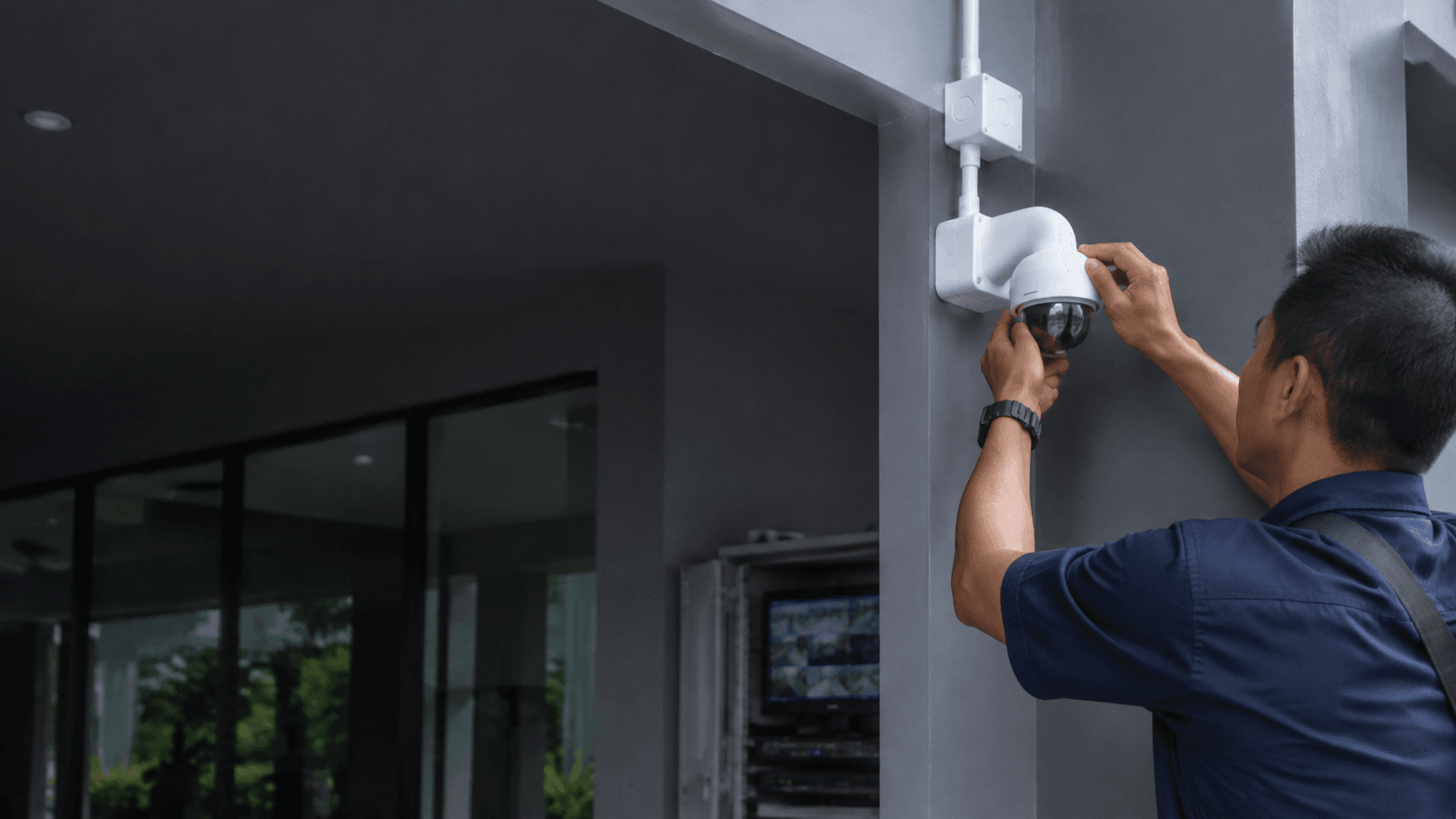
Vivint sells cameras as part of a wider smart home security package rather than as standalone hardware. The camera range covers an outdoor camera, a doorbell camera, an indoor camera, and a floodlight-style spotlight camera. Buyers in Malaysia comparing a Vivint camera system against locally supplied CCTV should weigh three things: whether professional installation and a monitoring subscription suit the property, what the equipment and monthly cost adds up to over the contract term, and whether local support exists when a camera fails.
Vivint Camera System. What Matters Before Choosing
Vivint is a United States smart home security company. Its cameras are designed to be installed by Vivint technicians and managed through one app alongside alarms, sensors, locks, and thermostats. That integration is the main selling point, and it is also the main constraint, because the cameras are not sold as a loose kit that any installer can wire into an existing recorder.
Independent reviews describe the platform as capable but expensive, with high monitoring fees and a long-term contract. Security.org notes that Vivint combines AI, smart integrations, and a user-friendly app, while describing the service as pricey. NerdWallet notes that professional installation and monitoring are required. Those two points shape almost every practical decision about the system.
What is vivint camera system?
A Vivint camera system is the camera portion of a Vivint smart home installation. It typically includes one or more outdoor cameras, an optional doorbell camera, an optional indoor camera, and a floodlight camera, all connected to the Vivint Smart Hub and viewed through the Vivint app. Recording, playback, and smart detection features depend on the monitoring plan attached to the account.
Because the cameras are tied to the hub and the app, the system behaves as one product rather than a set of independent devices. Motion events, alerts, and video clips appear in the same place as alarm and sensor activity. That is convenient for a household that wants a single view of the property, and awkward for anyone who wants to add a third-party camera later.
Choosing the Right Vivint Camera System
Camera choice follows the coverage problem, not the other way around. A front gate, a porch, a driveway, and an indoor hallway each need a different field of view and a different mounting height. The sequence below reflects how a professional installation normally moves from a blank floor plan to a working system.
- Identify the entry points that matter most, such as the main gate, front door, and vehicle parking area.
- Check the light at each point during the hours the property is actually occupied, since night performance depends on available light and infrared range.
- Decide which points need a doorbell camera for two-way talk and which need a wider outdoor view.
- Confirm where the hub and recorder will sit, and whether power and network cabling can reach that position.
- Match the monitoring plan to the recording and playback requirement, because clip history depends on the subscription.
- Confirm who handles installation, warranty service, and replacement if a camera fails after handover.
Steps two and six are where most disappointment originates. A camera aimed at a dark back lane will not produce a useful image simply because it is a good camera, and a system installed by a remote team is difficult to service quickly.
Camera types and where each one fits
The outdoor camera suits driveways, gates, and side passages where a wide view and deterrence matter. The doorbell camera suits the main entrance, where two-way audio and a head-to-toe view of a visitor are more useful than a wide angle. The indoor camera suits hallways and rooms that need occasional checking rather than constant coverage. The spotlight camera suits a dark yard or car porch where a floodlight and a camera can share one mounting point.
Overlapping coverage is normal and useful. Two cameras covering the same gate from different angles give a better chance of a usable image than one camera with a wider lens, because a wider lens spreads the same sensor across more area.
Practical Considerations for Vivint Camera System
Cost is the first consideration. Vivint equipment is generally financed or bundled, and monitoring is billed monthly on a contract. Security.org describes the service as pricey with high monitoring fees and a long-term contract, and NerdWallet lists cost among the downsides. Anyone comparing this against a locally supplied system should total the equipment, installation, and monitoring over the full contract term rather than comparing the first month.
Availability is the second. Vivint operates in the United States and does not provide installation in Malaysia. A buyer in Sarawak cannot book a Vivint technician, cannot rely on Vivint support for a site visit, and cannot use Vivint monitoring with a local response arrangement. The cameras can be discussed as a product, but the service model does not transfer.
Local alternatives follow a different model. Eyonic Sdn Bhd, a security system supplier in Sarawak, plans, supplies, and installs CCTV with camera placement, recording, and remote viewing for homes, offices, shops, and industrial sites. The installation process runs through site survey, system proposal, installation, and handover. A Hikvision CCTV package covering camera supply and setup, basic recording configuration, and mobile viewing handover is listed at RM 1,599, which is a one-time figure rather than a monthly subscription.
Lighting is the third consideration, and it applies to any camera brand. Eyonic advises checking actual lighting conditions before confirming placement for ColorVu-style cameras, because a camera that performs well in a showroom may behave differently on a dim back lane. The same discipline applies to a Vivint outdoor camera or spotlight camera: the mounting position should be chosen after the light at that position has been observed at night.
Where a subscription model helps and where it does not
A subscription model helps when the property owner wants monitoring, cloud clip history, and a single app without managing storage hardware. It does not help when the owner wants a fixed one-time cost, local service visits, or the freedom to mix camera brands. For a shop in Kuching with a fixed budget, a one-time installed package is usually easier to justify than an ongoing monthly commitment.
Contract length is the edge case that catches people out. A long-term monitoring agreement continues to bill whether or not the cameras are still wanted, and moving house does not automatically transfer the service. That is a structural difference from a locally installed recorder, which stays with the building.
Making an Informed Choice About
The honest summary is that the Vivint camera system is a well-integrated product tied to a service area and a subscription. It fits a household in the United States that wants one app, professional installation, and monitoring, and that accepts the monthly cost and contract. It does not fit a property in Malaysia that needs local installation, local support, and a predictable one-time cost.
For a Sarawak property, the practical path is a locally installed system with a documented survey and handover. Eyonic's completed work includes the Kuching Immigration Office, where the focus was arrival flow, staff areas, visitor movement, and dependable daily operation, and the KTA Sarawak Sdn Bhd office setup in Kuching, which supported staff movement, visitor handling, tidy cabling, and clearer daily site control. Comparable project budgets for that type of work have fallen in the RM 8,000 to RM 28,000 range depending on scope.
Three numbers are worth holding onto when comparing options: RM 1,599 for a basic installed Hikvision CCTV package, RM 8,000 to RM 18,000 for a small office setup, and RM 12,000 to RM 28,000 for a larger public-office installation. Those figures describe installed local work, not a subscription camera service, and they make the cost structure of each model visible.
Share your location, property type and required system with Eyonic on WhatsApp at +60 11-5111 7959 for the next practical step.