
That single fact shapes most buying decisions. The camera carries a 4K sensor, runs on battery, and stores footage on hardware in the building rather than in a subscription cloud. Buyers comparing it against the eufyCam 3 usually find the same resolution and detection features, with the differences sitting in power, storage expansion, and price.
- Confirm the recording resolution and whether 4K matters for the distance being covered.
- Check how footage is stored, since local storage avoids recurring fees but requires a HomeBase unit.
- Review power and mounting, because battery cameras need reachable positions for recharging.
- Compare the eufy cam 3c against the eufyCam 3 on solar charging and storage expansion.
- Verify app support, voice assistant compatibility, and weatherproofing for the intended location.
- Plan camera placement around actual lighting and sightlines before mounting anything.
Eufy Cam 3c: What Matters Before Choosing
The eufy cam 3c sits in the eufyCam 3 series, and the series name causes most of the confusion. Retail listings and support pages use eufyCam 3C and eufyCam S300 for the same product, while the eufyCam 3 and eufyCam S330 label the higher model. Consumer Reports reviewed the camera under the S300 name, and eufy's own support documentation compares the 3 and 3C directly.
Three specifications drive the decision. The camera records at 4K, which is 3840x2160, and that resolution matters most when identifying faces or plates at distance. It runs on battery rather than a fixed power line, so placement is flexible but recharging becomes a recurring task. Footage lands on a HomeBase unit with expandable local storage, which removes a monthly fee but adds hardware to the budget.
Weatherproofing is rated IP65 on the 3C, while the eufyCam 3 carries IP67. Both handle rain, but the difference matters in exposed positions. The 3C also lacks the integrated solar panel found on the higher model, so it depends on battery capacity or an external panel.
Choosing the Right Eufy Cam 3c Setup
Camera count and HomeBase capacity decide most installations. A single-camera kit suits a gate, a front door, or one blind spot. The two-camera kit sold as the T8881121 covers a typical house front and back. Larger properties need either more cameras or a second HomeBase, since each unit supports a limited number of devices.
Storage planning follows the same logic. Local storage on the HomeBase accepts an internal drive, and eufy documents expansion up to 16TB across the ecosystem. A household recording motion events on four cameras fills a small drive faster than expected, so the drive size should match the camera count and how long footage needs to be kept.
What is eufy cam 3c in practice?
It is a battery-powered outdoor camera in the eufyCam 3 family, sold with a HomeBase for local recording. The practical result is a system that records without a subscription, sends alerts through the eufy Security app, and supports activity zones and person detection. It works with Alexa, Google Assistant, and Apple HomeKit according to eufy's product documentation.
How the eufy cam 3c differs from the eufyCam 3
The eufyCam 3 adds an integrated solar panel and a higher IP67 weatherproof rating. The 3C relies on battery alone unless an external solar panel is fitted. Both share 4K resolution, BionicMind AI features, and HomeBase 3 compatibility. Buyers who can reach the camera for periodic charging save money with the 3C; buyers who cannot should weigh the solar model instead.
Practical Considerations for Eufy Cam 3c Placement
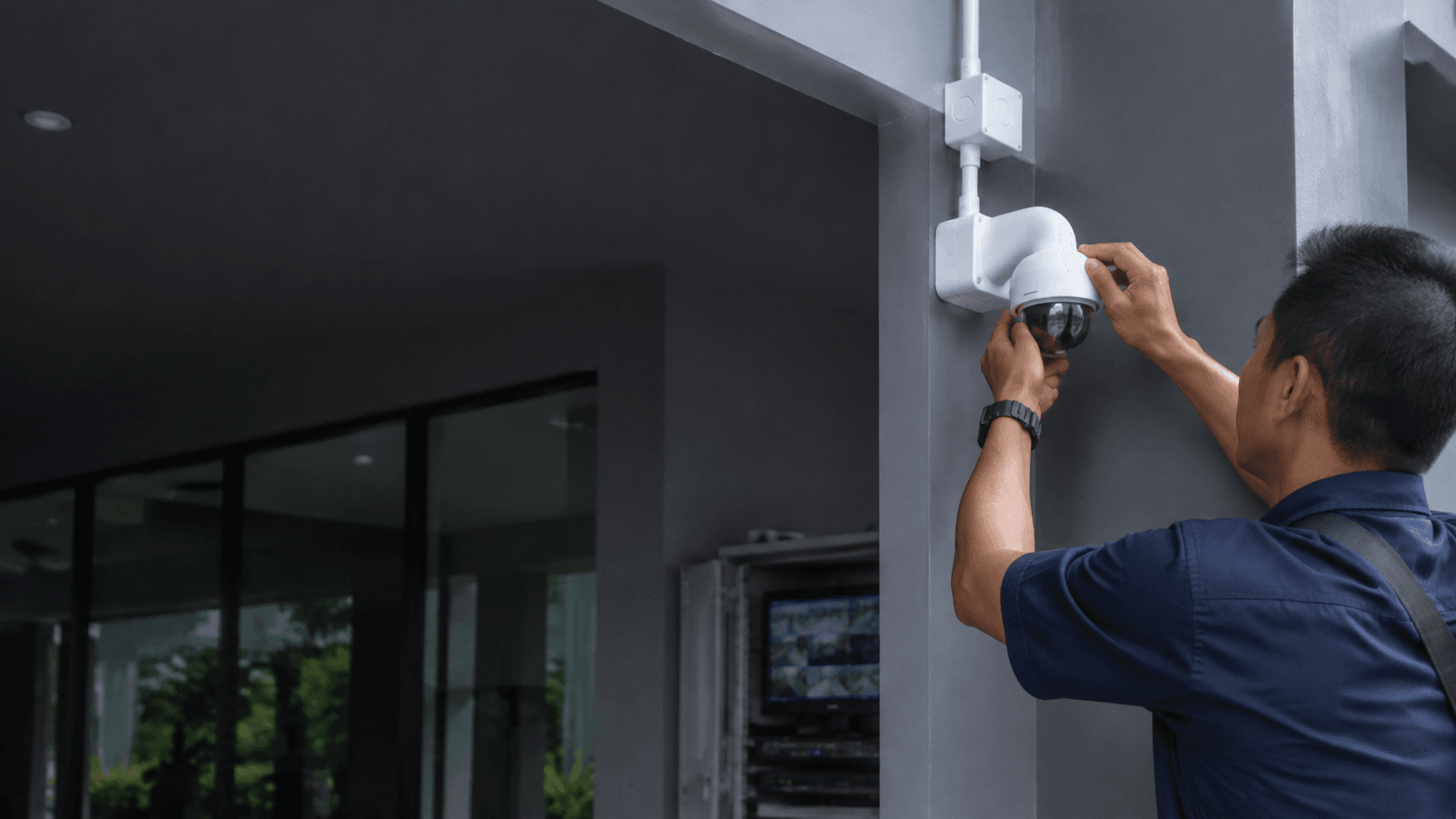
Lighting decides whether a 4K sensor delivers useful footage at night. A camera pointed at a dark lane records noise regardless of resolution, while one covering a lit entry captures identifiable detail. Checking actual conditions at the mounting point before drilling is the step that prevents disappointment, and it applies to any camera in this class.
Battery life depends on how often the camera wakes. A position facing a public road triggers constant motion events and drains the battery quickly. A position covering a doorway triggers rarely and lasts far longer. Narrowing activity zones in the app reduces false triggers and extends the interval between charges.
Signal strength between camera and HomeBase is the other constraint. Walls, metal roofing, and distance weaken the link, and a weak link produces dropped recordings rather than an obvious error. Testing the connection at the intended position before final mounting avoids a second visit to the ladder.
Where local storage changes the cost picture
Local storage removes the monthly fee that cloud-based cameras charge. The trade-off is that footage lives on hardware in the building, so a stolen HomeBase means lost recordings unless a backup exists. Buyers who want off-site copies still need a cloud plan or a separate backup routine.
Making an Informed Choice About
The camera suits households that want 4K detail, no subscription, and flexible placement. It suits less well where continuous 24/7 recording is required, since battery cameras record on events rather than continuously. It also suits less well where the mounting point is unreachable for charging and no external solar panel is practical.
Installation follows a predictable sequence. A site survey establishes camera positions and cable or signal routes. A system proposal sets the camera count, storage size, and mounting hardware. Installation fixes the cameras and configures the HomeBase. Handover covers app setup, activity zones, and mobile viewing.
For properties in Sarawak, that sequence is the same one used on commercial work. Eyonic completed a project for the Kuching Immigration Office covering arrival flow, staff areas, and visitor movement, and the same placement discipline applies to a home system. Eric Yong, founder of Eyonic Security Systems, has worked in technical installation of digital security solutions for commercial businesses in Sarawak for more than 10 years.
Budget expectations vary by scope. Eyonic's published packages start at RM 1,599 for a Hikvision CCTV package, an alarm system, or an autogate package, each covering supply, setup, and handover. Larger commercial projects have run between RM 8,000 and RM 28,000 depending on site requirements.
Share the property location, property type, and required system with Eyonic on WhatsApp at +60 11-5111 7959 for the next practical step.