
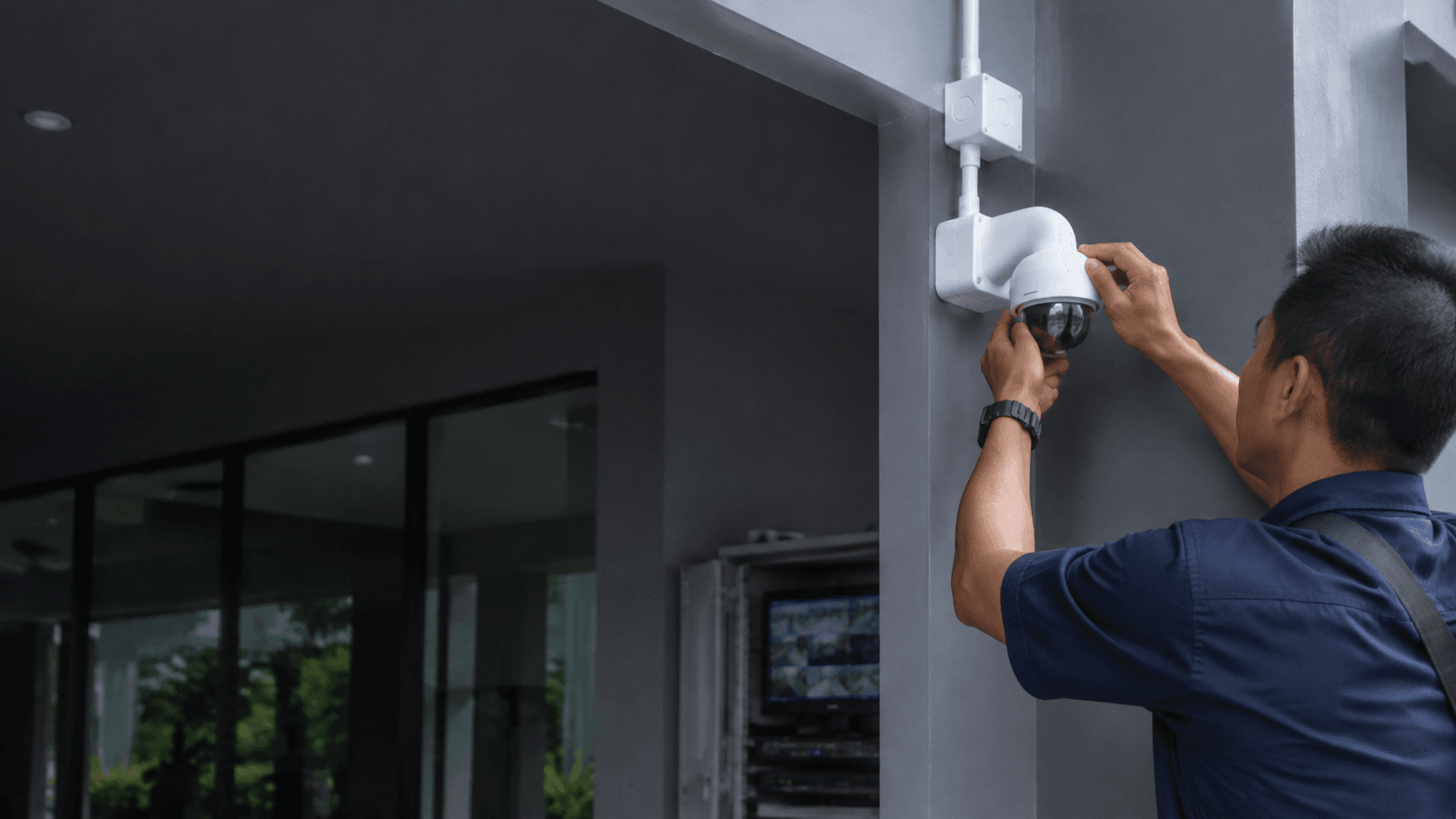
Buyers searching for cctv cameras for sale in Malaysia usually face a wall of product listings with no local installation support attached. Eyonic Sdn Bhd works differently: the company plans, supplies and installs monitoring systems with camera placement, recording and remote viewing for homes, offices, shops and industrial sites. That combination of supply and installation matters because a camera box alone does not decide where a lens points, how footage is stored, or how a phone connects to the recorder.
This page covers what the buying process looks like in practice, which camera and recording choices come up most often, how installation runs from first visit to handover, what package pricing looks like in ringgit, and which site conditions change where cameras can actually go.
Cctv Cameras For Sale. What Buyers in Malaysia Should Expect
Buying CCTV in Malaysia is rarely a single transaction. A camera needs a recorder, a storage drive, cabling or network points, a power arrangement, and a viewing app configured on at least one phone. Each of those pieces has to match the others, which is why a supplier that also installs tends to reduce the number of things that can go wrong.
Eyonic's service scope covers planning, supply and installation as one job. The company describes its CCTV work as camera placement, recording and remote viewing for homes, offices, shops and industrial sites. Those four property types behave differently. A shop needs coverage of the counter and entrance. An industrial site needs wider perimeter views and cable runs that survive weather and machinery. A home usually needs fewer cameras placed more carefully.
One useful reference point is Eyonic's project for the Kuching Immigration Office, which focused on arrival flow, staff areas, visitor movement and dependable daily operation. That is a public building with steady foot traffic, so camera positions had to serve both security review and day-to-day operational awareness rather than a single narrow purpose.
What Is Usually Included Beyond the Camera
A working system normally includes the recorder, storage, power and network provision, mounting hardware, cable routing, and configuration of remote viewing on a phone or computer. Eyonic lists NVR setup and remote viewing as part of its CCTV service scope, alongside camera placement. The handover stage exists precisely because remote viewing has to be tested on the owner's device before the job is finished.
Camera Types and Recording Setup Commonly Offered
Eyonic's product range includes Hikvision cameras. Hikvision is the brand named in the company's own package pricing and product reviews, so it is the reference point for most residential and commercial quotes.
Camera style matters less than placement and lighting. A bullet camera suits a long straight view along a wall or driveway. A dome or turret camera suits a corner where the direction of the lens should be less obvious. The choice between them is usually settled during the site survey, not before it.
Lighting Conditions and ColorVu-Style Cameras
Eyonic's own product review guidance on the Hikvision ColorVu camera recommends checking actual lighting conditions before confirming placement. That advice is worth taking literally. A camera that produces colour images in low light depends on how much ambient light reaches the lens position at night. A spot that looks bright during a daytime survey can be much darker after dark, especially under a deep awning or behind a wall that blocks street lighting.
The practical consequence is that placement decisions should be made with the night-time light level in mind, not just the daytime view. Where a position stays genuinely dark, the camera may still record, but the image characteristics change. Confirming this before drilling saves a second visit.
Recording and Remote Viewing
Recording is handled by a network video recorder, and Eyonic lists NVR setup as part of its installation scope. Remote viewing is configured during handover so the owner can check footage from a phone. Both depend on a stable internet connection at the property, which is a site condition rather than a product feature.
What a Practical Installation Process Looks Like
Eyonic's CCTV installation process follows four stages. The sequence matters because each stage produces information the next one depends on.
- Site survey. The property is reviewed to identify entry points, movement paths, lighting conditions and where cabling can run.
- System proposal. A camera count, camera types, recorder and storage arrangement are proposed based on what the survey found.
- Installation. Cameras are mounted, cabling is routed, and the recorder and network connections are set up.
- Handover. Recording and remote viewing are tested, and the owner is shown how to review footage.
The survey stage is where most of the value sits. A proposal written without seeing the property tends to over-specify camera counts or place lenses where a wall, tree or sign blocks the view. The Kuching Immigration Office project illustrates the point: arrival flow, staff areas and visitor movement each needed different coverage, and that only becomes clear by walking the building.
Why the Proposal Comes Before the Price
Camera count drives cost more than any other single variable. A proposal that fixes the count and the recorder size lets the price reflect the actual job rather than a generic bundle. It also gives the buyer something concrete to compare against other suppliers.
Package Pricing and Budget Ranges in Ringgit
Eyonic publishes a Hikvision CCTV Package at RM 1,599. The package covers camera supply and setup, basic recording configuration, and mobile viewing handover. That figure is a useful anchor for a small residential or small shop installation.
Larger jobs scale well beyond a single package. Eyonic's project pages list approximate budgets of RM 8,000 to RM 18,000 for an office setup for an engineering consultancy in Kuching, and RM 12,000 to RM 28,000 for the Kuching Immigration Office work. Those ranges reflect multi-camera commercial installations with more cabling, more recording capacity and more complex coverage requirements.
The gap between RM 1,599 and the five-figure project ranges is not a pricing inconsistency. It reflects camera count, cable distance, recorder capacity and the amount of coordination a live commercial site requires. A single-package installation and a public office with continuous foot traffic are different jobs.
What Drives the Number Up
Camera count is the largest factor. Cable distance matters next, because long runs need more material and more labour. Recorder channels and storage capacity add cost as the system grows. Site access also plays a part. work in an occupied office or a public building often has to be scheduled around operating hours.
Site Conditions That Change Camera Placement
Placement is the decision that most affects whether footage is useful. Several conditions routinely change where a camera can go.
Lighting is the first. As Eyonic's ColorVu review guidance notes, actual lighting conditions should be checked before confirming placement. A position that looks adequate in daylight may not perform the same way after dark.
Cable routing is the second. A camera position is only viable if a cable can reach it without an unreasonable run or an exposed path that invites damage. Tidy cabling was one of the stated needs in Eyonic's KTA Sarawak Sdn Bhd office project in Kuching, alongside staff movement and visitor handling.
Physical obstruction is the third. Signage, shelving, trees and structural columns all interrupt a view. Coverage of an entrance is worthless if a pillar sits between the lens and the door.
Building use is the fourth. A public office with visitor movement needs different coverage from a warehouse that is empty overnight. The Kuching Immigration Office project was shaped by arrival flow and staff areas, which are operational concerns rather than pure security ones.
When a Site Needs More Than CCTV
Some requirements sit outside camera coverage. Eyonic also supplies and installs alarm systems, autogate systems, keyphone intercom systems and Starlink internet installation in Sarawak. A gate that needs controlled entry, an intercom at a reception desk, or an internet link that remote viewing depends on may all belong in the same conversation as the cameras.
Getting a Practical Next Step From Eyonic
The most useful first move is to describe the property rather than pick a camera. Location, property type and the system required give enough information to judge whether a single package fits or whether a site survey is the better starting point.
Eyonic Sdn Bhd is based in Sarawak and its founder, Eric Yong, has more than ten years in the industry, with experience in technical installation of digital security solutions for commercial businesses in Sarawak. For buyers weighing cctv cameras for sale against a supplied-and-installed system, that installation background is the part a product listing cannot replicate.
Share your location, property type and required system with Eyonic on WhatsApp at +60 11-5111 7959 for the next practical step.