
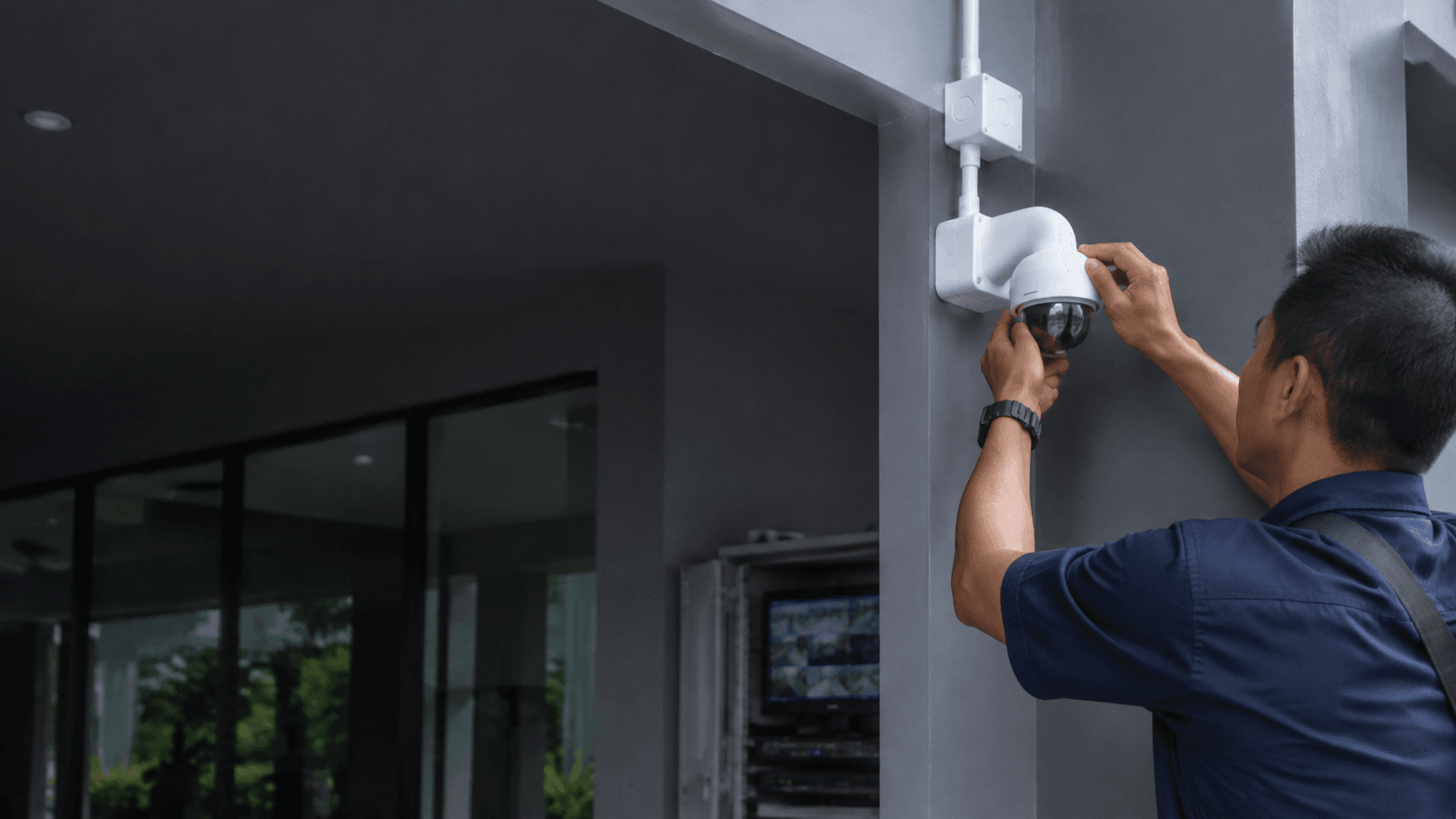
The exact-match query cctv surveillance system describes a working setup rather than a single boxed product. Cameras capture the scene, a recorder stores the footage, and a viewing method lets someone check it later. In Malaysia, the practical questions are usually about coverage, storage, and who handles the installation.
What a cctv surveillance system includes
A complete setup has four working parts: cameras, a recorder, storage, and a way to view footage. Eyonic lists camera placement, NVR setup, and remote viewing as core parts of the systems it plans, supplies, and installs.
Cameras are the visible part. Placement decides what each camera can actually see, which matters more than the number of cameras on a quotation. A recorder collects the video feeds in one place. Storage holds the recordings so they can be reviewed after an incident. Remote viewing lets the footage be checked from a phone or computer instead of only at the recorder.
Access control and smart locks often sit alongside a cctv surveillance system in the same building. Eyonic notes that smart locks work best when door condition, user roles, and a backup entry method are reviewed before installation, and that business use sometimes calls for an access-control panel instead of a standalone lock.
How a cctv surveillance system is planned before installation
Planning starts with a site survey, not a product list. Eyonic's installation process runs through four stages, and each one produces something the next stage depends on.
- Site survey — the property is inspected to understand layout, entry points, and existing cabling.
- System proposal — the survey findings are turned into a proposed system scope.
- Installation — cameras, recorder, and cabling are installed and configured.
- Handover — the system is explained and the user is shown how to operate it.
The survey stage is where most avoidable problems are caught. A camera pointed at a blank wall, a recorder placed where nobody can reach it, or a cable route that crosses a walkway all cost more to fix after installation than to plan around beforehand.
Camera placement and lighting checks
Placement should follow what needs to be seen: entrances, counters, cash areas, corridors, and vehicle access. Height and angle matter because a camera mounted too high may capture heads rather than faces.
Lighting is checked before placement is confirmed. Eyonic recommends checking actual lighting conditions on site before finalising placement for ColorVu-style cameras, because a camera chosen for low-light performance still depends on what the location really looks like at night. A showroom demonstration and a dim back lane are different conditions.
Recording, storage, and remote viewing
Recording configuration and mobile viewing handover are part of Eyonic's Hikvision CCTV package, which is priced at RM 1,599. The package covers camera supply and setup, basic recording configuration, and mobile viewing handover.
Storage is the part that decides how far back footage can be reviewed. Retention depends on how many cameras run, how long they record each day, and the size of the storage fitted. Those figures are not fixed in advance, so retention should be confirmed against the actual system rather than assumed from a package description.
Remote viewing depends on the network at the property. A stable connection makes phone viewing practical; a weak one makes it unreliable. This is worth testing during handover rather than discovering later.
Costs and packages in Malaysia
Eyonic publishes three packages at RM 1,599 each. The Hikvision CCTV Package covers camera supply and setup, basic recording configuration, and mobile viewing handover. The Hikvision Alarm System covers a control panel and sensors, siren and zone setup, and user testing and handover. The Autogate Package covers motor recommendation, remote-control setup, and safety testing and handover.
Larger projects are scoped individually. Eyonic's Kuching Immigration Office project, which covered arrival flow, staff areas, visitor movement, and dependable daily operation, had an approximate budget of RM 12,000 to RM 28,000. A KTA Sarawak Sdn Bhd office project in Kuching, covering staff movement, visitor handling, tidy cabling, and clearer daily site control, had an approximate budget of RM 8,000 to RM 18,000.
Those two ranges show how far a cctv surveillance system budget can move once a site grows beyond a single small property. A shop with one counter sits near the package end. A public office with multiple zones and daily public traffic sits at the project end.
Working with an installer in Sarawak
Eyonic Sdn Bhd is a security system supplier based in Sarawak, and its founder Eric Yong has worked in the industry for more than ten years, with experience in technical installation of digital security solutions for commercial businesses in Sarawak.
The value of a local installer shows up after handover. Cabling, recorder placement, and camera angles are physical work that may need adjustment once a site is in daily use. A supplier who can return to the site handles that differently from one who cannot.
For a cctv surveillance system to stay useful, someone at the property needs to know how to review footage, not just how to watch a live feed. Handover is the point where that knowledge transfers, so it is worth treating as a real step rather than a formality.
Share the location, property type, and required system with Eyonic on WhatsApp at +60 11-5111 7959 for the next practical step.