
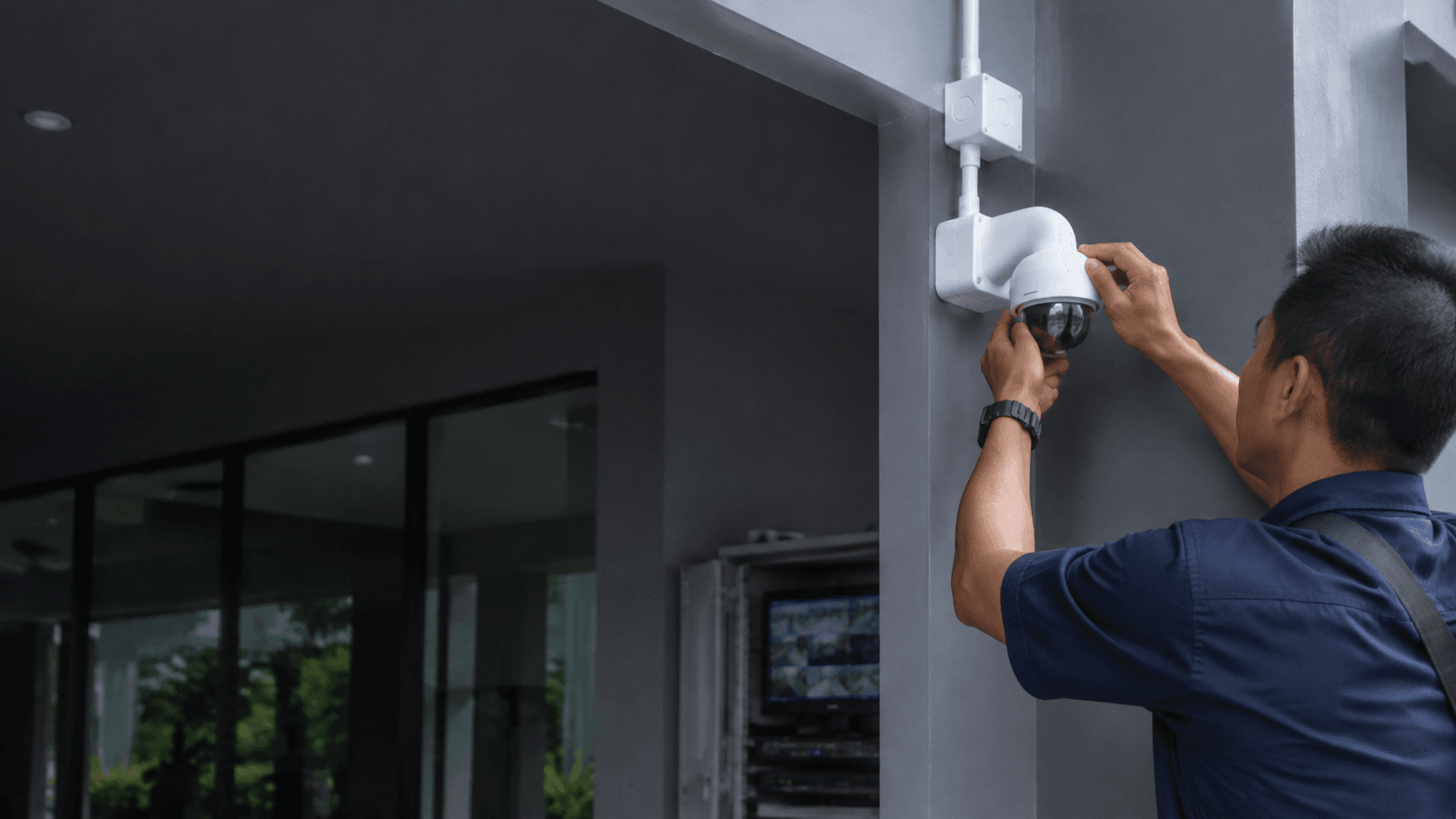
The phrase xvision cctv is ambiguous because unrelated companies use similar names. A UK-based brand sells IP cameras and recorders. A separate app listing called Xvision IPCCTV handles live view and playback. A third business in Australia sells automotive lighting. Search results mix all three, which is why a reader can land on a headlight shop while looking for a camera system.
Sorting out which meaning applies takes a few minutes of checking. The sequence below keeps the decision grounded in what can actually be confirmed.
- Check whether the product page names a manufacturer, a model number, and a recorder family.
- Check whether the app listing names the same developer as the camera brand.
- Confirm the recorder type, since app support depends on the recorder, not the camera alone.
- Confirm who will install and support the system locally.
- Confirm the viewing method and who holds the account credentials.
What Xvision CCTV usually refers to
Three distinct things share the name, and each one leads somewhere different.
The first is a camera and recorder brand. A UK distributor describes Xvision as a CCTV brand offering IP cameras, network video recorders, and accessories, with wired self-install systems, Power over Ethernet, and remote access without monthly fees. That is a hardware brand, not a service.
The second is a viewing app. An app store listing for Xvision IPCCTV is published by Y3K (EUROPE) LIMITED and describes surveillance software with live view, recording, playback, snapshots, and PTZ control. A Google Play listing for the same app name describes support for AHD and 960H DVRs alongside an IPC range. The app is a viewer, not a camera.
The third is a naming collision. A business trading as XVISION in Australia sells automotive lighting such as LED and HID headlight upgrades. Nothing about that business relates to surveillance. A reader who clicks the wrong result may conclude the term is about car parts.
There is also a US-based company trading as Xvision Security Solutions that advertises video surveillance for commercial, residential, and industrial settings. That is a separate regional business again.
The practical consequence is simple. The name alone does not identify a supplier, a country, or a product generation. Model numbers and the developer name on the app listing do.
Why the name is not a reliable identifier
Brand names that combine a letter and a common word are easy to reuse across unrelated markets. When several businesses adopt a similar name, search engines return a blend of results with no shared owner. A reader searching for a camera system can be shown a lighting catalogue, and a reader searching for an app can be shown a hardware distributor.
That is why model numbers matter more than the brand word. A listing that names a specific camera model and a matching recorder family gives something checkable. A listing that only repeats the brand name does not.
Xvision CCTV viewing apps and camera setup
App support depends on the recorder, not on the camera brand word. The Google Play listing for Xvision IPCCTV names AHD DVRs, 960H DVRs, and an IPC range, which means the app is built to talk to specific recorder families rather than to any camera carrying a similar name.
Two other details from that listing are worth noting. The app is published by Y3K (EUROPE) LIMITED, and the same developer name appears on the iOS listing for Xvision IPCCTV. Matching the developer name across a camera listing and an app listing is the most reliable way to confirm that the two belong together.
Setup guides found in search results focus on connection strings. Those pages publish RTSP and HTTP addresses, channel paths, and snapshot endpoints for a long list of camera models. Those addresses are model-specific and change between firmware versions. Copying a connection string from a general guide into a different camera model usually fails, and a failed connection string tells a reader nothing about whether the hardware is faulty.
Where a recorder is involved, the practical order is different from a standalone camera. The recorder holds the recording schedule, the user accounts, and the remote access configuration. Cameras feed into it. Changing a camera without touching the recorder rarely changes what a viewer sees on a phone.
What to confirm before relying on an app
Confirm the developer name on the app listing matches the developer or distributor named on the camera or recorder documentation. Confirm which recorder families the app states it supports. Confirm whether remote viewing needs a paid subscription or works without monthly fees, since both models exist in this market. Confirm who holds the administrator account, because a viewer who is not the administrator cannot reset access after a staff change.
Privacy terms are also worth reading rather than assuming. App store listings publish data safety sections, and those sections describe what the developer states it collects. That is the developer's own disclosure, not an independent audit.
What to compare before choosing Xvision CCTV
Comparison should start with the recorder and the viewing method, because those two decisions constrain everything else.
A wired Power over Ethernet system carries both power and data on one cable run, which simplifies cabling but requires a recorder or switch that supplies power. A system built around AHD or 960H recorders uses different cabling and different camera types. These are not interchangeable, and an app that supports one family may not support the other.
Remote access without monthly fees means the recorder handles the connection directly. That avoids an ongoing subscription but puts more responsibility on the local network configuration. A subscription-based service shifts that responsibility to the provider but adds a recurring cost.
Resolution claims need care. A listing that states 5 megapixels or 4K describes the camera sensor, not the recorded result. Recording resolution depends on the recorder's channel capacity and the storage configured for it. A high-resolution camera attached to a recorder set to a lower recording profile will not produce high-resolution recordings.
Night performance depends on the actual lighting at the site. Eyonic advises checking real lighting conditions before confirming placement for ColorVu-style cameras, and the same caution applies to any low-light camera claim. A specification sheet describes ideal conditions, not a specific doorway.
Questions worth answering before purchase
Which recorder family does the camera belong to, and does the chosen app state support for that family? How many channels are needed now, and how many might be needed later? Where will recordings be stored, and for how long? Who will hold administrator credentials? What happens to remote viewing if the internet connection drops?
Each of these has a cost implication. Channel count drives recorder selection. Storage duration drives hard drive sizing. Credential ownership drives whether a business can remove access when a staff member leaves.
Where local installation support fits
Hardware and app questions are only half of the decision. The other half is who surveys the site, positions the cameras, configures the recorder, and hands over the viewing setup.
Eyonic Sdn Bhd is a security system supplier in Sarawak, Malaysia, working on CCTV and ELV systems for homes, offices, shops, and industrial sites. The stated process covers site survey, system proposal, installation, and handover. That sequence matters because camera placement is decided during the survey, not after the boxes arrive.
Local project work gives a sense of the scope involved. Eyonic completed work for the Kuching Immigration Office, focused on arrival flow, staff areas, visitor movement, and dependable daily operation. A separate project for KTA Sarawak Sdn Bhd covered an office setup in Kuching supporting staff movement, visitor handling, tidy cabling, and clearer daily site control. Both are public-office and commercial settings where camera placement follows how people actually move through the space.
Published package pricing from Eyonic starts at RM 1,599 for a Hikvision CCTV package covering camera supply and setup, basic recording configuration, and mobile viewing handover. Comparable RM 1,599 packages exist for an alarm system and for an autogate setup. Larger project budgets on the published case studies range from RM 8,000 to RM 18,000 for the KTA Sarawak office work and RM 12,000 to RM 28,000 for the Kuching Immigration Office type of work. Those figures describe completed project scopes, not a quotation for any other site.
One limit is worth stating plainly. No verified relationship between Xvision CCTV and Eyonic is established in the available evidence. A reader who already owns Xvision hardware should confirm app and recorder compatibility directly rather than assuming a local supplier supports that specific brand.
What a site survey actually settles
A survey settles camera positions, cable routes, recorder location, and power availability. It also settles the honest limits of a layout. A camera aimed at a gate at night performs differently from the same camera aimed at a lit corridor, and no specification sheet resolves that difference. Checking the site under real lighting is the only reliable test.
Practical next step for
Start by identifying which meaning applies. If the goal is to view an existing system, the app listing and its stated recorder support are the relevant evidence. If the goal is a new system, the recorder family, channel count, storage plan, and local installation support matter more than the brand word.
For readers in Sarawak, sharing the location, property type, and required system with Eyonic on WhatsApp at +60 11-5111 7959 gives a concrete starting point for the next practical step.
Two cautions apply throughout. Model numbers and developer names are the only reliable identifiers when a brand name is shared across unrelated businesses. And any specification, resolution, or compatibility claim should be confirmed against the documentation that ships with the specific hardware, because general guides and search snippets describe other people's equipment.