
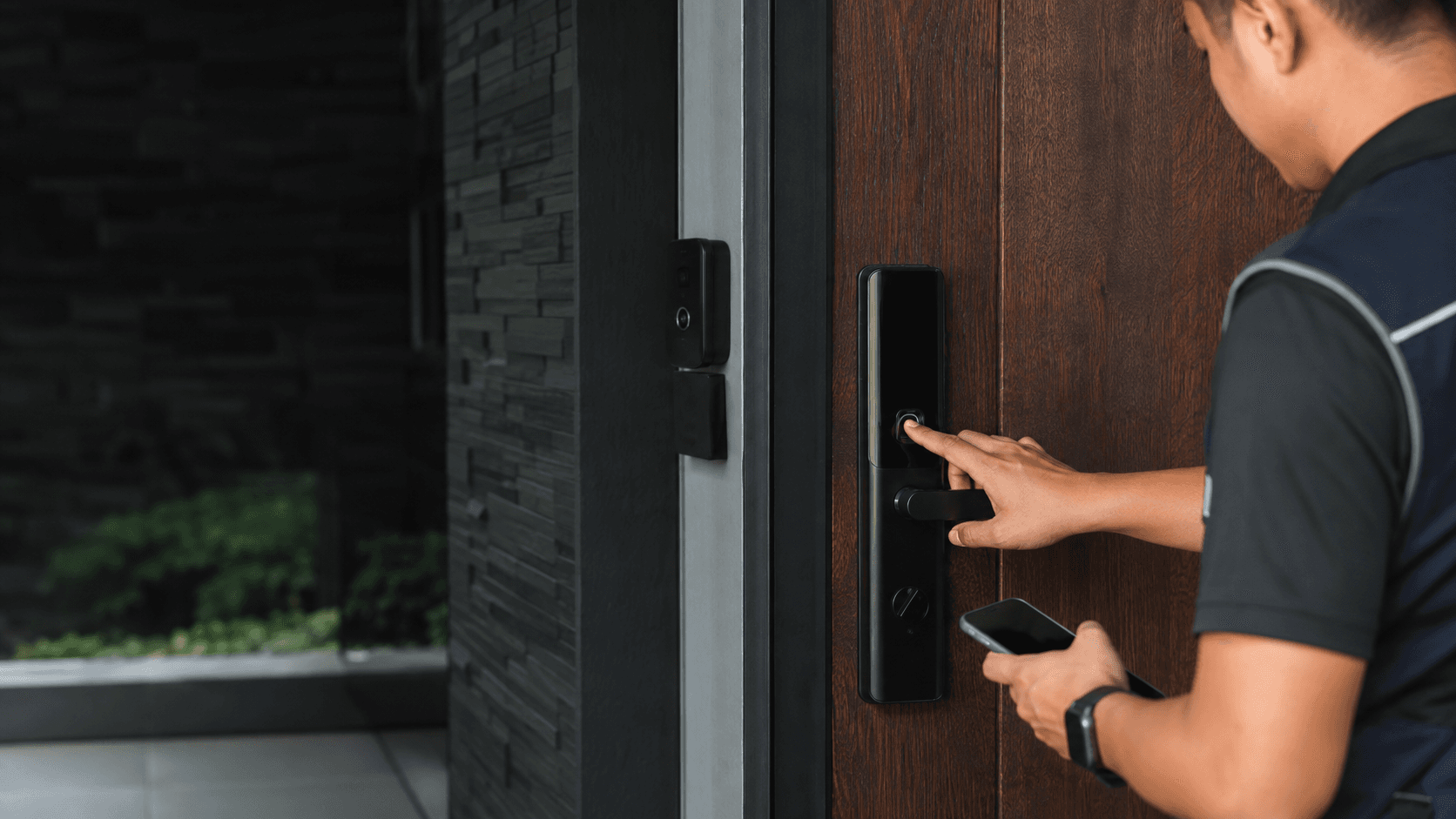
What Is a Biometric Door Lock?
A biometric door lock is an electronic locking system that identifies a person by a unique biological characteristic instead of a physical key. Fingerprint recognition is the most common method used in residential and commercial settings. These locks store enrolled fingerprint templates and compare a live scan against them before releasing the deadbolt.
Unlike a standard keypad lock, a biometric door lock does not require remembering a code. The reader captures the fingerprint, matches it to an enrolled user, and unlocks within a second or two. Many models combine fingerprint access with a keypad, RFID card, mobile app, or mechanical key override for backup entry.
How a Biometric Door Lock Works
The lock's optical or semiconductor sensor captures an image of the fingerprint ridge pattern. That image is converted into a mathematical template, not a stored picture of the finger. When someone places a finger on the reader, the lock compares the new scan against enrolled templates and grants access only when a match is confirmed.
Most consumer biometric door locks store between 20 and 100 fingerprints. The enrollment process typically involves scanning the same finger several times so the lock can recognise it at different angles and pressure levels. Dry, wet, or worn fingerprints can cause false rejections, which is why most locks also include a keypad or key override.
Eyonic's product review notes that smart locks work best when the door condition, user roles, and backup method are reviewed before installation. For business use, Eyonic usually checks whether a standalone smart lock or an access-control panel is more appropriate. This distinction matters because a single biometric door lock suits a home or small office, while a larger team may need centralised access control.
Key Features to Compare in a Biometric Door Lock
Not every biometric door lock performs the same in a Malaysian climate or on a local door frame. Comparing the following features helps narrow the choice before purchase:
- Fingerprint capacity and sensor type, since optical sensors can struggle with dry skin while semiconductor sensors read finer detail.
- Backup entry methods such as a mechanical key, keypad code, RFID card, or mobile app for times when the sensor fails.
- Battery type and estimated life, with most locks running on four AA batteries for six to twelve months depending on usage.
- Door thickness and backset compatibility, because Malaysian wooden and metal doors vary in standard dimensions.
- Weather resistance rating if the lock faces direct sunlight or rain under a porch.
- Connectivity options like Wi-Fi or Bluetooth for remote access logs and temporary user codes.
Fingerprint capacity matters more than raw numbers. A household of five needs only ten enrolled fingerprints, while a small business with shift workers may need fifty or more. The lock's internal memory and processing speed determine how quickly it matches a fingerprint from a larger database.
False acceptance rate and false rejection rate are the two security metrics that define accuracy. A false acceptance lets an unenrolled person in; a false rejection locks out a legitimate user. Manufacturers rarely publish these figures for consumer locks, so testing the sensor with dry and slightly wet fingers before purchase is the practical alternative.
Installation Considerations for a Biometric Door Lock
Door compatibility is the first constraint. A biometric door lock replaces the existing deadbolt or handleset, so the door must have the correct bore hole spacing and thickness. Standard Malaysian wooden doors are typically 40 to 45 millimetres thick, while metal doors may require additional mounting plates or adapters.
The installation process follows a consistent sequence:
- Measure the door thickness and existing bore hole positions to confirm the lock model fits.
- Remove the existing lock or deadbolt from the door and check the latch alignment.
- Install the new latch and strike plate, ensuring the bolt aligns with the door frame.
- Mount the exterior keypad or fingerprint reader and the interior locking mechanism.
- Insert batteries and enrol the first administrator fingerprint before closing the door.
- Test the lock several times with the door open, then closed, to confirm the latch retracts fully.
Alignment is the most common installation failure. If the strike plate does not line up with the latch, the motor cannot retract the bolt cleanly, and the lock reports an error or drains the battery faster. A door that has sagged on its hinges will also cause repeated false rejections because the latch binds against the strike plate.
Eyonic's CCTV installation process includes a site survey, system proposal, installation, and handover. The same staged approach applies to a biometric door lock: checking the door condition first prevents the common problem of installing a new lock on a misaligned frame. Eyonic also recommends checking actual conditions before confirming placement for its camera products, a principle that carries over to lock installation where door material and edge gaps affect sensor performance.
Biometric Door Lock Maintenance and Battery Life
Battery depletion is the leading cause of lockout with any electronic lock. Most biometric door locks provide a low-battery warning through the app or an audible beep for several days before the lock stops working. Replacing all batteries at once, rather than mixing old and new cells, extends reliable operation.
Fingerprint sensor maintenance is straightforward but often overlooked. Dust, cooking grease, and skin oils accumulate on the reader surface and degrade recognition accuracy. Cleaning the sensor with a dry microfiber cloth every few weeks restores performance. Abrasive cleaners or solvents can scratch the optical surface and permanently reduce scan quality.
Mechanical components also need attention. The latch and strike plate should move freely without lubrication buildup. A silicone-based lubricant applied sparingly to the latch mechanism prevents sticking, while oil-based products attract dust and cause gumming over time.
Weather exposure affects both the sensor and the electronics. A biometric door lock mounted on an exterior door that receives direct afternoon sun will heat up, and extreme heat can cause the fingerprint reader to fail intermittently. A shaded porch or an overhang reduces this risk. For fully exposed installations, a lock with an IP rating for water and dust resistance is the safer choice.
Choosing a Biometric Door Lock Installer in Malaysia
Professional installation matters more for a biometric door lock than for a standard deadbolt because the electronic components are sensitive to door alignment and wiring errors. A qualified installer checks the door thickness, bore hole positions, and frame alignment before mounting the lock. They also confirm that the latch throw matches the existing strike plate depth.
Eyonic Sdn Bhd operates as a security system supplier in Sarawak, Malaysia, planning, supplying, and installing monitoring and access systems for homes, offices, shops, and industrial sites. The company's completed projects include the Kuching Immigration Office, where practical support focused on arrival flow, staff areas, visitor movement, and dependable daily operation. Eyonic also supported KTA Sarawak Sdn Bhd with an office setup in Kuching for staff movement, visitor handling, tidy cabling, and clearer daily site control.
These projects show the difference between selling a lock and delivering a working access system. A public office or engineering consultancy needs reliable daily operation, not just a device mounted on a door. The same standard applies to a home biometric door lock: the installer should verify that the lock works consistently for every enrolled user before handover.
When selecting an installer, ask about their process for handling door modifications. Some doors need reboring or a new strike plate, and the installer should confirm whether those changes are included. Also confirm the backup plan if the lock fails electronically, since a mechanical key override is essential during a battery outage or sensor malfunction.
Eyonic's founder, Eric Yong, has more than ten years of experience in the technical installation of digital security solutions for commercial businesses in Sarawak. That depth of experience matters when a biometric door lock must integrate with an existing alarm system or access-control setup rather than operate as a standalone unit.
Share the location, property type, and required system with Eyonic on WhatsApp at +60 11-5111 7959 for the next practical step.