
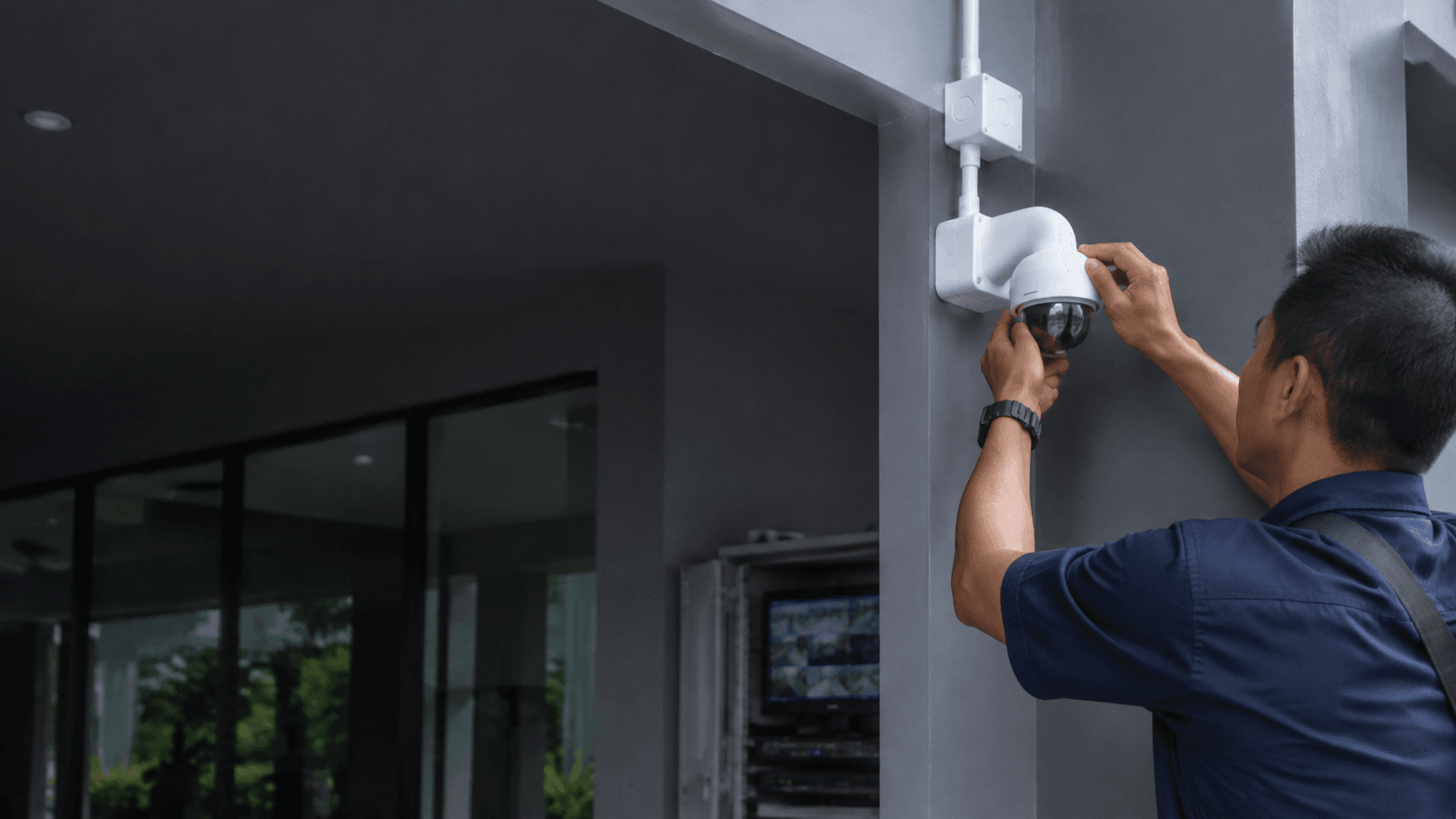
The exact-match query wired cctv camera describes equipment that stays connected by cable rather than relying on a wireless link for its main signal path. In Malaysia, that choice usually comes down to the building itself: how it is laid out, how it is used each day, and whether the cable route can be kept tidy and protected.
Eyonic Sdn Bhd plans, supplies and installs monitoring systems with camera placement, recording and remote viewing for homes, offices, shops and industrial sites. The company is based in Sarawak and works on both small premises and larger sites, including a public office project in Kuching.
Wired cctv camera basics for Malaysian buildings
A wired cctv camera is one part of a system, not a standalone purchase. The camera needs a cable route back to a recorder, and the recorder needs a place to sit with power and ventilation. That chain decides more about the final result than the camera model alone.
Four elements carry most of the planning weight:
- Site survey — the building is reviewed before anything is proposed, so camera positions and cable routes match the actual structure.
- System proposal — the survey findings are turned into a defined scope covering cameras, recording and viewing.
- Installation — cameras are mounted, cabling is run, and the recorder is configured.
- Handover — recording and remote viewing are set up and explained so the system can be operated day to day.
That sequence is the documented Eyonic CCTV installation process, and it applies whether the site is a single shop lot or a multi-area office.
Why the building decides the design
Concrete walls, long corridors, exposed ceilings and outdoor runs all change how cable is routed and where a recorder can reasonably live. A shophouse with a short internal run and an industrial site with cameras spread across separate structures are different jobs even when the camera count is similar.
Daily use matters too. A retail unit needs coverage of the counter and entrance. An office needs staff areas and visitor movement covered. A home usually needs the gate, car porch and entry points. The Kuching Immigration Office project focused on arrival flow, staff areas, visitor movement and dependable daily operation, which shows how the operating pattern shapes placement rather than the other way round.
What a wired cctv camera installation involves
Installation is the stage where most of the practical risk sits. Cable routes have to be planned before drilling starts, and the recorder position has to be settled early because it affects both cabling and where viewing happens.
The documented process runs in four stages, and each one produces something the next stage depends on. Skipping the survey usually means rework later, because camera positions chosen from a floor plan alone often miss obstructions, glare sources or areas that are busier than expected.
Site survey
The survey records what the building actually looks like: wall construction, ceiling access, existing power points, cable paths that can be concealed, and the areas that need coverage. It also establishes where the recorder can be installed without blocking access or overheating.
System proposal
The proposal converts the survey into a defined scope. It sets out camera positions, the recording arrangement and how remote viewing will work. This is the point where scope decisions are made rather than during installation, when changes cost more time.
Installation
Cameras are mounted at the agreed positions, cabling is run along the planned routes, and the recorder is set up. Tidy cabling is a practical outcome rather than a cosmetic one — the KTA Sarawak Sdn Bhd project listed tidy cabling alongside staff movement, visitor handling and clearer daily site control as part of the office setup.
Evidence and Practical Fit
Handover covers recording configuration and remote viewing, so the people running the site can check footage and view cameras without needing to call for help each time. The Hikvision CCTV Package documents camera supply and setup, basic recording configuration and mobile viewing handover as its three parts.
placement and lighting checks
Placement is where a system either works or becomes a source of complaints. Two checks matter most. what the camera is meant to see, and what the light is doing at that spot.
Eyonic recommends checking actual lighting conditions before confirming placement for ColorVu-style cameras. That recommendation exists because lighting varies across a site — a covered walkway, an open car park and an indoor corridor behave differently at night, and a position that looks correct in daylight can perform differently after dark.
Placement questions worth settling before drilling
Coverage should follow movement rather than symmetry. Entrances, counters, cash handling points, staff access doors and vehicle entries usually matter more than evenly spaced cameras along a wall. Height and angle also affect whether a face or a number plate is captured, and those are decisions best made on site.
Obstructions are the other common issue. Signage, shelving, trees and structural columns can block a view that looked clear on a plan. The survey stage exists to catch these before installation.
Where lighting changes the answer
Areas with mixed lighting — part covered, part open — are the hardest to place well. A position that covers the lit section may leave the darker section unclear, and the reverse is also true. Confirming lighting conditions on site is the practical way to avoid committing to a position that cannot be adjusted easily once cable is run.
projects and budget ranges
Budget expectations vary widely with site size, camera count and cable complexity. Two documented Eyonic projects give a realistic sense of the range for office and public-building work in Sarawak.
The Kuching Immigration Office project had an approximate budget of RM 12,000 to RM 28,000. The KTA Sarawak Sdn Bhd project had an approximate budget of RM 8,000 to RM 18,000. Both were office or public-building setups in Kuching, and both involved practical coverage of movement through the premises rather than a single-camera installation.
For smaller premises, the Hikvision CCTV Package is listed at RM 1,599 and covers camera supply and setup, basic recording configuration and mobile viewing handover. That package is a starting point rather than a like-for-like comparison with the project ranges, because larger sites involve more cameras, longer cable runs and more configuration work.
What moves a budget up or down
Camera count is the obvious factor, but cable routing often has more effect than expected. Concealed routes through finished walls take longer than surface runs along an exposed ceiling. Sites with multiple separate structures, outdoor runs or long distances between cameras and the recorder generally sit at the higher end.
Scope decisions made at the proposal stage are the main control on cost. Adding cameras after installation is more disruptive than including them from the start, because the cable route and recorder capacity have already been set.
questions before confirming a system
Most uncertainty before a purchase comes down to fit rather than features. The useful questions are about the building and how it is used, not about comparing model numbers.
Will a wired setup suit the premises
Wired systems suit sites where cable can be routed and where a recorder can be installed in a suitable location. Buildings with difficult cable paths, or where drilling is restricted, need that constraint identified during the survey rather than discovered during installation.
How many cameras are needed
Camera count follows coverage areas, not floor area. Counting the points that need watching — entrances, counters, access doors, vehicle entries — gives a more reliable starting number than dividing total square footage.
What happens at handover
Handover should leave the site able to record and view remotely. The documented package includes mobile viewing handover, and the installation process ends with handover as a defined stage rather than an informal walkthrough.
What is not covered by the available information
Specific camera resolutions, cable types, cable run limits, storage capacity, warranty terms and maintenance schedules are not documented in the available material, so they should be confirmed directly for a specific site rather than assumed from a general description.
next step with Eyonic
Eyonic Sdn Bhd is a security system supplier in Sarawak working on CCTV and ELV systems, with planning, supply and installation for homes, offices, shops and industrial sites. The founder, Eric Yong, has worked in the industry for more than 10 years, with experience in technical installation of digital security solutions for commercial businesses in Sarawak.
The practical starting point is the survey, because placement, cable routing and recorder position all depend on the actual building. Sharing the location, property type and required system gives enough context to move to that stage.
Share your location, property type and required system with Eyonic on WhatsApp at +60 11-5111 7959 for the next practical step.