
SimpliSafe sells indoor cameras as part of a do-it-yourself security setup rather than as standalone gadgets. The two indoor models differ mainly in how they receive power and how they connect to a system, and those differences decide where each one can realistically sit inside a Malaysian home, office, or shop unit.
What the Simplisafe Indoor Camera range includes
Two indoor cameras carry the SimpliSafe name. The SimpliCam is the wired indoor camera, and the Smart Alarm Wireless Indoor Security Camera is the battery-powered option. Both are added to a SimpliSafe system through the SimpliSafe Mobile App, and both are intended for indoor use.
The wired SimpliCam stays tethered to a power source, so its position is limited by where a plug point and cable run can reach. The wireless model runs on a rechargeable battery, which frees placement from cabling but introduces charging as an ongoing task. Neither model is a generic IP camera that plugs into any recorder; both belong to the SimpliSafe ecosystem.
Setup for either camera follows the same broad sequence in the SimpliSafe Mobile App: add the camera, connect it to a Wi-Fi network, give it a name, then choose a location. The wired camera is prepared for setup and its QR code is scanned during pairing. The wireless camera is fully charged before it is added, then woken so it can pair with the system and join Wi-Fi.
Wired and wireless indoor camera variants
The choice between the two models is mostly a power and placement decision. A wired camera suits a fixed indoor position near an existing socket, where the camera will stay put for years. A wireless camera suits a position where running cable is impractical, or where the camera may need to move as a room's layout changes.
| Comparison point | SimpliCam wired indoor camera | Smart Alarm Wireless Indoor Security Camera |
|---|---|---|
| Power source | Wired to a power source | Rechargeable battery, charged before setup |
| App setup | Added in the SimpliSafe Mobile App, QR code scanned | Added in the SimpliSafe Mobile App, camera woken to pair |
| Wi-Fi requirement | Connects to a Wi-Fi network during setup | Connects to Wi-Fi during setup, with signal strength checked afterwards |
| Placement | Limited by cable reach and socket position | Freed from cabling, but needs a position with workable signal |
| Monitoring context | Indoor monitoring within a SimpliSafe system | Indoor monitoring within a SimpliSafe system |
Both models share indoor-only positioning, app-based management, and a role inside a SimpliSafe system rather than as a standalone recorder. Published SimpliSafe support material describes the wireless model as pairing to the system and connecting to Wi-Fi, and describes the wired model as being added in the app, connected to Wi-Fi, named, and then placed.
Which variant fits which property
A rented apartment or a small office room with sockets already in sensible corners tends to suit the wired camera, because the cable run is short and the camera stays in one place. A shop unit with a high ceiling, a warehouse office, or a room where the best viewing angle sits far from any socket tends to suit the wireless model, provided the Wi-Fi signal at that spot is strong enough.
The wireless model adds a maintenance routine that the wired model does not: the battery has to be charged. A camera mounted high on a wall is harder to reach for charging than one placed at chest height, so the practical placement decision and the charging decision are the same decision.
What to compare before choosing a Simplisafe Indoor Camera
Four checks decide whether either model is a sensible fit for a specific property.
- Site survey. walk the rooms and note where coverage is actually needed, where power and network points already exist, and which surfaces can take a mount.
- System proposal. match the camera choice to the rest of the security setup, so cameras, alarm devices, and recording are planned as one system rather than added piece by piece.
- Installation. mount and configure the devices, confirm the network connection at each camera position, and check that the app view matches the intended coverage.
- Handover. confirm that live viewing, alerts, and playback work as expected, and that the people who need access know how to use them.
That sequence reflects how Eyonic runs its own CCTV installation work in Sarawak, covering site survey, system proposal, installation, and handover. The same order applies when a property owner is weighing an indoor camera against a full camera system, because the survey answers the placement question before any model is chosen.
System fit and app dependence
Both indoor models depend on the SimpliSafe Mobile App for setup and daily use. A property without reliable Wi-Fi at the camera position will struggle regardless of which model is chosen, and the wireless model makes that dependency more visible because signal strength is checked after pairing.
Neither model is documented in the supplied evidence as compatible with Eyonic's own packages or with third-party recorders. A property already running a Hikvision-based CCTV setup should treat the Simplisafe Indoor Camera as a separate system rather than an add-on to the existing recorder.
Placement and lighting checks
Indoor camera placement is decided by three things: what needs to be seen, where the camera can physically sit, and whether the light at that spot is usable. A camera pointed at a bright window will silhouette anyone standing in front of it, and a camera in a dark corridor will produce a different result from one in a lit reception area.
Eyonic's own guidance on camera placement is to check the actual lighting conditions on site before confirming a position, rather than assuming a specification will carry the result. That check applies to indoor cameras as much as to outdoor ones, and it is the reason a site survey comes before a model recommendation.
Practical placement points for either indoor model:
- Aim the camera along the path people walk, not at the wall they walk past.
- Avoid pointing directly at windows, glossy surfaces, or strong downlights.
- Keep the camera out of easy reach but accessible enough for charging or cable checks.
- Confirm the Wi-Fi signal at the exact mounting spot, not at the room's doorway.
Installation and handover steps
For the wired SimpliCam, the app sequence is to add the camera, connect it to Wi-Fi, name it, prepare it for setup, scan its QR code, and then choose a location. For the wireless model, the sequence starts with a full charge, then adding the camera in the app, waking it, pairing it to the system, connecting it to Wi-Fi, choosing a location, and checking the connection afterwards.
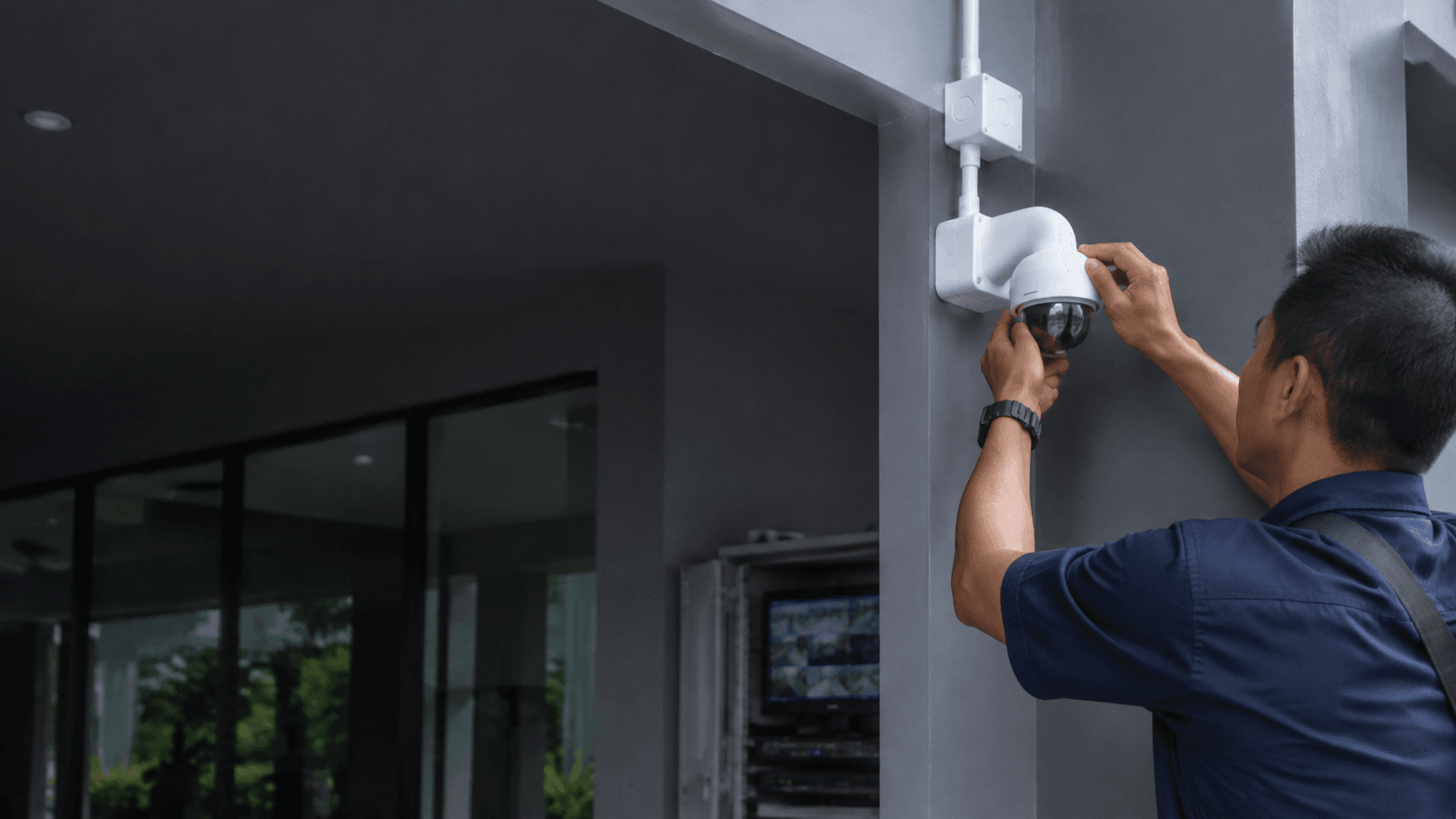
Mounting differs by surface. SimpliSafe's own guidance separates mounting on stone, brick, or stucco from mounting on drywall, and includes a step for fine-tuning the camera's position after it is fixed. That final adjustment matters more than it appears, because a camera angled a few degrees off can miss the doorway or counter it was installed to cover.
Handover is where an indoor camera either becomes useful or gets ignored. The people who need the footage should be able to open the app, view live video, and find recorded events without assistance. On a commercial site, that usually means confirming access for more than one person and checking that alerts reach the right devices.
Practical limits and open questions
Several details about the Simplisafe Indoor Camera cannot be confirmed from the available evidence, and they matter to a Malaysian buyer.
No verified technical specifications, resolution figures, field-of-view numbers, or battery life for either indoor model are available in the supplied material. No verified Malaysian availability, local pricing in MYR, warranty terms, or local support arrangements are available either. There is also no verified statement about whether the Simplisafe Indoor Camera is sold or installed in Sarawak or elsewhere in Malaysia.
Monitoring plan details, subscription costs, and recording retention terms for the Simplisafe Indoor Camera are not confirmed in the supplied evidence, even though published SimpliSafe material links some camera features to monitoring plans. Anyone comparing the camera against a locally supplied system should confirm those terms directly before deciding.
There is no verified compatibility statement between the Simplisafe Indoor Camera and Eyonic's supplied services or packages. A property that already runs a locally installed CCTV system should treat the two as separate purchases rather than assuming they will work together.
For a property in Sarawak, the practical comparison is usually between a self-installed indoor camera and a locally planned system. Eyonic's own work in the region includes a project for the Kuching Immigration Office covering arrival flow, staff areas, visitor movement, and dependable daily operation, and a project for KTA Sarawak Sdn Bhd covering staff movement, visitor handling, tidy cabling, and clearer daily site control. Both were planned around how the site is actually used, which is the same question an indoor camera decision turns on.
Where a single indoor camera is enough, the Simplisafe Indoor Camera range offers a wired and a wireless option with app-based management. Where coverage, recording, and cabling need to be planned across a whole property, a surveyed system with defined camera positions tends to answer more of the questions that come up after installation.
Share your location, property type and required system with Eyonic on WhatsApp at +60 11-5111 7959 for the next practical step.