
The exact-match query ip cctv system describes a setup where each camera is a network device rather than a point-to-point analog feed. That single design choice changes the cabling, the recorder, how footage is stored, and how the system is expanded later. For property owners in Malaysia weighing a first installation or a replacement, the practical questions are what the system contains, how it behaves differently from analog, and what a local installer actually does on site.
What an Ip Cctv System Includes
A working ip cctv system is a small network with a specific job. The parts below are the ones that determine whether the finished installation is reliable or frustrating.
Cameras. Each camera captures video and converts it to a digital stream. Because the camera does the encoding, image quality and low-light behaviour are decided at the camera rather than at a central recorder.
Network video recorder. The NVR receives streams from the cameras, writes them to storage, and serves playback. It is the component that replaces the DVR used in analog setups, and it is where recording schedules and retention are configured.
Power over Ethernet. PoE carries both data and electrical power over a single network cable. A camera on PoE needs one cable run instead of a separate power point, which usually reduces the number of electrical works required during installation.
Cabling and network hardware. Network cable, connectors, and a PoE switch or PoE-capable recorder form the backbone. Cable routes and distances matter more than most buyers expect, because they constrain where cameras can physically go.
Remote viewing. Mobile and desktop access lets the owner check live and recorded footage away from the property. This is configured during handover so the account, permissions and viewing app are working before the installer leaves.
Camera placement. Placement decides what the system is actually worth. A camera aimed at the wrong angle records activity without identifying it, and no amount of resolution fixes a bad angle.
How an Ip Cctv System Differs from Analog CCTV
The difference is not only image quality. It is where the video is processed and how the system grows.
In an analog setup, cameras send a signal to a DVR, which digitises and records it. In an ip cctv system, each camera produces its own digital stream and the NVR records those streams. That shift has three practical consequences for a Malaysian property.
First, cabling. Analog installations typically need a video cable plus a separate power feed to each camera. A PoE-based ip cctv system runs one cable per camera, which simplifies routing through ceilings, trunking and outdoor walls.
Second, expansion. Adding a camera to a networked system usually means running one cable to the nearest network point and adding the device to the recorder. Analog expansion is bounded by the DVR's channel count and the available cabling.
Third, remote access. Networked systems are built to be viewed over a network, so remote viewing is a native function rather than an add-on module. Analog systems can support remote viewing through a recorder, but the path is less direct.
Analog equipment remains cheaper to buy in many cases, and existing analog cabling can sometimes be reused with converters. That trade-off is worth stating plainly: a networked system costs more upfront and rewards that spend through simpler cabling, easier expansion, and cleaner remote access.
Planning an Ip Cctv System Around Real Lighting and Layout
Camera selection is often decided on paper before anyone stands on site. Eyonic's guidance on ColorVu-style cameras is to check actual lighting conditions before confirming placement, because a position that looks adequate in daylight can behave very differently after dark.
Lighting conditions at a Malaysian property vary more than a single site visit at midday suggests. A covered porch, a back lane with a single street lamp, a shopfront under bright signage, and an open car park each present a different problem. Placement decisions should follow an evening or night check of the actual positions, not a daytime walkthrough alone.
Layout matters for the same reason. The useful questions are what needs to be seen, from which direction a person or vehicle approaches, and whether the camera can be mounted at a height and angle that captures a usable view. Entrances, arrival routes, and movement between public and restricted areas are usually the highest-value positions.
Eyonic's work for the Kuching Immigration Office followed this logic, with coverage focused on arrival flow, staff areas, visitor movement and dependable daily operation. That is a public-office example, but the same reasoning applies to a shop, an office, or a home: the system is planned around how the space is used, not around a fixed camera count.
The Eyonic Installation Process for an Ip Cctv System
Eyonic's CCTV installation process follows four stages. The sequence matters because each stage depends on the information gathered in the one before it.
- Site survey. The property is reviewed on location, covering camera positions, lighting conditions, cable routes, and where the recorder will sit.
- System proposal. The findings are turned into a proposed system covering camera placement, recording, and remote viewing.
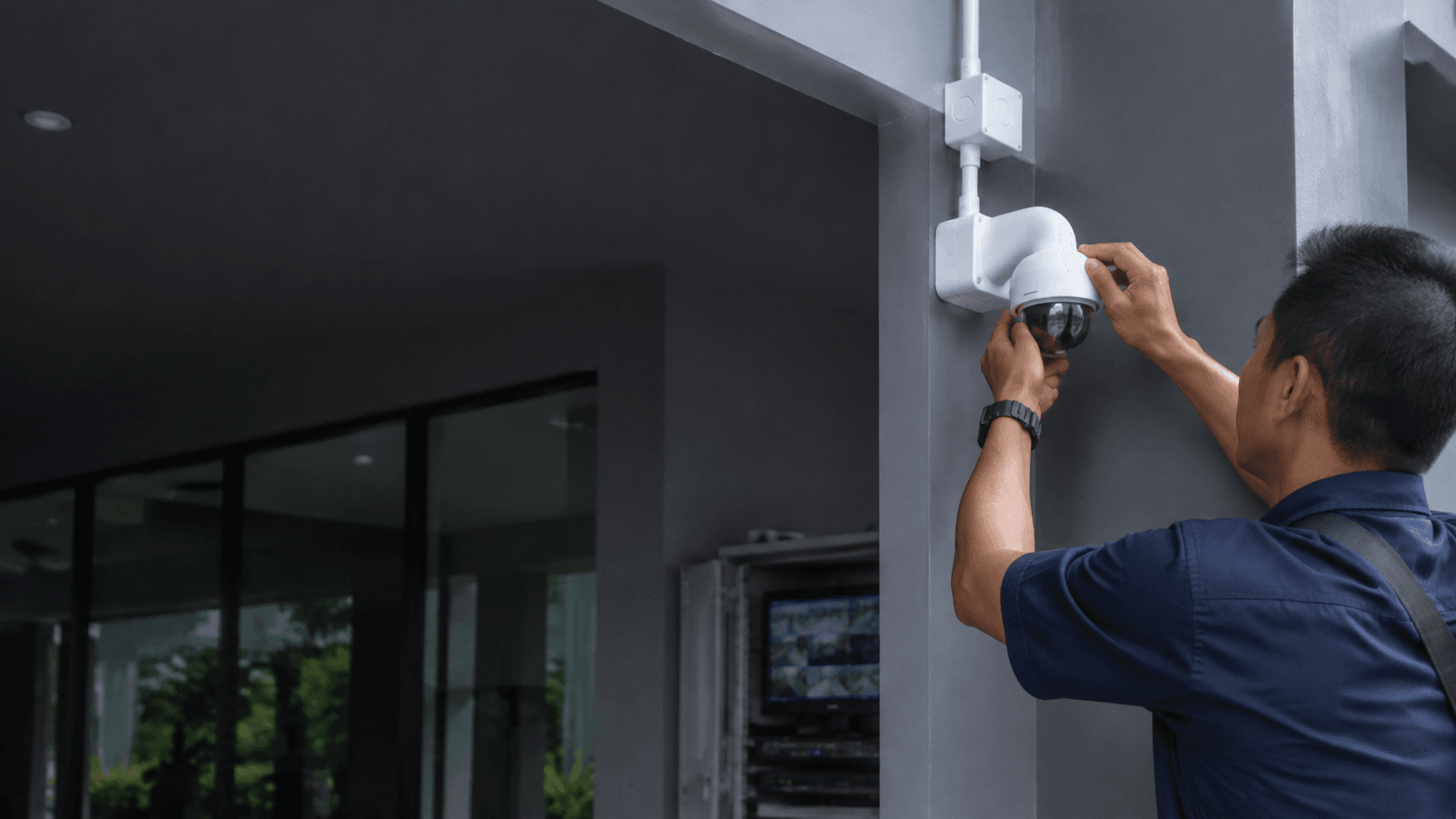
- Installation. Cameras, cabling, and the recorder are installed and configured on site.
- Handover. The system is tested with the owner, including mobile viewing setup, so the finished installation is usable from day one.
Eyonic Sdn Bhd is a security system supplier based in Sarawak, and the company plans, supplies and installs monitoring systems with camera placement, recording and remote viewing for homes, offices, shops and industrial sites. The founder, Eric Yong, has been in the industry for more than 10 years, with experience in technical installation of digital security solutions for commercial businesses in Sarawak.
For buyers comparing suppliers, the useful question is not only what equipment is quoted but whether the survey and handover stages are included. A proposal built without a site visit tends to produce placement guesses, and an installation without a proper handover leaves the owner unable to check footage remotely.
What to Prepare Before Requesting an Ip Cctv System Survey
A survey produces a better proposal when the owner arrives with clear information. The following items shorten the process and reduce the chance of a mismatched quote.
Property type and use. A single-storey home, a shophouse, an office floor, and an industrial site each raise different coverage and cabling questions. Stating the property type up front lets the survey focus on the right areas.
Priority areas. Entrances, cash counters, stock areas, parking, and staff-only zones are common priorities. Naming them helps the survey concentrate on positions that matter rather than spreading coverage evenly.
Existing infrastructure. Whether network cabling, a network point, or an existing recorder is already present affects both the design and the amount of new cabling required.
Lighting and after-dark conditions. Noting which areas are dark at night, and whether lighting is likely to change, supports the placement check that Eyonic recommends before confirming camera positions.
Remote viewing expectations. Who needs to view footage, from how many devices, and whether viewing happens on site or away from the property all shape the configuration at handover.
Eyonic publishes a Hikvision CCTV package at RM 1,599 covering camera supply and setup, basic recording configuration, and mobile viewing handover. That figure is a package price rather than a general rate for every property, and larger or more complex sites are quoted after the survey. Two comparable Eyonic projects give a sense of scale for commercial work: the Kuching Immigration Office project carried an approximate budget of RM 12,000 to RM 28,000, and the KTA Sarawak Sdn Bhd office project carried an approximate budget of RM 8,000 to RM 18,000.
Two constraints are worth knowing before committing. First, no verified warranty, support-response, or maintenance terms are published for these systems, so those terms should be confirmed directly with the supplier rather than assumed. Second, no verified Malaysian regulatory or licensing requirements for CCTV installation are published here, so any compliance question specific to a site should be raised with the supplier during the survey.
For readers deciding between a networked system and a cheaper analog replacement, the deciding factor is usually expansion and remote access rather than image quality alone. A property that expects to add cameras, or that needs reliable mobile viewing, tends to get more from an ip cctv system over its working life. A small property with existing analog cabling and no plans to expand may find a like-for-like replacement more economical.
Share the location, property type and required system with Eyonic on WhatsApp at +60 11-5111 7959 for the next practical step.