
The exact phrase cctv dahua 2mp is a search habit rather than a product name. Buyers type it when they want a Dahua camera that records at roughly two megapixels, and the results they get are mostly marketplace listings, price guides and spec pages from outside Malaysia. What those pages rarely explain is what the camera actually captures, which body shape suits which position, and what happens between ordering and handover.
Two megapixels is a resolution figure, not a quality guarantee. A 2MP sensor produces an image around 1920 by 1080 pixels, which is the same pixel count as 1080p. Whether that image is useful depends on the lens, the sensor's low-light behaviour, the amount of light on the scene, and where the camera is mounted. A well-placed 2MP camera on a lit entrance usually identifies a face more reliably than a higher-resolution camera pointed at a dark corner from too far away.
Cctv Dahua 2mp: What Matters Before You Choose
In daylight, a 2MP camera records enough detail to recognise a person, read a vehicle plate at close range, and follow movement across a gate or corridor. The limiting factor is distance and angle. A wide lens covering an entire car park spreads those two million pixels thinly, so a face at the far end becomes a few pixels wide. Narrowing the field of view or moving the camera closer concentrates the same resolution onto a smaller area.
At night, the camera switches to infrared or to a low-light mode, and the image changes character. Infrared produces monochrome footage that is good for detecting presence and movement but weaker for identifying a face or a colour. Colour-at-night modes depend on ambient light, so a street lamp, a porch light or a shop sign can make the difference between usable colour and a dark frame.
Eyonic's own guidance on low-light cameras is to check the actual lighting conditions at the position before confirming placement, because the same camera behaves differently under a covered walkway and under open sky. That check belongs in the site survey, not in a showroom comparison.
Where 2MP is enough and where it is not
A 2MP camera suits an entrance, a gate, a corridor, a counter and a small shop floor where the subject passes within a few metres. It is a poor fit for identifying faces across a large open yard, reading plates at speed on a main road, or covering a long perimeter in a single view. Those jobs need either more cameras, tighter lenses, or a higher-resolution model, and the honest answer is often more cameras rather than a bigger number on the box.
Dahua 2MP camera types and where each one fits
Dahua builds 2MP cameras in several families, and the family matters more than the megapixel count. The two transmission types a Malaysian buyer will meet most often are HDCVI, which runs over coaxial cable, and IP, which runs over network cable and typically uses Power over Ethernet.
HDCVI is common in upgrades. If a building already has coaxial cable from an older analogue system, HDCVI cameras can often reuse that cabling and feed a compatible recorder, which reduces the amount of new cable to pull. IP cameras carry more configuration options and integrate more naturally with network recorders and remote viewing, but they need network cabling and a switch or recorder that supplies power.
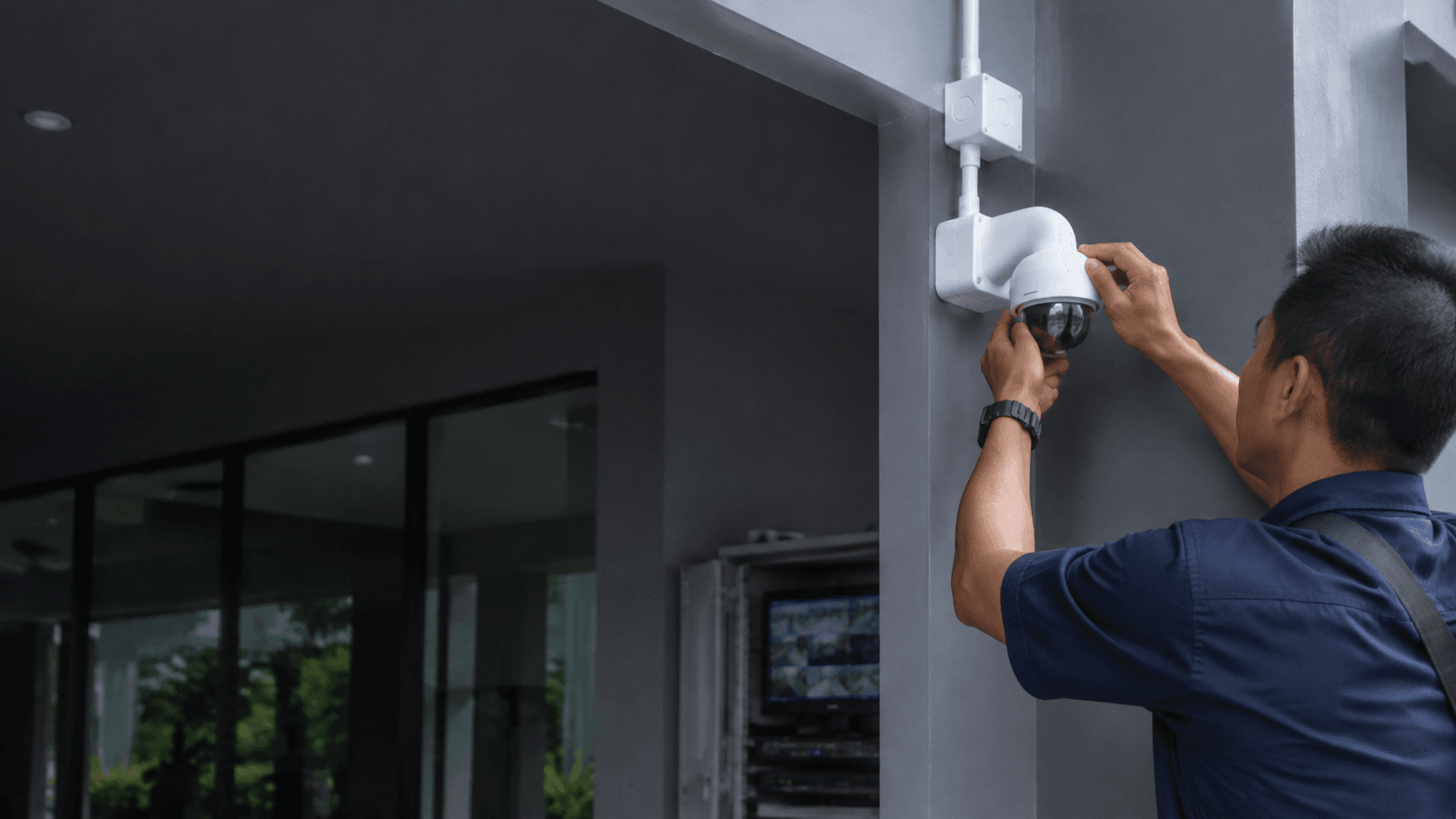
Body shape follows the position. Dome cameras sit flush against a ceiling or soffit, resist tampering better and look less obtrusive indoors. Bullet cameras mount on a wall or bracket and throw infrared further, which suits a gate, a driveway or a perimeter wall. PTZ cameras pan, tilt and zoom, so one unit can cover a wide area, but they only record what they are pointed at, which makes them a complement to fixed cameras rather than a replacement.
HDCVI or IP for a Malaysian site
The deciding question is what already exists. A shop or office with usable coaxial runs and a working recorder is usually cheaper to refresh with HDCVI. A new build, or a site that wants cameras on the same network as access control and internet, leans toward IP. Mixed sites exist, and a recorder that accepts both analogue and IP channels lets a building add cameras gradually instead of replacing everything at once.
What changes the price of a Dahua 2MP setup in Malaysia
Camera count is the largest single driver, because every camera adds a lens, a mount, a cable run and a channel on the recorder. A four-camera house and a twenty-camera factory are different projects even when the cameras are identical.
Cable route is the second driver and the one buyers underestimate. A camera above a false ceiling near an existing power point is quick work. A camera on a far boundary wall needs conduit, possibly trenching, and a longer run that may require a different transmission method. Labour on a difficult route can exceed the cost of the camera itself.
Recorder capacity, storage size and whether the site needs a monitor, a network cabinet or a UPS all add to the total. Remote viewing setup is part of the handover rather than a separate product, but it depends on the site having a stable internet connection and a router the installer can configure.
Eyonic publishes package pricing for its Hikvision CCTV, alarm and autogate packages at RM 1,599 each, and its completed office projects have carried approximate budgets in the RM 8,000 to RM 18,000 and RM 12,000 to RM 28,000 ranges depending on scope. Those figures describe Eyonic's own work and are not Dahua 2MP prices. Dahua 2MP pricing in Malaysia varies by model, channel count and installation conditions, and a figure quoted without a site visit is a guess.
How a Dahua 2MP installation is planned and handed over
Eyonic's CCTV installation process runs through four stages, and the sequence is the same whether the cameras are Dahua, Hikvision or another brand.
- Site survey. walk the property, note lighting at each candidate position, check existing cabling and power, and identify what the system needs to see.
- System proposal. match camera types and counts to the positions, specify the recorder and storage, and set out the scope and cost.
- Installation. mount cameras, run and terminate cabling, configure the recorder, and set recording schedules and motion zones.
- Handover. test each camera, set up remote viewing on the user's devices, and walk through playback and basic troubleshooting.
The survey stage is where most problems are prevented. A camera aimed at a bright doorway will silhouette everyone who walks through it. A camera under a leaking gutter will fail early. A camera covering a neighbour's window creates a complaint. None of these are camera faults, and none are visible from a product listing.
Handover is where the system becomes usable. Remote viewing configured on the owner's phone, a short explanation of how to find footage from a specific time, and a note of who to contact if a camera drops offline are what separate an installed system from a box of hardware.
What a completed installation looks like
Eyonic's project for the Kuching Immigration Office covered arrival flow, staff areas and visitor movement, with the emphasis on dependable daily operation rather than a headline camera count. A public office cannot afford a system that needs constant attention, and the same logic applies to a shop, a clinic or a warehouse. The measure of a good installation is that nobody thinks about it until they need the footage.
Questions to settle before confirming a Dahua 2MP system
What does the system need to prove? Detection, recognition and identification are different jobs. If the requirement is knowing that someone entered, a wide 2MP view is fine. If the requirement is identifying a face for a police report, the camera needs to be close enough and lit well enough to produce that image.
Which positions are non-negotiable? List the entrances, the cash area, the stockroom and any blind spot that has caused a problem before. Cameras placed to cover a list of real positions outperform cameras spread evenly around a building.
What happens when the internet drops? Recording should continue locally on the recorder, with remote viewing resuming when the connection returns. A system that depends on the cloud for recording is a different product with different risks.
Who maintains it? Cameras need occasional cleaning, recorder drives have a working life, and passwords need to be managed. A system with no owner becomes a system nobody trusts.
Finally, confirm the brand and model actually being supplied, in writing, along with what the price includes. A quotation that names a resolution but not a model leaves the door open to substitutions that change the result.
For a site in Sarawak, the practical next step is to share the location, the property type and what the system needs to cover with Eyonic on WhatsApp at +60 11-5111 7959, so the survey and proposal stages can be scoped against the actual building rather than a listing page.