
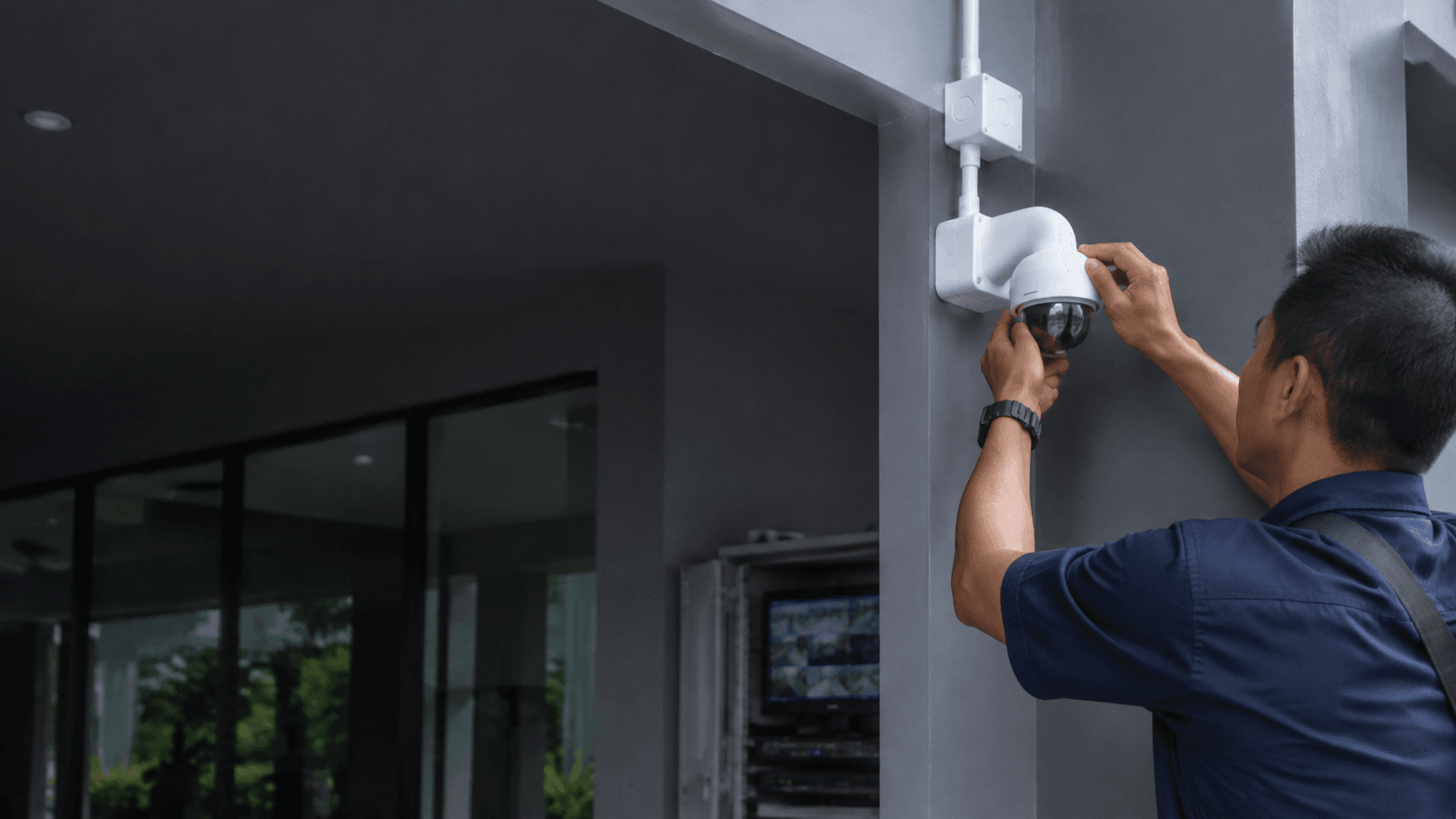
The channel count is the headline number, but it is not the whole decision. An eight-channel recorder sets the ceiling on how many cameras can feed one box, and that ceiling then shapes camera placement, cabling routes, storage sizing and how the system behaves on an ordinary working day. Buyers in Malaysia who understand what the recorder controls tend to make better choices about the rest of the package.
Cctv 8 Channel: What the Recorder Actually Controls
The recorder is the unit that receives video from each connected camera, writes it to storage, and serves it back for live viewing or playback. Eight channels means eight camera inputs can be connected and recorded at the same time. The recorder does not decide picture quality on its own; that depends on the cameras attached and how the recorder is configured. What the recorder does control is how many feeds exist, how long footage is kept, and how footage is retrieved when something needs to be checked.
In practice, the recorder is also the point where remote viewing is set up. Once the unit is on the network and configured, footage can be reviewed from a phone or computer away from the property. That is the feature most owners actually use day to day, and it is worth confirming during handover rather than assuming it works.
How Many Cameras an 8 Channel System Supports
An eight-channel recorder supports up to eight cameras. Fewer cameras can be connected and the spare channels stay unused until needed. That spare capacity is the main practical argument for choosing eight channels over a smaller unit: the system can grow without replacing the recorder.
Capacity and coverage are different questions. Eight cameras do not automatically cover a property well. A single entrance might need two angles, while a long perimeter may need several cameras to avoid blind spots. The useful exercise is to list the areas that matter, then check whether eight positions cover them. If the list runs past eight, a larger recorder is the honest answer rather than squeezing coverage into too few positions.
Where eight channels usually fits
Eight channels suits a mid-sized property: a terrace or semi-detached house with front, side and rear coverage; a shop with entrance, counter, stockroom and rear access; or a small office with reception, work areas and a service entrance. Larger commercial or industrial sites often need more than eight positions, and the recorder should be sized to the site rather than the other way around.
Recorder Types. DVR, NVR and Hybrid Options
Recorders fall into three broad families, and the choice affects cabling, camera compatibility and cost.
A DVR works with analogue-style cameras over coaxial cable and is often the simpler route when existing cabling is already in place. An NVR works with network cameras over IP cabling and is the more common choice for new installations. A hybrid recorder accepts a mix, which helps when part of a site is being upgraded and part is being kept.
The recorder type should follow the site, not the other way around. If cabling already exists and is serviceable, a DVR or hybrid can avoid unnecessary rewiring. If the installation is new, network cabling gives more flexibility for later changes. Eyonic handles NVR setup as part of its CCTV work, and the recorder type is confirmed during planning rather than assumed at the counter.
Planning Camera Placement Before Purchase
Placement decides whether the footage is useful. A camera pointed at the wrong angle records activity without identifying anything, which defeats the purpose of the system.
Lighting is the check that gets skipped most often. Eyonic recommends checking actual lighting conditions before confirming placement for ColorVu-style cameras, because a position that looks fine in daylight can behave differently at night. Entrances, driveways and back lanes all have different light profiles, and the camera position should be confirmed against the real conditions at the site.
Coverage should also follow movement rather than walls. Arrival points, staff areas and visitor routes are the areas that matter in a working building, which is the pattern Eyonic applied at the Kuching Immigration Office project, where the focus was arrival flow, staff areas, visitor movement and dependable daily operation.
What a site survey settles
A site survey confirms camera positions, cable routes, recorder location and power availability before any hardware is ordered. It also surfaces constraints that are invisible on a floor plan, such as a position with no practical cable path or a mounting point that cannot carry a camera safely. Settling these questions first avoids rework later.
Storage Recording Time and Daily Operation
Storage determines how far back footage can be reviewed. The recorder writes continuously or on motion, depending on configuration, and the drive fills at a rate set by the number of cameras, the recording quality and how much of the day is recorded. More cameras and higher quality mean faster fill and shorter retention.
Retention is a decision, not a default. A property that reviews footage weekly needs less retention than one that reviews monthly. The practical approach is to decide how far back footage must be available, then size storage to match, and to confirm the setting during handover so the expectation is clear.
Daily operation matters as much as the specification. A recorder that is difficult to search makes footage useless in the moment it is needed. Playback, export and remote viewing should all be demonstrated before the installer leaves, using the actual phone or computer the owner will rely on.
Getting an 8 Channel System Installed in Sarawak
Supply and installation are separate steps, and skipping the planning stage is what turns a recorder into a box with no working system around it. Eyonic follows a defined sequence for CCTV work in Sarawak.
- Site survey to confirm camera positions, cable routes, recorder location and power.
- System proposal covering the recorder, cameras, storage and installation scope.
- Installation of cabling, cameras and the recorder, with configuration of recording and remote viewing.
- Handover with user testing, so playback and mobile viewing are confirmed working before completion.
Eyonic Sdn Bhd is a security system supplier based in Sarawak, and its documented CCTV work covers camera placement, recording and remote viewing for homes, offices, shops and industrial sites. The Kuching Immigration Office project is a public-sector example, and the KTA Sarawak Sdn Bhd project covered an office setup in Kuching supporting staff movement, visitor handling, tidy cabling and clearer daily site control.
For a documented starting point, the Hikvision CCTV Package is listed at RM 1,599 and covers camera supply and setup, basic recording configuration and mobile viewing handover. That package is not confirmed as an eight-channel system, so the channel count should be confirmed against the actual requirement rather than assumed from the package name.
Share your location, property type and required system with Eyonic on WhatsApp at +60 11-5111 7959 for the next practical step.