
The exact-match query here is poe camera system, and the practical question behind it is rarely "what does PoE stand for". Most readers in Malaysia already know they want wired cameras. What they need is a way to judge whether the site supports a PoE camera system, what has to be decided before anything is drilled into a wall, and who surveys, supplies, installs and hands the thing over.
This page covers the mechanism, the comparison points that actually change a quotation, where a wired setup suits Malaysian property types, and how a Sarawak installation is planned and closed out.
PoE Camera System. What the Wired Setup Actually Does
A PoE camera system replaces two separate runs — a power cable to a plug point and a video cable back to a recorder — with a single Ethernet cable per camera. The camera receives electrical power over that same cable while sending video back along it.
That single-cable design is the whole point. It removes the need for a power outlet at each camera position, which is usually the constraint that decides whether a camera can go where the coverage is needed or only where there happens to be a socket.
The trade-off is that the cable has to reach somewhere. Every camera in a PoE camera system terminates at a device that supplies power and receives video, normally a network video recorder with built-in PoE ports or a separate PoE switch feeding a recorder. If that central point cannot be reached by cable from a camera position, the design has to change.
Three practical consequences follow from the mechanism:
- Camera placement is limited by cable routing, not by the nearest power point.
- Every camera depends on the central recorder or switch, so that location needs its own protection and ventilation.
- Cable quality and termination matter more than they do on a wireless camera, because the same pair of wires is carrying power as well as data.
None of this makes PoE better or worse than wireless in the abstract. It makes it a different set of constraints, and the constraints are what a site survey is for.
How Power over Ethernet Reaches Each Camera
Power over Ethernet works by injecting DC power onto the same twisted-pair cable that carries network data. The camera separates the power it needs from the data it sends, so a single cable does both jobs.
The supplying device — a PoE network video recorder or a PoE switch — decides which ports receive power. Cameras that are not PoE-capable, or devices that need more power than a port provides, sit outside that arrangement and need their own supply.
Two limits shape real installations. The first is distance. Ethernet runs have a practical maximum length before the signal degrades, and that ceiling applies to the combined power-and-data run. The second is power budget. a supplying device has a total amount of power to distribute across its ports, so the number of cameras and what each one draws both count.
Because those figures vary by manufacturer and model, they belong in the manufacturer's documentation for the specific equipment being quoted, not in a general guide. Any installer who states a distance or power figure without naming the model is guessing.
What the recorder does
The network video recorder is the centre of the system. It receives video from every camera, writes it to local storage, and provides the interface for live viewing and playback. In many PoE setups it also supplies the power, which is why the recorder's location is a design decision rather than an afterthought.
Local storage means footage sits on a drive on the premises rather than in a subscription cloud. That suits sites that want to avoid recurring fees and keep recordings under their own control. It also means the recorder needs a secure, ventilated, powered position — and that losing that position loses recording.
Where remote viewing fits
Remote viewing lets a phone or computer outside the premises check live and recorded video. It depends on the recorder being reachable over the internet, which is a configuration step rather than a camera feature. A PoE camera system can record perfectly well with no internet connection at all; what stops working without it is viewing from elsewhere.
What to Compare Before Choosing a PoE Camera System
Most comparison pages list resolution tiers and channel counts. Those matter, but they are downstream of four decisions that change the quotation far more.
- Whether the site can be cabled from each camera position back to a single recorder location.
- How many camera positions the coverage actually requires, and what each position needs to see.
- Whether recording stays on local storage on site or needs to leave the premises.
- Who surveys the site, supplies the equipment, installs it and hands it over.
Resolution, night performance and lens choice come after those four, because they are selected per position once the positions exist. A high-resolution camera pointed at the wrong area is still pointed at the wrong area.
Camera placement and lighting
Placement decides whether footage is useful. A camera that captures a face at the entry is doing more work than one covering an empty corridor. Height, angle, and what is directly behind the subject all affect whether an image identifies anyone.
Lighting deserves its own check. Eyonic's guidance on ColorVu-style cameras is to verify actual lighting conditions at the position before confirming placement, because how a camera performs at night depends on what light is genuinely present after dark — not on what the area looks like during a site visit in daylight.
Wired against wireless
A wired IP camera does not compete for wireless bandwidth and does not depend on signal strength at the mounting point. That makes it the more predictable choice where the cable route exists and the position is fixed.
Wireless cameras remain reasonable where cabling is genuinely impractical, where the position may move, or where a small number of cameras is enough. The honest comparison is not which technology is better but which constraint the site actually has.
Resolution and storage
Higher resolution captures more detail and consumes more storage per day. Storage capacity, retention period and camera count are linked: more cameras at higher resolution over a longer retention period needs more drive space. Because retention and capacity figures depend on the specific recorder and drive, they should be confirmed against the equipment quoted rather than assumed from a general rule.
Where a Fits in Malaysian Properties
The property type usually decides whether a wired setup is straightforward or awkward.
In a shop or office, ceiling and trunking routes are often available, and a single recorder position can serve the whole floor. This is the easiest case for a PoE camera system, and it is also where tidy cabling matters commercially — visible cable runs across a retail ceiling look unfinished to customers.
In a home, the constraint is usually aesthetics and access. Cable has to reach each camera without cutting through finished surfaces unnecessarily, and the recorder needs a position that is secure, ventilated and out of the way. Single-storey and double-storey layouts differ mainly in how much routing work the cable run involves.
Industrial sites bring distance and environment into play. Long cable runs, outdoor positions, and areas where equipment is exposed to weather or washdown all affect both the cable route and the housing chosen. These are the sites where a survey before quotation matters most, because assumptions made from a photograph tend to be wrong.
Across all three, the recurring local factor is that the recorder and the network connection are not the same thing. Recording continues on site regardless of internet performance; remote viewing depends on the connection. Sites that expect remote viewing to be as reliable as local recording are usually disappointed for reasons that have nothing to do with the cameras.
Planning Installation and Handover in Sarawak
Eyonic Sdn Bhd is a security system supplier based in Sarawak, planning, supplying and installing CCTV and ELV systems for homes, offices, shops and industrial sites. The company's founder, Eric Yong, has worked in technical installation of digital security solutions for commercial businesses in Sarawak for more than 10 years.
The installation process follows four stages:
- Site survey — checking the property, the coverage required, the cable routes and the lighting conditions at each proposed position.
- System proposal — setting out the camera positions, the recorder location and the equipment proposed for the site.
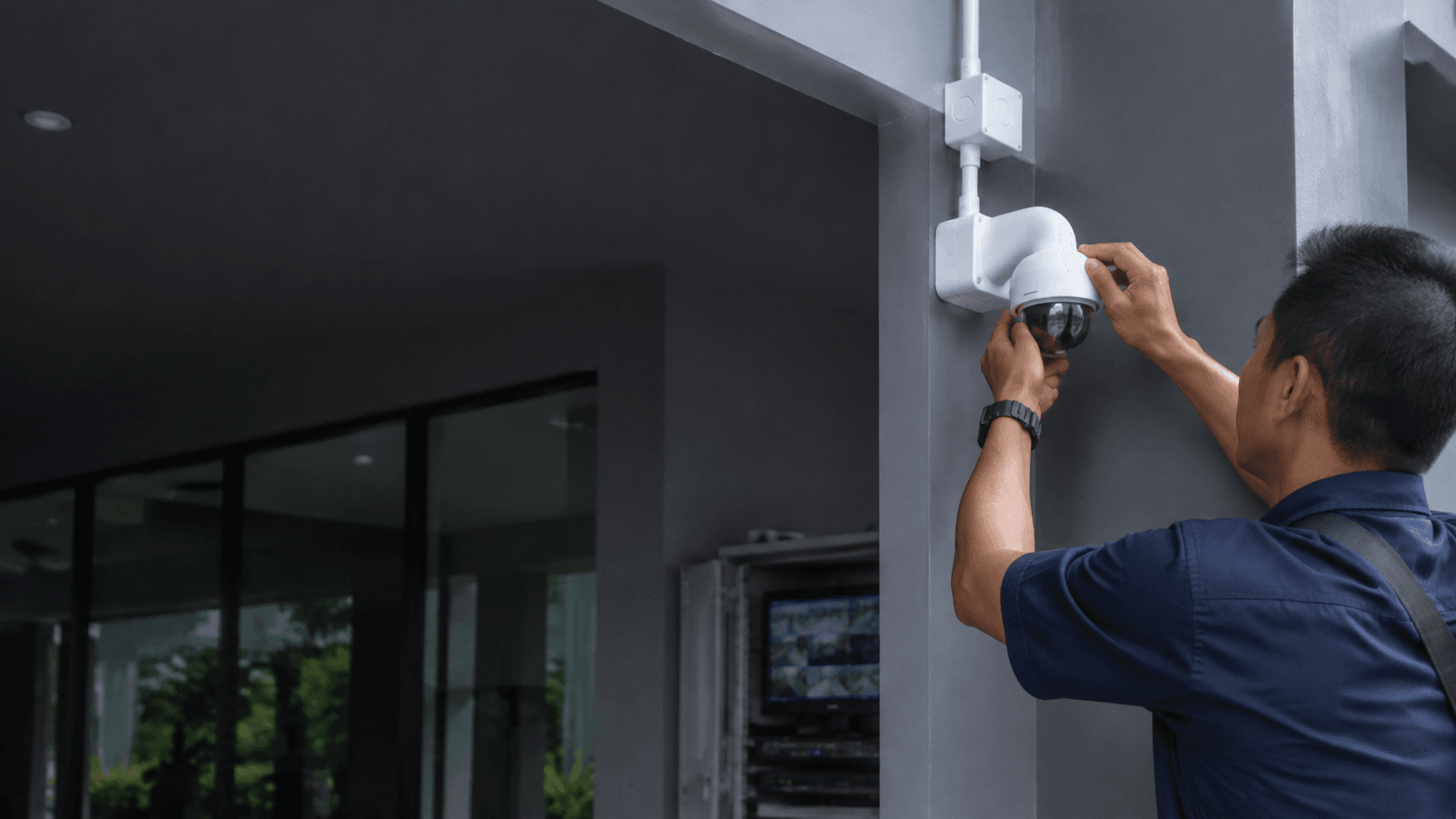
- Installation — mounting cameras, running and terminating cable, and configuring the recorder.
- Handover — confirming recording, walking through live and playback viewing, and setting up mobile access.
The survey stage is where most of the value sits. It is also where a PoE design is either confirmed or changed, because cable routing is the constraint that decides whether the planned positions are achievable.
Eyonic's completed work includes a project for the Kuching Immigration Office, focused on arrival flow, staff areas, visitor movement and dependable daily operation, and a project for KTA Sarawak Sdn Bhd, an engineering consultancy that needed a practical office setup in Kuching supporting staff movement, visitor handling, tidy cabling and clearer daily site control. Both are described in general terms; neither is confirmed as a PoE deployment.
Approved package pricing on the Eyonic site is RM 1,599 for the Hikvision CCTV Package, RM 1,599 for the Hikvision Alarm System and RM 1,599 for the Autogate Package. These packages are not confirmed as PoE systems, so they should not be read as PoE pricing. Project budgets for the Kuching Immigration Office and KTA Sarawak Sdn Bhd work sit in the RM 12,000 to RM 28,000 and RM 8,000 to RM 18,000 ranges respectively.
Share the location, property type and required system with Eyonic on WhatsApp at +60 11-5111 7959 for the next practical step.
Questions Buyers Ask Before Installing
Does a need an internet connection
No. Recording to local storage works without internet access. Internet is needed for viewing footage from outside the premises, so a site that only needs on-site recording can run without it.
Can a PoE camera connect directly to a router
A single camera can be powered by a PoE injector or a PoE port on a router or switch, but that arrangement provides no central recording. A recorder is what turns individual cameras into a system with stored footage and playback.
How far can a cable run
Ethernet has a practical maximum run length, and the exact figure depends on the equipment and cable used. That number should come from the manufacturer's documentation for the specific hardware, and it should be confirmed during the site survey rather than assumed.
Is a more expensive than wireless
The equipment comparison is not the whole picture. A wired setup involves cable, routing labour and termination that a wireless setup avoids, while a wireless setup may need additional access points or repeaters to be reliable. The relevant comparison is the total installed cost for the coverage the site needs.
What happens if the recorder fails
Recording stops, because the recorder is where footage is written. Cameras that draw power from the recorder also stop. This is why the recorder position — power, ventilation, physical security and access for maintenance — is a design decision rather than a storage cupboard afterthought.
Can a be expanded later
Expansion depends on spare ports on the recorder or switch and on spare power budget. A system sized exactly to the current camera count leaves nothing to add, so the number of positions a site might eventually need is worth settling before the equipment is chosen.
Who should install it
Cable routing, termination and recorder configuration all affect whether the system works as intended. A supplier who surveys the site, proposes the layout, installs it and hands it over keeps responsibility for the outcome in one place, rather than splitting it between a seller and an installer.