
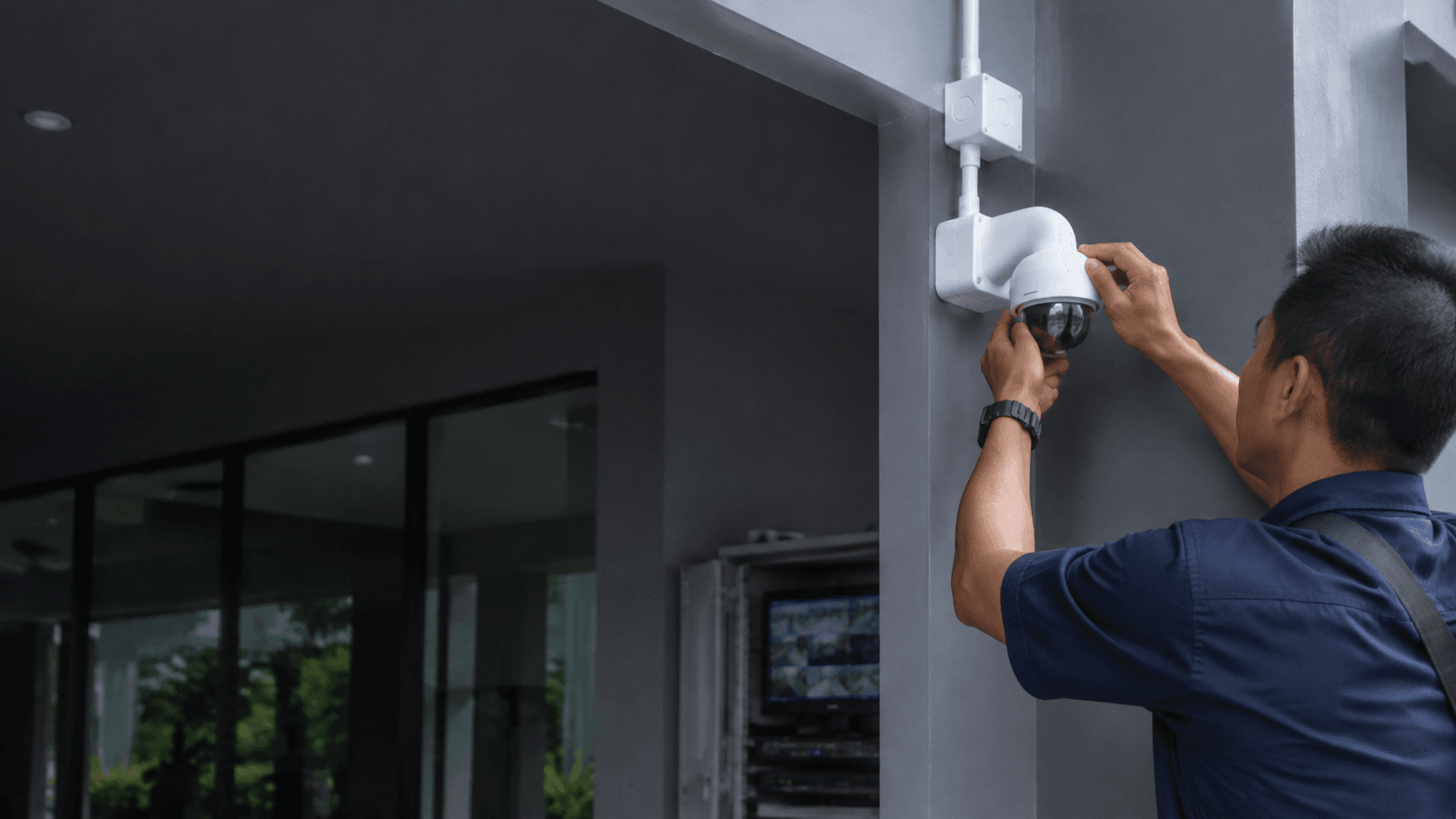
The exact-match query nvr 4 channel price sits at the meeting point of two questions: how many cameras a recorder can handle, and what the whole setup costs once cameras, storage, cabling and installation are counted. A four-channel unit is the smallest common network video recorder size, so it suits small premises where four viewpoints cover the important areas.
Published prices for a four-channel recorder vary widely because the box alone is not the system. Camera count, resolution, storage capacity, PoE support and installation labour all move the final figure. The sections below separate the recorder from the complete installation so the budget is easier to judge.
Nvr 4 Channel Price: What Matters Before You Choose
Price depends less on the channel count than on what is connected to it. A four-channel recorder with four cameras, a hard drive and professional installation costs more than the recorder by itself, and the gap is usually the larger part of the total.
Eyonic's published Hikvision CCTV package is RM 1,599 and covers camera supply and setup, basic recording configuration, and mobile viewing handover. That figure describes a package rather than a bare recorder, which makes it a more useful starting point for budgeting than a component price.
Larger projects scale well beyond a single package. Eyonic's Kuching Immigration Office project, which covered arrival flow, staff areas and visitor movement, carried an approximate budget of RM 12,000 to RM 28,000. The KTA Sarawak Sdn Bhd office project, covering staff movement, visitor handling and tidy cabling, carried an approximate budget of RM 8,000 to RM 18,000. Both show how quickly scope, camera count and site complexity outweigh the recorder itself.
Choosing the Right Nvr 4 Channel
Four channels is a real constraint, not a marketing label. Each channel accepts one camera, so a four-channel recorder reaches its limit at the fourth camera. Anyone planning a fifth viewpoint later needs either a larger recorder or a second unit.
The practical sequence below reflects how Eyonic approaches CCTV work, from site survey through to handover.
- Survey the site and identify the areas that need coverage, such as entrances, counters, walkways and storage.
- Count the required camera positions and confirm whether four channels are enough or whether a larger recorder is needed.
- Check the actual lighting at each position before confirming camera placement, since night conditions change what a camera can capture.
- Confirm the recorder specification, including resolution support, PoE availability and storage capacity.
- Agree the installation scope, including cabling routes and where the recorder will sit.
- Complete installation, configure recording, and hand over mobile viewing so the system can be checked remotely.
Step three matters more than it appears. Eyonic advises checking real lighting conditions before confirming placement for ColorVu-style cameras, because a position that looks adequate in daylight can behave differently after dark. Moving a camera after installation costs more than placing it correctly the first time.
What is nvr 4 channel?
An Nvr 4 Channel is a network video recorder that accepts video streams from up to four IP cameras over a network connection. It stores footage on an internal drive and serves live and recorded video to a monitor or a mobile app. Unlike an analog DVR, it receives digital streams, so camera and recorder compatibility matters.
PoE models simplify wiring because a single network cable carries both power and data to each camera. Non-PoE models need separate power at each camera position, which changes both the cabling plan and the installation cost.
4 Channel NVR
A 4 Channel NVR is the recorder itself, without cameras or storage. Buyers comparing component prices against installed packages should note that the recorder is usually the smallest line in the budget. Cameras, hard drive, cabling, connectors and labour typically account for the rest.
Storage is the variable most often underestimated. Recording resolution, frame rate, retention period and the number of active channels all determine how much drive capacity is needed. A four-channel system recording continuously at high resolution fills a drive far faster than one recording only on motion.
Practical Considerations for Nvr 4 Channel
Several factors decide whether a four-channel system fits, and each has a cost consequence.
| Consideration | Why it affects cost |
|---|---|
| Channel count | Four channels cap the system at four cameras; expansion requires a larger recorder. |
| Camera resolution | Higher resolution improves detail but increases storage demand and drive size. |
| PoE support | PoE reduces separate power runs, which can lower cabling labour. |
| Storage capacity | Retention period and recording mode determine the hard drive size required. |
| Site conditions | Cable routes, ceiling type and building layout change installation time. |
| Lighting | Poor night lighting may require different cameras or additional positions. |
Two edge cases are worth flagging. First, a site that needs coverage at four points but expects to add a fifth within a year should not buy a four-channel recorder, because replacing it later costs more than buying the larger unit now. Second, a site with difficult cable routes may find that installation labour exceeds the equipment cost, particularly where ceilings are solid or distances are long.
Remote viewing is another practical factor. Eyonic includes mobile viewing handover in its CCTV package, which means the system is configured so footage can be checked from a phone. That step is easy to overlook when comparing prices, yet it determines whether the system is actually usable day to day.
Making an Informed Choice About Nvr 4 Channel
The most reliable way to price a four-channel system is to price the whole installation rather than the recorder. A component price tells the buyer what one box costs; it does not describe what the finished system does or what it takes to install it.
Eyonic's founder, Eric Yong, has worked in the industry for more than ten years and specialises in technical installation of digital security solutions for commercial businesses in Sarawak. That background is relevant to pricing because installation decisions, not equipment selection, usually determine whether a project stays within budget.
For buyers in Sarawak, the practical next step is to describe the site rather than ask for a component price. Location, property type and the areas needing coverage give enough information to judge whether four channels are sufficient and what the installation involves. Eyonic can be reached on WhatsApp at +60 11-5111 7959 to share those details.
Where a four-channel recorder is genuinely sufficient, the cost stays close to a standard package. Where it is not, the honest answer is that a larger recorder and a wider installation scope will cost more, and knowing that before installation begins is worth more than a low headline figure.