
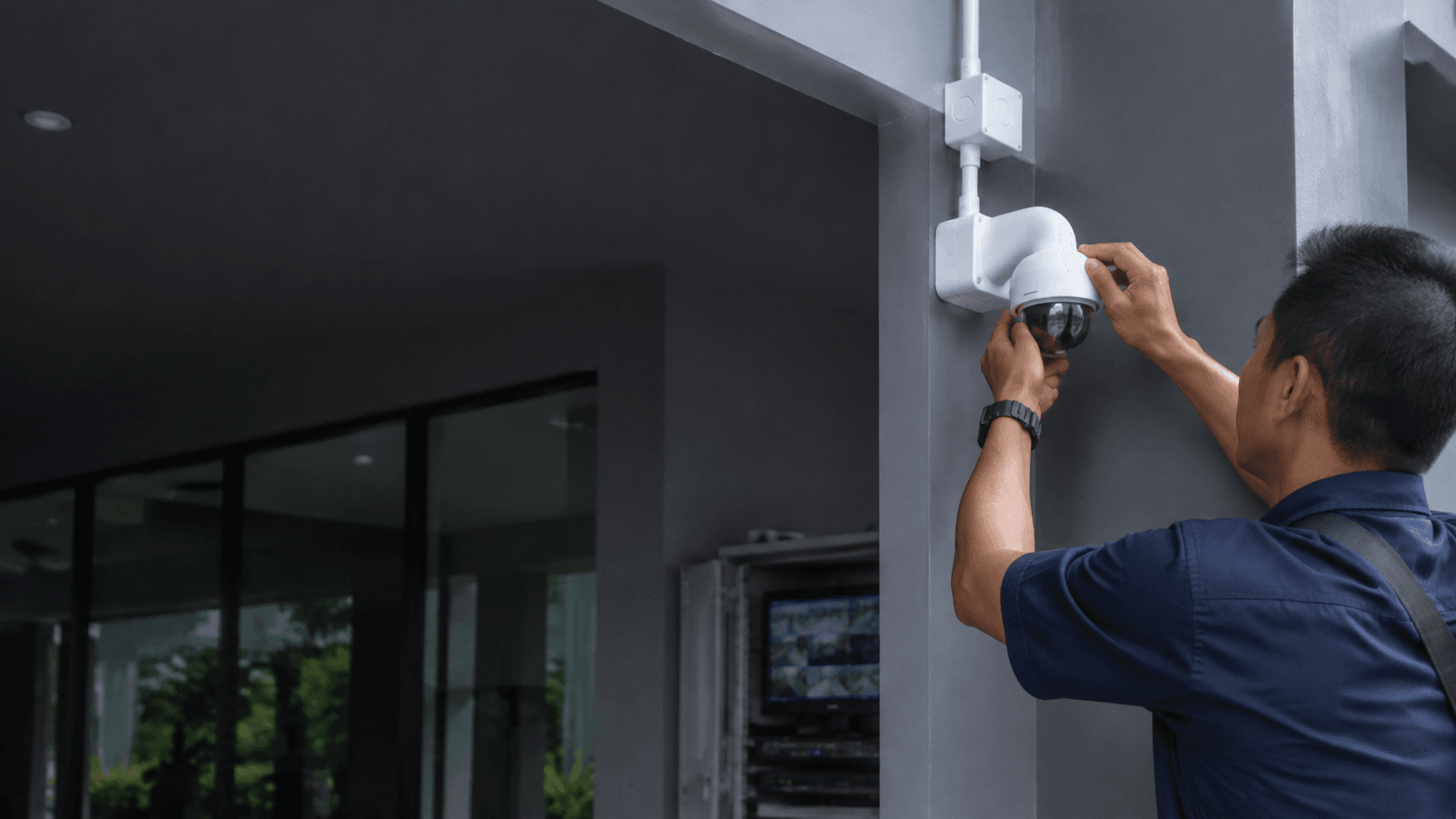
The exact-match query best hardwired security system is a comparison question, not a product name. Buyers asking it usually want to know which wired approach fits a house, shop, or office, what the cabling actually changes, and where the limits sit. This guide works through those points using published competitor structure and Eyonic's own Sarawak installation experience.
Best Hardwired Security System. What Matters Before You Choose
Wired and wireless systems differ less in what they detect than in how signals travel and how much work installation demands. A hardwired security system sends power and data over fixed cable, so cameras and sensors do not depend on batteries or a stable wireless link at each device.
That single design choice drives most of the practical trade-offs:
- Confirm whether the property already has usable cable routes or conduit, because retrofitting cable into finished walls is the main cost driver.
- Decide whether the priority is video surveillance, intrusion detection, or both, since these use different devices on the same cabling discipline.
- Check where the recorder or alarm panel can sit with power and ventilation, because that location shapes every cable run.
- Verify lighting at each camera position before fixing placement, since night performance depends on the actual scene rather than the specification sheet.
- Plan how recordings and alerts will be reviewed day to day, because a system nobody checks provides little value.
Competitor pages in this space lean heavily on brand rankings and monitoring contracts. The structural pattern across the eight accessible competitor pages shows comparison tables, numbered product lists, and repeated wired-versus-wireless sections. Those patterns are useful as topic evidence, not as proof of any specific product claim.
Choosing the Right Hardwired Security System
The right choice depends on the building, not on a single best model. A hardwired security system tends to fit better when the property is under construction, undergoing renovation, or already fitted with conduit and cable trays.
Three scenarios cover most decisions:
New build or major renovation. Cable can be run before walls close, which keeps installation tidy and avoids visible trunking later. This is the cheapest moment to install wired infrastructure.
Existing commercial premises. Offices, shops, and industrial sites often already have cable pathways for other services. Reusing those routes keeps a wired system practical even in an older building.
Finished homes with no conduit. Surface trunking is possible but visible. Where cabling would be disruptive, a hybrid approach using wired cameras at accessible points and wireless devices elsewhere is often more sensible than forcing a fully wired layout.
Eyonic's own installation process follows a sequence that reflects these constraints: site survey, system proposal, installation, and handover. The survey stage exists precisely because cable routes and camera positions cannot be confirmed from a floor plan alone.
What is hardwired security system?
A hardwired security system is an installation where cameras, alarm sensors, or both connect to a recorder or control panel through physical cable rather than wireless radio links. Power and signal travel along that cable, so each device does not need its own battery or wireless pairing.
Two common forms exist. Wired camera systems connect to a DVR or NVR that stores footage locally. Wired alarm systems connect sensors and keypads to a control panel. Some properties run both on separate cabling, and some integrate them.
Best Hardwired Home Security System Of 2026
No single product wins this category outright, because the best hardwired security system for a given property depends on camera count, recording capacity, and how the building is wired. Published comparisons in 2026 continue to rank national monitoring brands alongside equipment-focused options, and the split between professionally monitored and self-monitored systems remains the main dividing line.
What the competitor evidence does show is a consistent set of features buyers weigh:
| Consideration | Why it matters |
|---|---|
| Cable route availability | Determines whether wired installation is straightforward or disruptive |
| Recording location | Local DVR or NVR storage keeps footage on site |
| Camera placement | Coverage depends on position more than on resolution alone |
| Lighting conditions | Night image quality depends on the actual scene at each position |
| Review workflow | Footage and alerts only help if someone checks them |
For buyers in Sarawak, local installation support matters as much as the equipment list. Eyonic supplies and installs Hikvision cameras and related ELV systems for homes, offices, shops, and industrial sites, with camera placement, recording, and remote viewing handled as part of the same job.
Eyonic's published package pricing starts at RM 1,599 for a Hikvision CCTV package, RM 1,599 for a Hikvision alarm system, and RM 1,599 for an autogate package. Larger projects sit well above that: the Kuching Immigration Office project carried an approximate budget of RM 12,000 to RM 28,000, and the KTA Sarawak Sdn Bhd office project sat at approximately RM 8,000 to RM 18,000. Those figures show how widely wired installation costs range once site size and device count change.
Wired versus wireless. the real trade-off
Wired systems avoid per-device batteries and reduce dependence on wireless signal strength, which matters in buildings with thick walls or heavy interference. The cost is installation effort and reduced flexibility if camera positions need to change later.
Wireless systems install faster and reposition easily, but each device needs power or a battery, and signal reliability varies with the building. Many practical installations mix both rather than committing fully to one.
Practical Considerations for Hardwired Security System
Several constraints decide whether a wired approach works in practice.
Cable distance and power. Long cable runs can affect signal and power delivery, so the recorder or panel location matters. Runs that are too long may need additional equipment.
Lighting at each position. Eyonic advises checking actual lighting conditions before confirming placement for ColorVu-style cameras. A position that looks adequate in daylight can behave differently at night, and the fix is usually repositioning rather than changing the camera.
Access control and entry. Wired infrastructure often extends beyond cameras. Smart locks work best when door condition, user roles, and a backup entry method are reviewed before installation, and for business use the choice between a standalone smart lock and a full access-control panel should be made deliberately.
Handover and daily use. A system is only as useful as the people operating it. Mobile viewing setup and user testing at handover reduce the chance that footage sits unread.
Eyonic's completed projects reflect this pattern. The Kuching Immigration Office installation focused on arrival flow, staff areas, visitor movement, and dependable daily operation. The KTA Sarawak Sdn Bhd project addressed staff movement, visitor handling, tidy cabling, and clearer daily site control. Both are examples of wired infrastructure being planned around how a building is actually used.
Making an Informed Choice About
The decision usually comes down to timing and building condition. If cable can be run cleanly, a hardwired security system offers stable power and signal without per-device battery maintenance. If the building is finished and cabling would be disruptive, a hybrid layout often delivers most of the benefit with less work.
Before committing, it helps to have three things settled: the property type and layout, the areas that need coverage, and how footage or alerts will be reviewed. Those answers determine device count, recorder capacity, and cable routes far more than any brand comparison does.
Eyonic Sdn Bhd is a security system supplier in Sarawak, Malaysia, working on CCTV and ELV systems for homes, offices, shops, and industrial sites. Founder Eric Yong has more than ten years in the industry, with experience in technical installation of digital security solutions for commercial businesses in Sarawak.
For a property in Sarawak, sharing the location, property type, and required system with Eyonic on WhatsApp at +60 11-5111 7959 is the practical next step, since cable routes and camera positions are confirmed during a site survey rather than over a specification sheet.