
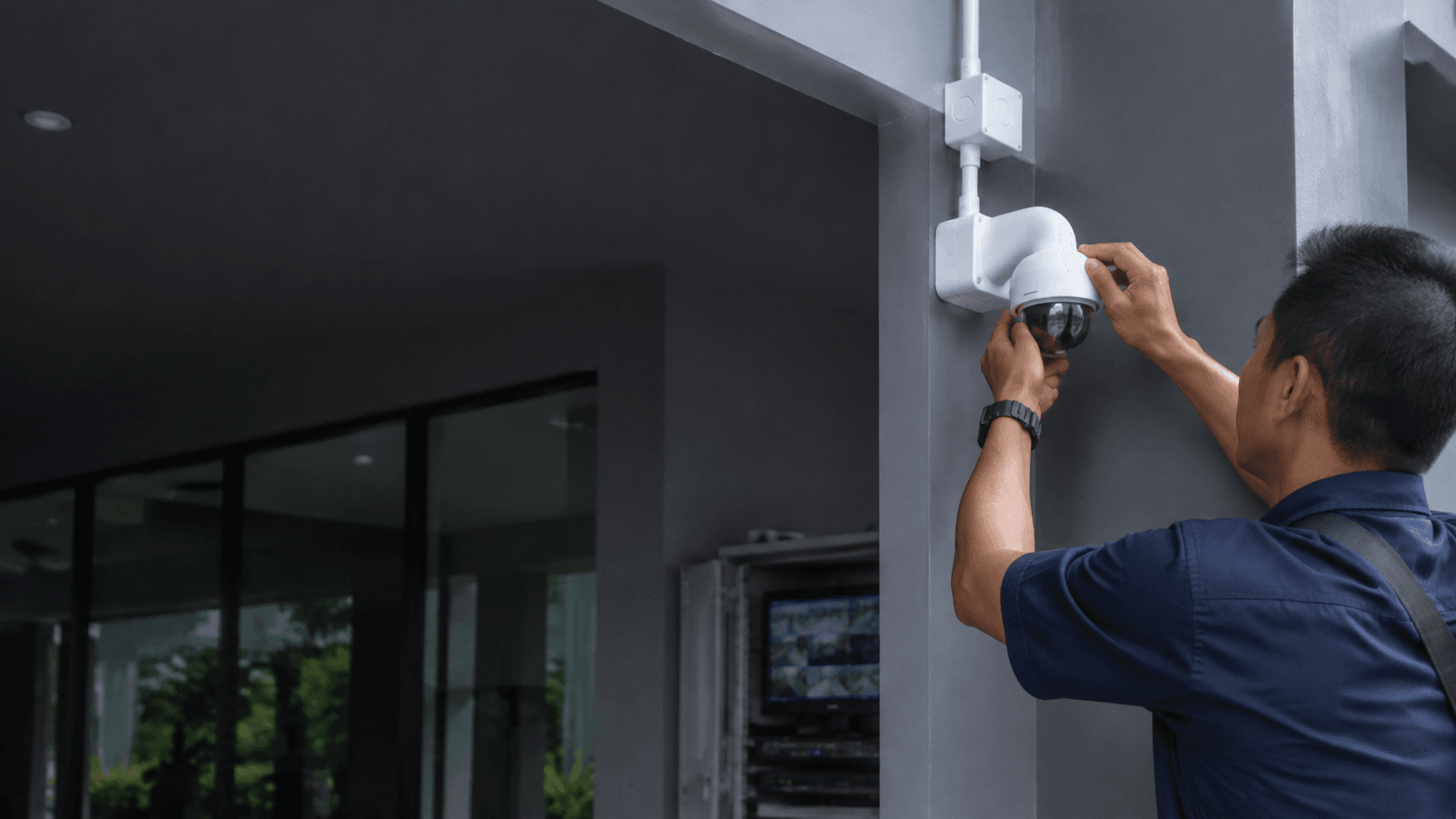
Resolution is the headline number on most product pages, yet it is rarely the reason footage fails. A camera rated for a large pixel count can still return a soft, unusable image if it points into a light source, covers too wide an area, or sits too far from the subject. The reverse also holds. a modest camera placed well often identifies a face or a plate more reliably than a sharper camera placed badly.
Eyonic Sdn Bhd plans, supplies and installs monitoring systems with camera placement, recording and remote viewing for homes, offices, shops and industrial sites across Sarawak. That sequence matters because the decisions that determine footage quality happen before installation, not after.
High Resolution CCTV Camera. What Resolution Delivers
A high resolution cctv camera delivers more usable detail across a wider field of view, which matters most when a single camera has to cover a large area such as a shop floor, a warehouse aisle or a building entrance. More pixels spread across the same scene means each object occupies more of the image, so a face or a vehicle becomes easier to identify rather than merely detect.
The practical benefit is not a sharper picture for its own sake. It is the ability to answer a specific question after an incident: who entered, what was carried, which vehicle left. A camera that only shows a shape moving through a frame cannot answer those questions, regardless of how the specification reads.
Higher resolution also carries costs that buyers rarely see on a product page. Larger images consume more storage, demand more network bandwidth, and require recording hardware that can handle the load. A camera upgrade without a matching recorder and storage plan can leave a site with better sensors and worse retention.
What Resolution Means in Recorded Footage
Resolution describes how much image detail a camera captures, but recorded footage is where that detail either survives or disappears. Compression, frame rate, lighting and the distance between camera and subject all act on the final file. Two cameras with identical resolution can produce very different recordings on the same wall.
Distance is the quiet variable. A camera covering a wide area places fewer pixels on each person, so identification detail falls as coverage widens. Narrowing the field of view, or adding a second camera for the same zone, often improves usable detail more than raising resolution on a single unit.
Lighting decides whether the captured detail is worth recording. Eyonic recommends checking actual lighting conditions before confirming placement for ColorVu-style cameras, because a position that looks adequate during a daytime walkthrough can behave differently once the site is in nightly use. A camera aimed toward a bright source, or one covering a zone that is genuinely dark, will not return the detail its resolution suggests.
Recording settings complete the picture. A recorder configured for long retention at aggressive compression can soften the exact frames that matter. Matching resolution, storage and retention expectations at the planning stage avoids discovering the trade-off after an incident.
Resolution Options and What Each One Shows
Camera ranges are commonly grouped by resolution tier, and each tier suits a different job. The right choice depends on what the footage needs to prove, not on which number is largest.
- Site survey to review the property, coverage zones, lighting conditions and existing cabling or recording equipment.
- System proposal setting out camera positions, resolution choices, recording and remote viewing before any supply commitment.
- Installation of cameras, cabling and NVR setup, with placement confirmed against the surveyed plan.
- Handover covering recording configuration, mobile viewing and user testing so the system is usable from day one.
That sequence is the one Eyonic follows for CCTV installation in Sarawak, and it exists because resolution decisions are only sound once the site has been seen.
Lower tiers suit close-range coverage where the subject fills much of the frame, such as a doorway, a counter or a gate. Mid tiers handle general perimeter and indoor coverage where the goal is to follow movement and recognise regular visitors. The highest tiers suit wide areas, long approaches and scenes where a single camera must serve several purposes at once.
Buyers weighing tiers should ask what the footage must establish. A camera covering a payment counter needs enough detail to identify a transaction; a camera covering a car park entrance needs enough detail to read a plate or recognise a driver. Those are different problems, and they rarely resolve to the same specification.
Lighting, Lens and Placement Before Resolution
Three factors decide footage quality before resolution is considered, and each one can override a specification advantage.
Lighting sets the ceiling on usable detail. A scene with strong backlight, deep shadow or uneven illumination will not return clean images no matter how many pixels the sensor carries. Reviewing a site under its real night-time conditions, rather than a daytime visit, is the only reliable way to confirm whether a position will perform.
Lens choice controls how much of the scene reaches the sensor. A wide lens covers more area but places fewer pixels on each subject; a narrower lens concentrates detail on a smaller zone. The trade-off is coverage against identification, and it is decided by what the camera is expected to prove.
Placement determines whether the other two factors can work at all. Height, angle, distance to the subject and nearby light sources all shape the result. A camera mounted too high captures the tops of heads; one mounted too low is easily obstructed or tampered with. Placement also affects cabling routes, weather exposure and how easily the unit can be serviced later.
Resolution sits at the end of this chain. It improves an image that lighting, lens and placement already support, and it cannot rescue one they do not.
Site Survey and Camera Placement in Sarawak
A site survey is where a high resolution cctv camera plan becomes specific to a property. The survey records what needs watching, where people and vehicles actually move, how the site is lit at night, and what cabling or recording equipment already exists.
Eyonic's completed work for the Kuching Immigration Office focused on arrival flow, staff areas, visitor movement and dependable daily operation. That scope shows how a public building's coverage priorities differ from a home or a retail unit: the cameras serve daily operational awareness, not only incident review, so placement has to support routine use as well as evidence gathering.
Eyonic also completed a practical office setup in Kuching for KTA Sarawak Sdn Bhd, supporting staff movement, visitor handling, tidy cabling and clearer daily site control. Cabling routes and equipment housing are part of the survey for the same reason: a system that looks untidy or obstructs daily work tends to be adjusted informally, which undermines the original placement plan.
Sarawak sites bring their own conditions to the survey. Outdoor positions face heavy rain and strong sun, which affects housing, mounting and how quickly a lens or dome collects grime. Indoor commercial spaces often have reflective floors, glass frontages and mixed lighting that create glare a daytime walkthrough will not reveal. Both cases argue for confirming positions on site rather than selecting them from a floor plan.
Property type shapes the survey as much as location does. A home typically needs a small number of well-placed cameras covering entry points and the perimeter. A shop needs counter and entrance coverage where identification matters. An industrial site needs wide-area awareness across yards and loading areas, where the distance between camera and subject is the dominant constraint.
Installation, Recording and Remote Viewing Handover
Installation turns the survey plan into a working system. Cameras are mounted at the confirmed positions, cabling is run and terminated, and the recorder is configured for the resolution and retention the site actually needs. NVR setup is where resolution choices meet storage reality, since higher detail across multiple cameras consumes capacity faster.
Remote viewing is configured during the same stage so the system is useful away from the property. Mobile viewing handover is part of Eyonic's Hikvision CCTV Package at RM 1,599, which covers camera supply and setup, basic recording configuration and mobile viewing handover. The package is a starting point for a straightforward installation rather than a specification for every site, and larger or more complex properties are scoped from the survey.
Handover is the step that decides whether the system stays useful. It covers how recording is configured, how to review footage, how remote viewing works and what to check when something looks wrong. A system handed over without that walkthrough tends to be trusted less, and footage that is not trusted is rarely reviewed in time to be useful.
Ongoing care is modest but real. Lenses and domes collect dust, cobwebs and water spots, particularly outdoors in Sarawak, and a dirty lens undoes a resolution advantage faster than any setting. Checking that recording is still running, that storage has not filled, and that remote access still works keeps the system in the condition it was handed over in.
For sites weighing a new installation or an upgrade, the useful starting point is the property itself: its layout, its lighting after dark and what the footage needs to establish. Sharing the location, property type and required system with Eyonic on WhatsApp at +60 11-5111 7959 is the next practical step toward a surveyed plan.