
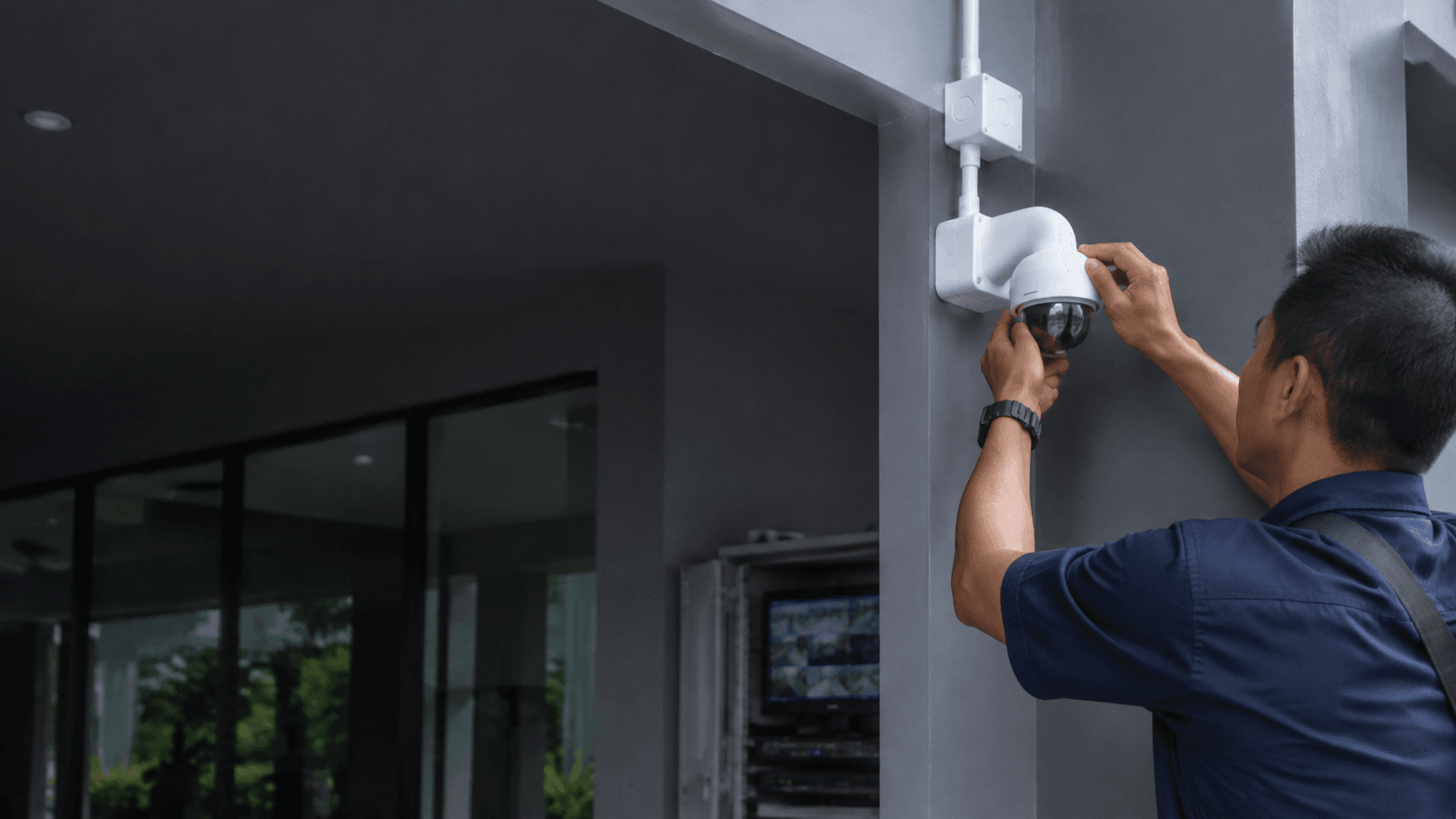
The Arlo Cctv question in Malaysia usually comes down to two things: what the camera range actually covers, and whether a wireless or wired layout suits the property. Arlo is a camera brand built around wire-free and plug-in models, app-based viewing, and motion alerts. Eyonic Sdn Bhd is a Sarawak security system supplier that handles planning, supply and installation for CCTV and ELV work, so the two meet at the point where a buyer wants a working system rather than a box of cameras.
This guide stays with what can be confirmed. It covers the range at a category level, the placement and lighting checks that decide whether footage is usable, how a Malaysian setup gets planned, the documented installation sequence, and the questions worth settling before a system is confirmed.
What the Arlo Cctv range covers
Arlo Cctv is best understood as a family of camera types rather than a single product. Across the market, the range splits along three lines: how the camera is powered, where it is meant to sit, and how it connects.
Power is the first split. Battery-powered cameras avoid cabling to the camera position, which matters on finished walls, rented premises and gate posts where running power is disruptive. Plug-in cameras stay on continuous power, so there is no battery to manage. Solar options extend battery models where direct sun is available.
Location is the second split. Indoor cameras cover rooms and entry points inside a building. Outdoor cameras are built for weather exposure and are the usual choice for perimeters, car porches and back lanes. Doorbell cameras sit at the entrance and combine a camera with a doorbell function.
Connectivity is the third split. Most Arlo Cctv models connect over Wi-Fi, while some use cellular or LTE so a camera can work where no Wi-Fi reaches. A hub or base station is used in some configurations to manage cameras and local storage.
Two features recur across the range and shape how a system behaves in practice. Motion detection triggers recording and alerts, and night vision determines what is visible after dark. Both are covered in the placement section below because both depend heavily on where the camera is mounted.
What the range does not settle is local supply. Availability, authorised distribution and stock status in Malaysia are separate questions from what the brand offers globally, and those are best confirmed directly rather than assumed from a product page.
Arlo Cctv placement and lighting checks
Placement decides more about final footage quality than the camera model does. A well-positioned mid-range camera outperforms a poorly positioned premium one, because angle, distance and light are what the sensor actually works with.
Start with what needs to be seen. For a home, that is usually the main gate, the car porch, the front door and any back access. For a shop or office, it is the entrance, the counter or reception, the stock or server area, and the route visitors take through the space. Writing that list before choosing positions prevents cameras being placed where they are easy to mount rather than where they are useful.
Height and angle matter. Cameras mounted too high look down on the tops of heads and lose facial detail. Cameras mounted too low are easy to obstruct. A slight downward angle that captures a face at the distance people actually approach is more useful than a wide view from the roofline.
Light is the check most often skipped. Eyonic recommends checking actual lighting conditions before confirming placement for ColorVu-style cameras, and the same discipline applies to any night-capable model. A position that looks clear in daylight can be washed out by a nearby streetlight, blinded by a porch lamp, or left in near-total darkness. Standing at the proposed position after dark, or reviewing the scene at the hours that matter, gives a truer answer than a specification sheet.
Motion detection has its own placement logic. A camera pointed at a busy road will trigger constantly on passing traffic, while a camera covering a quiet side gate will only trigger when something is genuinely there. Narrowing the field of view, or using activity zones where the app supports them, reduces alert fatigue. A system that alerts too often gets ignored, which defeats the purpose.
Wi-Fi reach is the last physical constraint. A camera position that is convenient for coverage may sit at the edge of the network, producing dropped recordings or laggy live view. Checking signal at the proposed spot before mounting avoids a camera that works on the bench and fails on the wall.
Planning an Arlo Cctv setup in Malaysia
A Malaysian setup adds a few practical considerations to the general planning process. Buildings here vary widely, from terrace houses and condominium units to shophouses and industrial lots, and each type constrains cabling, mounting and access differently.
For landed homes, the main questions are cable routes to any wired camera, power availability at outdoor positions, and whether the gate or porch needs coverage that a single camera cannot provide. For condominium units, the constraint is usually permission and common-area rules, which can rule out external mounting entirely and push the design toward indoor and doorbell coverage. For shops and offices, the priorities shift toward entrance flow, counter coverage and after-hours monitoring, with the recording location and access permissions decided early.
Network and power planning comes next. Wireless cameras still need a reliable Wi-Fi network at their positions, and battery models need a plan for recharging or replacement. Wired and plug-in cameras need a route to power and, where a recorder is used, a route back to it. Deciding this before installation is cheaper than deciding it afterwards.
Recording and viewing should be settled at the same time. Remote viewing lets a system be checked from elsewhere, which is often the main reason a system is bought. Where recordings are stored, how long they are kept, and who can access them are decisions that belong in the plan rather than after handover.
Eyonic's own work in Sarawak gives a sense of how these decisions play out at scale. The Kuching Immigration Office project focused on arrival flow, staff areas, visitor movement and dependable daily operation, with an approximate budget for that type of work of RM 12,000 to RM 28,000. The KTA Sarawak Sdn Bhd project covered a practical office setup in Kuching supporting staff movement, visitor handling, tidy cabling and clearer daily site control, with an approximate budget of RM 8,000 to RM 18,000. Both show the same pattern. coverage is designed around how a space is actually used, not around a camera count.
Budget expectations should be set against that pattern. Eyonic's published packages for related systems sit at RM 1,599 for a Hikvision CCTV package, RM 1,599 for a Hikvision alarm system, and RM 1,599 for an autogate package. Those figures cover different systems from an Arlo Cctv deployment and are useful as a reference point for what a supplied and installed package looks like locally, not as a price for Arlo equipment.
Arlo Cctv installation steps
Eyonic's documented CCTV installation process runs through four stages. The same sequence applies whether the cameras are Arlo Cctv models or another brand, because the stages are about the site rather than the hardware.
- Site survey. The property is reviewed on site to establish what needs coverage, where cameras can physically go, how power and network reach those positions, and what constraints the building imposes.
- System proposal. The survey findings are turned into a proposed system covering camera positions, equipment, recording and viewing arrangements, so the scope is agreed before any work starts.
- Installation. Cameras are mounted, cabled or paired as designed, and the recording and network configuration is completed.
- Handover. The system is tested with the user, mobile viewing is set up, and the operating basics are walked through so the system is usable from day one.
The site survey is the stage that carries the most weight. Placement, lighting and Wi-Fi checks all happen there, and a proposal built on a proper survey is far less likely to need rework. Skipping or shortening the survey is the most common reason a system ends up with a blind spot or a camera that cannot see at night.
Handover matters more than it is often given credit for. A system that the user cannot check remotely, or does not understand how to review, tends to go unmonitored within weeks. Confirming mobile viewing and walking through the basics at handover is what turns an installation into a working security setup.
Arlo Cctv questions before confirming a system
Several questions are worth settling before committing to a placement or package, because the answers change the design rather than just the price.
Is the property suited to wireless or wired? Wireless suits finished interiors, rented premises and positions where cabling is disruptive. Wired suits new builds, long cable runs where power is already available, and positions where continuous power is preferred over battery management. Many properties end up with a mix.
What happens after dark? Night performance depends on the light actually present at each position. Confirming that before installation avoids discovering a blind spot after the fact.
How will recordings be stored and reviewed? Storage arrangements, retention and access permissions should be decided as part of the plan, since they affect both the equipment and how the system is used day to day.
Who needs access? For a business, that means deciding which staff can view footage and whether access changes when roles change. For a home, it usually means confirming that everyone who needs the app has it working.
What is the local supply position? Availability and authorised distribution for Arlo Cctv equipment in Malaysia should be confirmed directly rather than assumed, since this varies by model and by time.
What does the budget cover? A supplied and installed package covers survey, equipment, installation and handover, which is a different figure from the cost of cameras alone. Comparing the two as if they were the same leads to unrealistic expectations.
Eric Yong, founder of Eyonic Security Systems, has worked in the industry for more than ten years and is experienced in technical installation of digital security solutions for commercial businesses in Sarawak. That background is relevant to the planning questions above, because the answers depend on site conditions rather than product specifications.
For a property in Sarawak, the practical next step is to share the location, property type and required system with Eyonic on WhatsApp at +60 11-5111 7959, so the survey and proposal stages can be scoped against the actual site.