
The exact-match query qvis cctv returns a fragmented picture. One page lists IP cameras, NVRs, and IP kits with almost no explanatory text. Another publishes RTSP and HTTP connection URLs for six camera models. A third hosts DVR manuals. A fourth is a forum thread about a fault. None of them states resolution, lens, IR range, or weather rating for a specific model in a way a buyer can verify, and none addresses Malaysian availability.
That fragmentation is the real subject here. Anyone weighing Qvis CCTV equipment has to assemble a working picture from several partial sources, then decide whether the gaps are acceptable. The sections below set out what the brand covers, how its cameras typically connect, what to verify before committing, and how the brand sits against the alternatives commonly installed in Malaysia.
What Qvis CCTV equipment covers
Qvis CCTV spans two broad product families: IP cameras and network video recorders, and analogue or hybrid recorders paired with 4-in-1 cameras. Competitor listings show both, which matters because the two families are wired, configured, and expanded differently.
On the IP side, one brand-owned category page groups IP cameras, NVRs, and IP kits. A third-party camera database lists six Qvis IP models it supports, including AMB-EYE 1.3, AMB-EYE3, amb-vanir3, EYE4, and Eye-4HD. Those model names are the only ones the analysed pages tie to connection data.
On the analogue and hybrid side, a UK retailer listing shows Qvis DVRs across 8, 16, and 32 channels, with storage options including 1TB, 2TB, and 4TB, and formats covering HDCVI, AHD, TVI, CVBS, and IP input. The same listing marks several lines as obsolete and no longer available. A separate product page describes a 2.4MP 1080p varifocal turret camera with 36 IR LEDs, a 4-in-1 output, and an IP66 rating.
Those figures come from retailer and third-party pages, not from a manufacturer datasheet supplied here. Treat them as indicative of the product range rather than as confirmed current specifications.
How Qvis cameras connect to recorders and software
Connection is the best-documented part of the Qvis CCTV story, because two independent software vendors publish Qvis camera URLs. Both describe the same underlying approach: the camera exposes a stream over the network, and the recorder or viewing software pulls that stream.
- Confirm the camera model against a published connection list before assuming a URL pattern applies.
- Find the camera on the local network, either through an ONVIF scan or by entering its IP address directly.
- Enter the camera username and password to authenticate the stream request.
- Select the RTSP stream path, which the published references place on the default port 554.
- Save the connection and verify the live image before relying on it for recording.
The published RTSP paths follow a recognisable shape. Both software references show a path built around the camera's own naming, with variants for main and sub streams. One reference lists an HTTP option alongside RTSP for the same models. ONVIF auto-discovery is described as supported, which means a compatible recorder or viewing application can find the camera without a manually typed URL.
Two practical constraints follow from that. First, ONVIF support is stated at the software-vendor level, not confirmed per camera model, so a specific unit may still need manual entry. Second, default credentials are not published in the analysed sources. Anyone setting up a Qvis camera should expect to establish or recover credentials rather than assume a documented default.
For recording, the choice is between a Qvis NVR or DVR and third-party software running on a PC. The software route suits a single camera or a small mixed-brand setup where the existing recorder stays in place. A dedicated Qvis recorder suits a multi-camera site where channel count, storage, and retention need to be managed in one place.
What to check before choosing Qvis CCTV
The pre-purchase checks below are the ones that decide whether a Qvis CCTV installation goes smoothly or stalls on missing documentation.
- Confirm the exact model number and whether it is current stock or discontinued, since at least one retailer listing marks Qvis lines as obsolete.
- Obtain the datasheet for that model, covering resolution, lens, IR range, and weather rating, rather than relying on a listing summary.
- Verify the connection method the model actually supports, whether ONVIF, a documented RTSP path, or a proprietary recorder pairing.
- Check recorder compatibility, including channel count, supported formats, and maximum storage.
- Establish who provides warranty and spare parts locally, and whether that support exists in the intended country of installation.
- Confirm the recorder's remote viewing method works on the network available at the site.
The discontinued-stock point deserves emphasis. A product line that is partly obsolete can still work well for years, but replacement of a failed unit becomes harder once stock clears. That risk is manageable if spares are identified at purchase and unmanageable if they are not.
Where the published information comes from
Competitor pages fall into four distinct types, and each answers a different question. Knowing which type to consult saves time.
| Page type | What it covers | What it does not cover |
|---|---|---|
| Product listing | Model names, channel counts, storage options, format support | Verified specifications, current availability |
| Connection URL reference | RTSP and HTTP paths, ONVIF discovery, supported model list | Credentials, per-model confirmation |
| User manual index | Recorder and DVR documentation by series | Camera specifications, regional support |
| Forum thread | Real fault reports and troubleshooting discussion | Authoritative answers, model coverage |
A buyer assembling a decision should start with the connection reference to confirm the model is supported, then the manual index for recorder configuration, then the listing for channel and storage planning. The forum thread is useful for anticipating faults but not for confirming specifications.
Where Qvis CCTV fits in a Malaysia installation
Nothing in the analysed sources confirms Qvis CCTV pricing, distributor status, warranty terms, or service arrangements in Malaysia. That absence is the single most important fact for a Malaysian buyer, and it changes how the brand should be assessed.
Where a brand has no confirmed local support chain, the practical questions shift from product features to logistics. Can the exact model be sourced? If a camera fails, how long is the site without coverage? Who holds the spare? For a single home camera these are minor. For a shop, office, or industrial site running continuous recording, an unsupported failure means an unmonitored period, and that is an operational risk rather than a technical one.
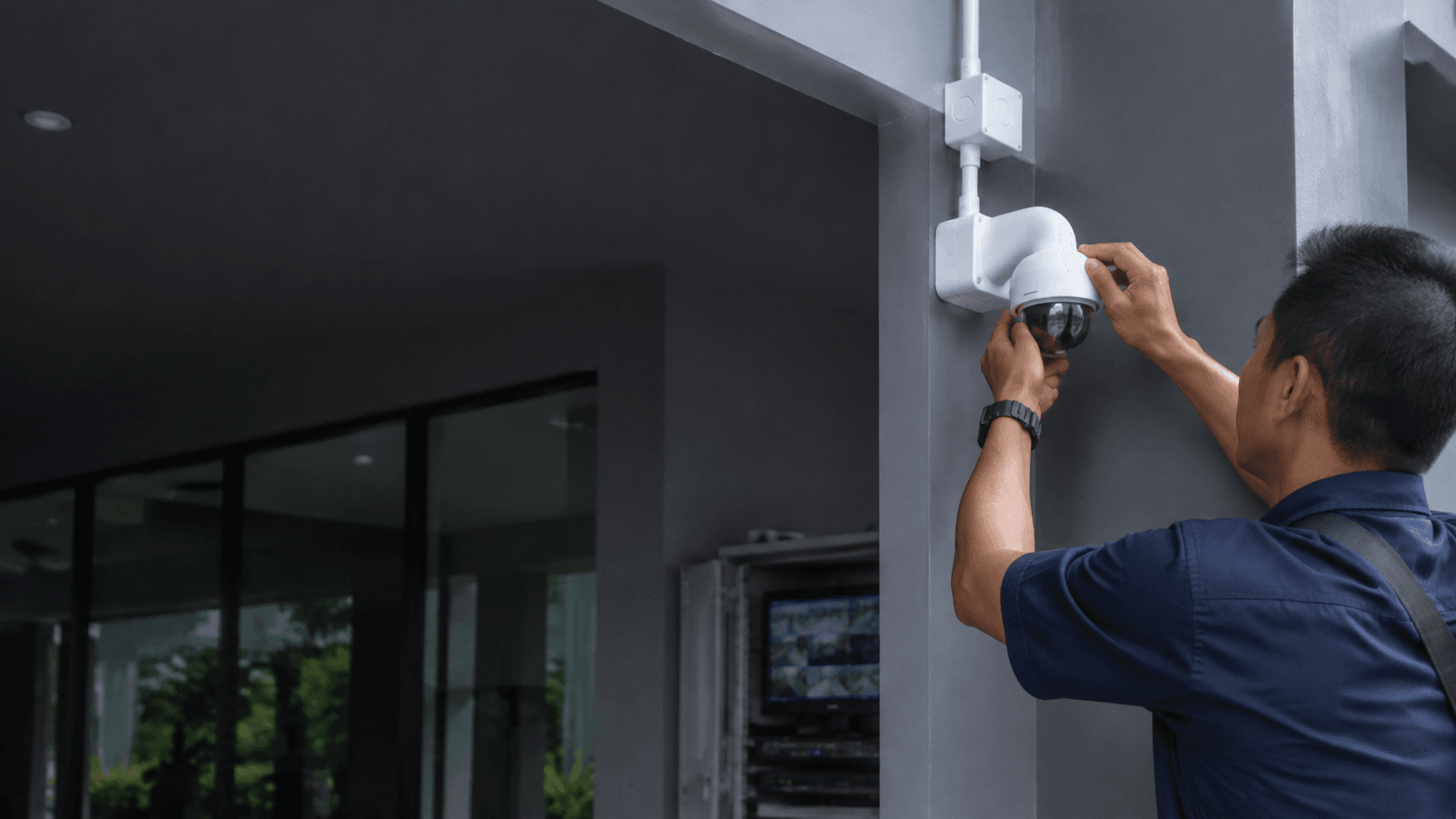
Installation practice matters more than brand in that situation. A site survey establishes where cameras need to go and what lighting each position actually receives, since a position that looks adequate in daylight can be unusable at night. Camera placement then follows from the survey rather than from a standard layout. Recorder setup and remote viewing are configured and tested before handover, so the person relying on the system knows it works.
That sequence is how CCTV installation is structured in Sarawak, and it applies regardless of which camera brand is specified. A project for the Kuching Immigration Office followed the same logic, focused on arrival flow, staff areas, visitor movement, and dependable daily operation. A separate office project for an engineering consultancy in Kuching addressed staff movement, visitor handling, and tidy cabling. In both cases the outcome depended on placement and configuration rather than on the badge on the camera.
For a mixed or existing installation, the connection material covered above is the useful part of the Qvis CCTV picture. A camera that publishes a working RTSP path can be brought into a recorder or viewing application that is already in place, which extends the life of existing equipment instead of replacing it.
Getting Qvis CCTV questions answered
Most unanswered Qvis CCTV questions are unanswered because the brand's own documentation is thin or the product line has partly moved on. The workable approach is to verify the specific model rather than the brand, and to confirm local support before committing to a quantity of cameras.
Three checks resolve most of the uncertainty. Confirm the model number and its current status. Obtain the datasheet for that exact model. Establish who holds warranty and spares in the country of installation. If any of the three cannot be answered, the risk sits with the site rather than the supplier.
Where a Qvis model cannot be confirmed as current or locally supported, the sensible comparison is against a brand with a documented local supply chain, so the decision rests on support rather than on specification alone. Share the location, property type, and required system with Eyonic on WhatsApp at +60 11-5111 7959 for the next practical step.