
The exact-match query "tp link cctv camera" covers more ground than a single product. TP-Link sells Tapo cameras for homes and small premises, and VIGI cameras for business networking. Both appear in search results for the same phrase, so the first job is deciding which family matches the site being watched.
Eyonic Sdn Bhd plans, supplies and installs CCTV and ELV systems in Sarawak, Malaysia, for homes, offices, shops and industrial sites. That work includes camera placement, NVR setup and remote viewing, which matters because a camera brand choice only becomes a working system after someone decides where each unit points and how footage is stored.
What a tp link cctv camera actually is
TP-Link does not sell one product called a CCTV camera. The phrase collects two separate lines. Tapo covers cloud cameras and home security cameras, including indoor, outdoor, pan and tilt, battery, solar and 4K models. VIGI covers network cameras built for business networking, with dome, bullet, turret and fisheye shapes, resolutions such as 4MP, 5MP and 8MP, and features like human and vehicle classification.
That split explains why search results for the same phrase look so different. A product listing page shows Tapo indoor and outdoor cameras with names like C100, C120, C200, C210, C216, C246D, C260, C500, C520WS and C660 KIT. A business networking page shows VIGI InSight models with model codes such as S245, S345, S385, S445 and S485. The two groups share a brand and almost nothing else.
Storage follows the same divide. Tapo cameras commonly use a microSD card or cloud storage, with Tapo Care as the subscription option. VIGI cameras work with local storage and VIGI Cloud VMS. A buyer comparing prices across both families is often comparing two different recording designs, not two cameras at different quality levels.
Choosing the right tp link cctv camera
The decision sequence below follows the order that matters in practice. It starts with the site, not the model number, because placement and lighting decide whether a camera performs as advertised.
- Define what needs watching. an entrance, a gate, a shop floor, a car park, a corridor or a whole perimeter.
- Check whether power and network cable can reach each position, or whether the site needs battery or solar operation.
- Check the actual lighting at each position, including night conditions, before confirming placement.
- Decide where footage lives. microSD card, network video recorder, or cloud storage with a subscription.
- Match the camera family to the job: Tapo for simple Wi-Fi coverage, VIGI for multi-camera business sites.
- Confirm who reviews footage and how, including remote viewing on a phone.
- Plan the handover so the people using the system know how to check recordings and adjust alerts.
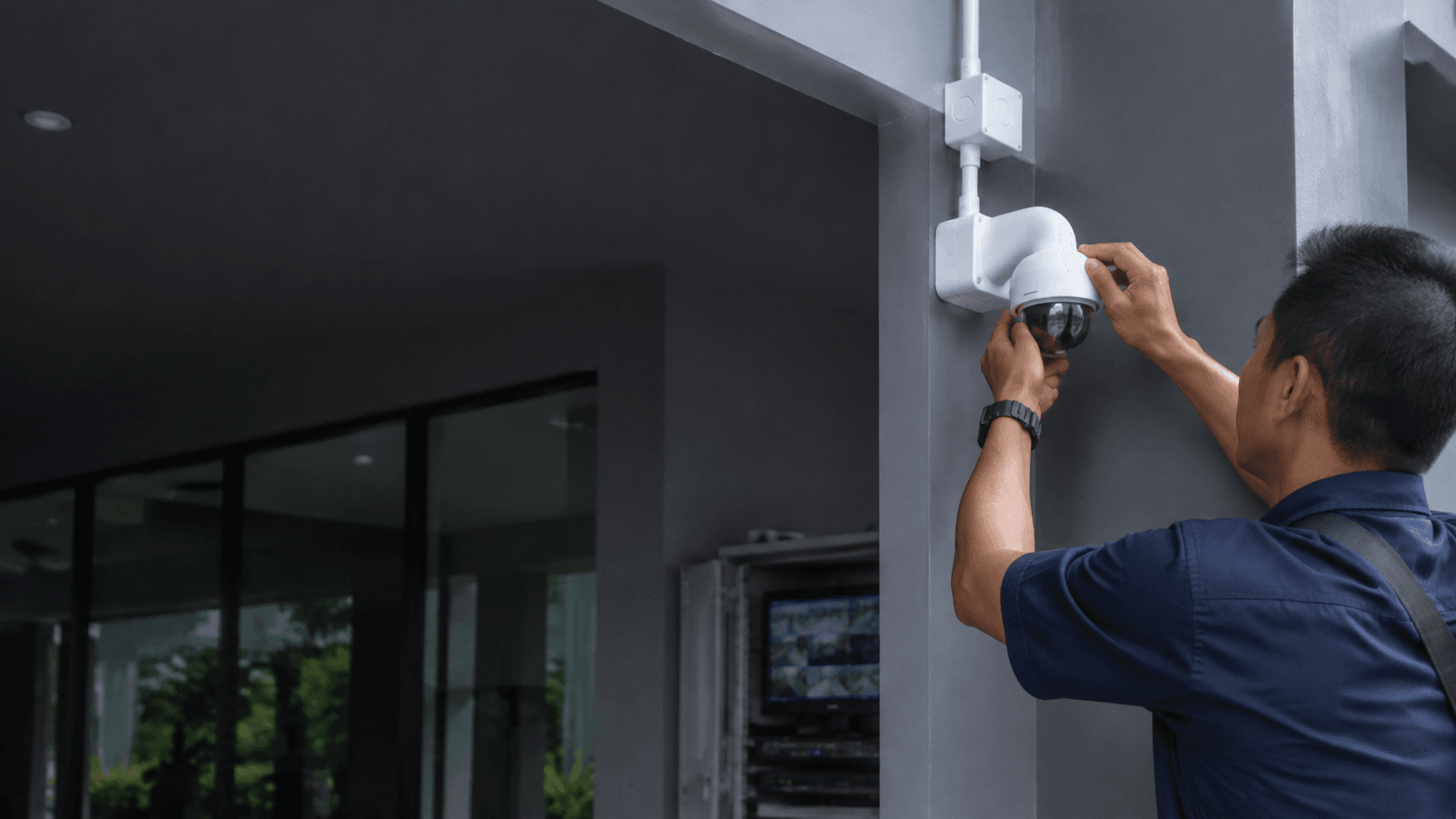
Eyonic's CCTV installation process follows a similar shape: site survey, system proposal, installation and handover. The site survey exists because a camera chosen from a specification sheet can still fail if the mounting point faces a light source or covers the wrong angle.
Eyonic recommends checking actual lighting conditions before confirming placement for ColorVu-style cameras, and the same caution applies to any camera marketed on low-light performance. A demonstration clip recorded in a controlled setting says little about a back lane at night.
Tapo for homes and small premises
Tapo cameras suit sites where Wi-Fi reaches the camera position and the number of cameras stays small. Pan and tilt models cover a wider area from one mounting point, which reduces the number of units needed for a room or a small yard. Indoor models often serve double duty as baby monitors or pet cameras, which is why product listings mention those uses alongside security.
The trade-off is dependence on the local Wi-Fi network and, for cloud features, on a subscription. Local microSD storage avoids the subscription but puts the recording inside the camera, where a thief can remove the card along with the unit.
VIGI for business and multi-camera sites
VIGI cameras target business networking, with features such as human and vehicle classification, two-way audio, PoE power, weatherproof ratings and vandal-proof housings. A shop, office or industrial site with several cameras usually needs a recorder and a structured cabling plan rather than a set of independent Wi-Fi units.
Business sites also carry requirements that home cameras ignore. Multi-site deployments, integration with existing analog systems and compliance questions appear in buyer research for this category. Those questions rarely have a simple answer, and they belong in a site survey rather than a product page.
Tapo Introduces Revolutionary 4K Cams | TP-Link
TP-Link's own 4K camera page describes a family that spans solar-powered kits, battery-powered magnetic cameras, wired pan and tilt indoor and outdoor models, and a 4K solar-powered system. The page lists resolution steps from 1080P through 2K, 3K, 4MP, 5MP and 8MP up to 4K, and it presents 4K as a way to capture more detail for identification.
One detail on that page matters more than the resolution headline. Regular 4K battery-powered security cameras only record clips when activity is detected. Continuous recording drains a battery quickly, so battery models trade always-on coverage for event clips. A site that needs 24/7 recording needs wired power, not a bigger battery.
Higher resolution also raises storage and bandwidth demands. More pixels per frame means larger files, which shortens the time a fixed-size microSD card or recorder drive can hold. A 4K upgrade without a storage plan often ends with fewer days of retained footage than the system it replaced.
Practical considerations for tp link cctv camera setups
Several constraints decide whether a TP-Link camera works well on a given site, and most of them appear before installation rather than after.
Wi-Fi coverage is the first. A camera at the far end of a property may connect during setup and drop out under load. Battery and solar models reduce cabling but add charging or panel placement to the maintenance list. Wired models need a cable route, which may be the largest part of the installation work.
Lighting is the second. Colour night vision depends on some ambient light, while infrared night vision produces monochrome images. A position with a bright light source in frame can wash out the image regardless of the camera's low-light rating.
Storage and retention form the third constraint. Local recording keeps footage on site and avoids subscription fees, but it is vulnerable to theft and damage. Cloud recording survives a stolen camera but adds a recurring cost and depends on the internet connection.
Privacy and permissions form the fourth. Cameras that cover neighbouring property, shared corridors or staff areas raise questions that a specification sheet does not answer. Activity zones and privacy zones help, but they are configured after installation and need review as the site changes.
For larger or public-facing sites, the pattern is familiar. Eyonic's work for the Kuching Immigration Office focused on arrival flow, staff areas, visitor movement and dependable daily operation. That kind of brief is about coverage and reliability across a working day, not about a single camera's resolution.
Where a TP Link camera fits and where it does not
A Tapo camera fits a home, a small shop or an office corner where Wi-Fi reaches and one or two viewpoints cover the important area. It also fits a renter who cannot run cable and wants a camera that can move to a new address.
A VIGI camera fits a business site with several viewpoints, a recorder, and a need for consistent retention and central review. It also fits sites that already run network cabling and want cameras on the same infrastructure.
Neither family replaces a site survey. A camera that covers a door but misses the approach, or one that records a corridor but not the till, leaves the actual risk uncovered. Placement decisions usually matter more than the model chosen.
Making an informed choice about a
The useful comparison is not TP-Link against other brands in the abstract. It is whether a specific camera family matches the power, network, lighting and storage conditions at a specific site. A home with good Wi-Fi and two viewpoints has different needs from a shop with eight cameras and a recorder.
Cost planning should include more than the camera. Cabling, mounting, a recorder or storage card, and the labour to install and configure the system all contribute. Eyonic publishes package pricing that starts at RM 1,599 for a Hikvision CCTV package covering camera supply and setup, basic recording configuration and mobile viewing handover, and the same figure applies to its alarm system and autogate packages. Those packages are Hikvision-based rather than TP-Link, which is worth knowing when comparing quotes for a TP-Link installation.
Larger projects scale differently. Eyonic's Kuching Immigration Office project carried an approximate budget of RM 12,000 to RM 28,000, and its KTA Sarawak Sdn Bhd office project carried an approximate budget of RM 8,000 to RM 18,000. Both involved office environments with staff movement, visitor handling and cabling requirements, which is the kind of scope where camera count and cable routes drive the price more than the brand.
Before committing, it helps to confirm three things: the exact positions cameras will cover, how many days of footage must be retained, and who will review recordings when something happens. A system that answers those three questions is usually the right size. A system chosen on resolution alone often is not.
Share your location, property type and required system with Eyonic on WhatsApp at +60 11-5111 7959 for the next practical step.