
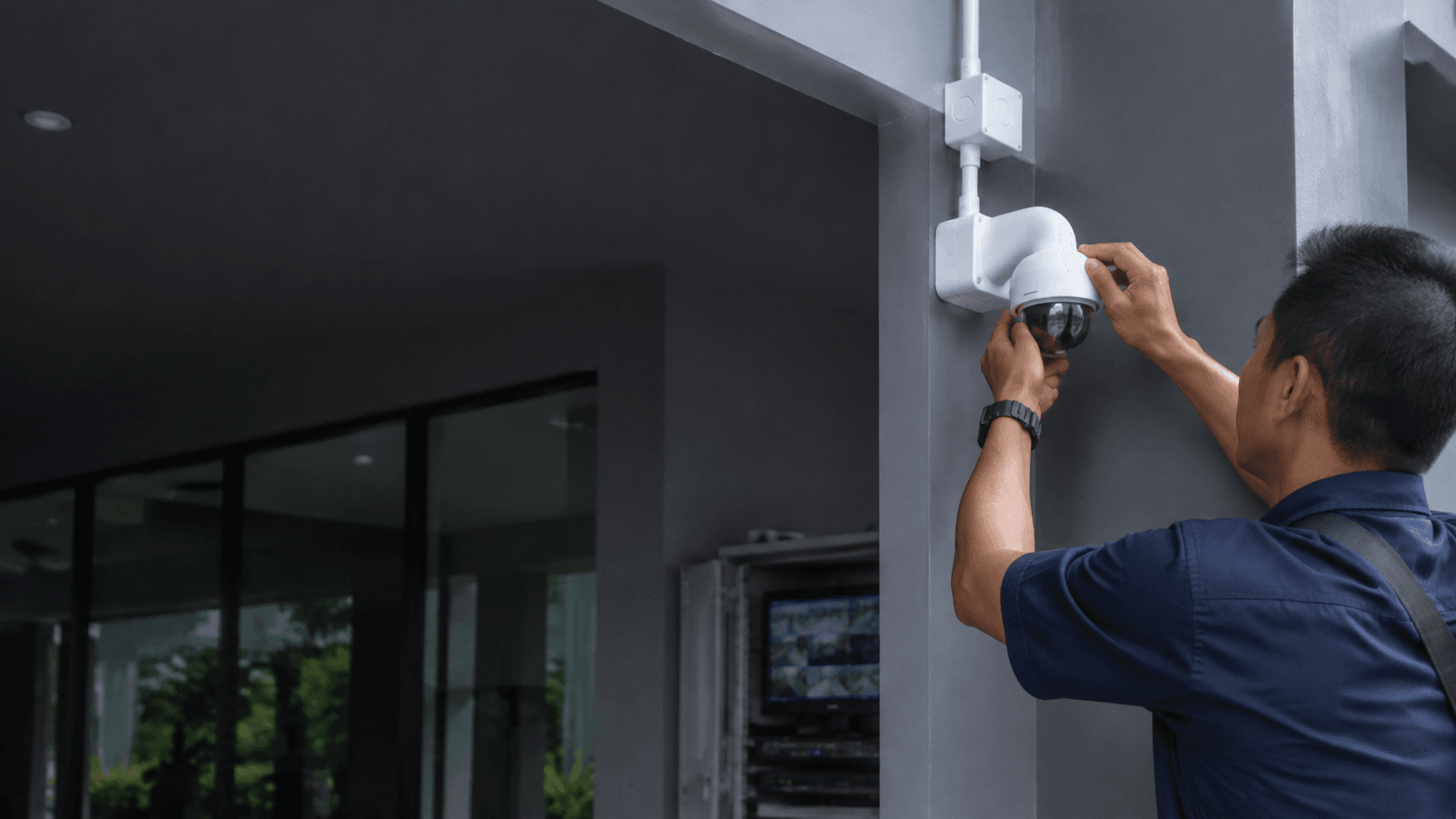
The exact-match phrase matters less than what happens after the box is opened. A recorder that fills up, a camera pointed at a blank wall, or an app nobody was taught to use all produce the same result: footage that does not exist when it is needed. The sections below work through placement, recording and storage, remote viewing, and the installation sequence that turns a purchase into a working system.
Cctv Camera For Home With Recording: What Matters Before You Choose
Recording is not a single feature. It is the outcome of four things working together: a camera that can see the scene, a recorder or storage destination that accepts the video, a configuration that decides when video is written, and a person who can retrieve it later. Remove any one and the system stops being useful.
Home recording usually falls into two broad approaches. Continuous recording writes video all the time, which produces the most complete record but consumes storage fastest. Event-based recording writes only when motion or another trigger occurs, which stretches storage but can miss the moments just before an event starts. Many home systems combine both, keeping a continuous low-detail stream alongside higher-quality event clips.
The practical question is not which method is better in the abstract. It is which method matches the property. A quiet terrace house with a single entry point and low foot traffic behaves very differently from a corner lot with a side lane, a back gate and regular deliveries. The busier the scene, the more event triggers fire, and the closer an event-based setup comes to behaving like continuous recording in terms of storage consumed.
Where The Recorder Sits
Recording hardware needs a home. In a wired setup, that is typically a recorder unit placed indoors, connected to the cameras by cable and to the home network for remote viewing. Placement of that unit matters for two reasons: heat and access. A closed cabinet with no airflow shortens the life of any recorder, and a unit buried behind stored boxes is difficult to service when a drive needs attention.
Power availability is the other constraint. Recorders and cameras need a stable supply, and homes with frequent short outages benefit from planning around that rather than discovering it after installation. This is the kind of detail a site survey is meant to surface before any drilling begins.
Camera Placement And Lighting Checks
Placement decides what the system can prove. A camera mounted for a wide decorative view of a porch often captures faces at a distance too far to identify, while a camera positioned to cover the approach path captures people before they reach the door. Coverage of entry and exit routes generally matters more than coverage of rooms.
Eyonic recommends checking actual lighting conditions before confirming placement for ColorVu-style cameras. That advice is worth taking literally. Marketing images for low-light cameras are captured in controlled conditions. A real car porch at night may have a single warm bulb, a reflective car bonnet, and a wall that throws shadow across the exact area that needs to be seen. The camera that performs well in a showroom may perform differently under those conditions.
What To Check Before Fixing A Position
Light at the scene at the hours that matter, not at midday. Whether a nearby surface will reflect light back into the lens. Whether a tree, awning or parked vehicle will block the view at different times of day. Whether the camera will look directly into a rising or setting sun. Whether the cable route from that position back to the recorder is practical without exposed runs that invite tampering.
Angle also affects identification. A camera looking down at a steep angle captures the top of a head. A camera at closer to eye level captures a face. Where the goal is identifying who approached, height and angle deserve as much attention as the camera model.
Recording, Storage And Remote Viewing
Storage is the constraint that surprises most households. Video is written continuously or in bursts, and the storage medium fills at a rate set by resolution, frame rate, compression and how often recording triggers. None of those figures are fixed across packages, so the honest answer is that retention depends on the configuration chosen for the property.
What can be said with confidence is the trade-off. Higher detail per frame consumes more space per hour. More hours retained requires more space. A household that wants a long history at high detail needs more storage than one that wants a short history at moderate detail. The right balance is a conversation about what the footage is for, not a specification copied from a listing.
Remote viewing adds a second dependency: the home network. Viewing live or recorded video away from the property requires the recorder to be reachable over the internet, which in turn depends on the broadband service and router at the address. A system can record perfectly and still be unreachable remotely if that link is weak or the router is not configured for it.
What Handover Should Cover
Mobile viewing handover is part of Eyonic's Hikvision CCTV Package, alongside camera supply and setup and basic recording configuration. That means the practical test of a completed job is whether the household can open the app, find a past event, and play it back without assistance. If that cannot be done on the day of handover, the installation is not finished.
Installation And Handover Sequence
Eyonic's CCTV installation process runs through four stages. The order matters, because each stage removes a decision that would otherwise be guessed at later.
- Site survey — the property is assessed for camera positions, lighting, cable routes, recorder location and network conditions.
- System proposal — the survey findings are turned into a recommended system covering cameras, recording and viewing.
- Installation — cameras, cabling and the recorder are installed and configured according to the agreed plan.
- Handover — recording configuration and mobile viewing are demonstrated and tested with the household.
The survey stage is where most avoidable problems are caught. A property with a long driveway, a rear lane and a separate gatehouse has different requirements from a single-storey terrace with one entrance, and the difference shows up in cable runs and camera count rather than in the camera model.
Eyonic's work for the Kuching Immigration Office illustrates how the same sequence scales to a public building, where the focus was arrival flow, staff areas, visitor movement and dependable daily operation. A home is smaller, but the logic is identical: cover the routes people actually use, and make sure the system keeps running without daily attention.
What A Real Handover Looks Like
A handover that holds up weeks later covers the recording schedule, how to find footage from a specific time, what happens when storage reaches its limit, and who to contact if a camera stops responding. It also covers the mundane. which breaker or outlet the recorder uses, and what the indicator lights mean.
Eyonic Sdn Bhd plans, supplies and installs monitoring systems with camera placement, recording and remote viewing for homes, offices, shops and industrial sites. The founder, Eric Yong, has worked in the industry for more than ten years, with experience in technical installation of digital security solutions for commercial businesses in Sarawak.
Practical Limits And Evidence Gaps
Some questions cannot be answered from published material, and pretending otherwise would be misleading. There are no verified recording resolution, frame rate, storage capacity, retention period or compression figures for any home package. There are no verified night-vision performance figures for a specific camera model. The number of cameras, cable runs and channels included in the RM 1,599 Hikvision CCTV Package is not published, and neither are warranty terms, response times or after-sales service levels.
Malaysian legal or consent requirements for recording audio, or for cameras that overlook neighbouring property, are not covered by any source available here. Households with those concerns should confirm the position before installation rather than after. Mobile app names, notification behaviour and remote-viewing limits are likewise unverified, as are the power, network and broadband requirements for remote viewing at a specific address.
What is verifiable is the process and the pricing structure. Eyonic's basic packages are listed at RM 1,599 for the Hikvision CCTV Package, RM 1,599 for the Hikvision Alarm System, and RM 1,599 for the Autogate Package. The CCTV package covers camera supply and setup, basic recording configuration, and mobile viewing handover. Larger project work sits in a different range: the Kuching Immigration Office project carried an approximate budget of RM 12,000 to RM 28,000, and the KTA Sarawak Sdn Bhd office project an approximate budget of RM 8,000 to RM 18,000.
Choosing Between A Package And A Survey Led Build
A fixed package suits a straightforward property where the entry points are obvious and the cable routes are short. A survey-led build suits anything with an awkward layout, multiple buildings, a long perimeter, or a requirement to cover specific routes rather than general space. The cost difference is real, but so is the difference between a system that records what matters and one that records a wide view of nothing in particular.
For a cctv camera for home with recording in Sarawak, the sequence is the same either way: survey the property, agree the system, install it, and test the recording and viewing before the installer leaves. Share the location, property type and required system with Eyonic on WhatsApp at +60 11-5111 7959 to move to the next practical step.